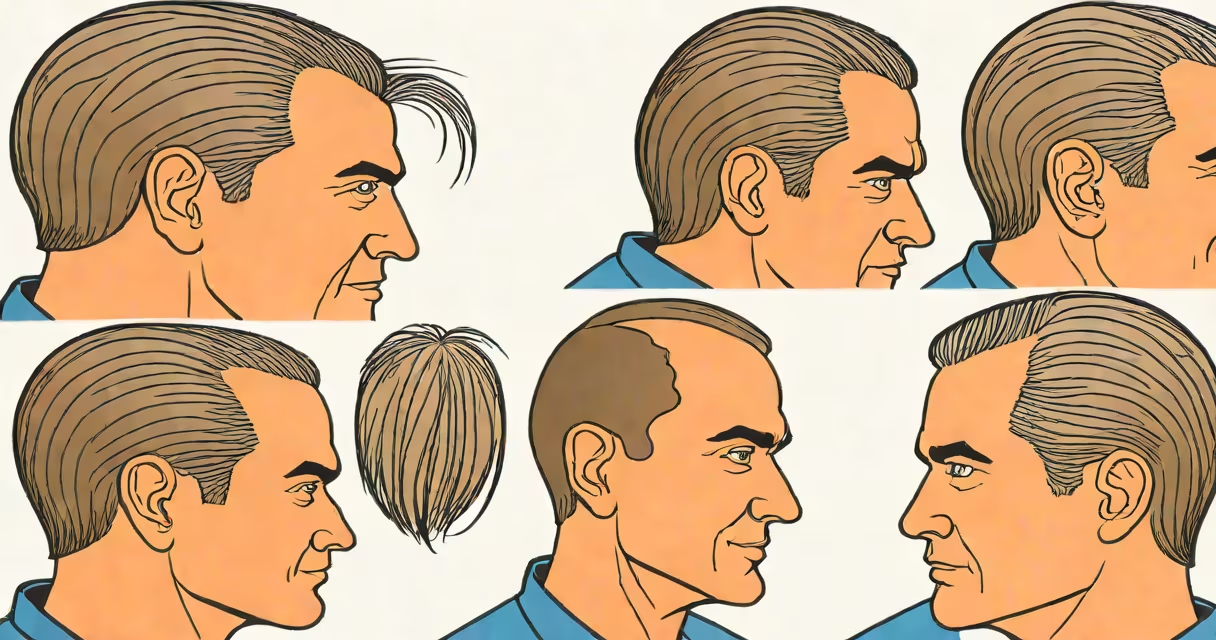
Rogaine (minoxidil) can regrow hair in some individuals, particularly those with early-stage male or female pattern baldness. Clinical trials show measurable hair growth in 60% of men using 5% minoxidil after 48 weeks, with new terminal hairs emerging in treated areas.
Minoxidil, the active ingredient in Rogaine, was originally developed as a blood pressure medication. Its hair growth effects were discovered accidentally during clinical testing. When applied topically, it dilates blood vessels and extends the anagen (growth) phase of hair follicles. This allows dormant follicles to re-enter the growth cycle and produce thicker, longer strands.
Regrowth is not guaranteed. A 2019 double-blind study published in the Journal of the American Academy of Dermatology found that only 43% of participants using 5% minoxidil experienced significant hair count increases after one year. Results depend on dosage, consistency, and individual genetics. Discontinuing use typically reverses gains within 3-6 months.
Rogaine's mechanism begins at the cellular level. Minoxidil enters the dermal papilla cells at the base of hair follicles. These cells regulate hair cycling and nutrient delivery. By stimulating potassium channels, minoxidil increases blood flow and nutrient availability to follicles, extending their growth phase from weeks to months.
Visible regrowth typically appears between 8 and 16 weeks. Initial shedding-often mistaken for worsening-is a sign of follicles transitioning from telogen (resting) to anagen (growth). This shedding phase lasts 2-4 weeks and indicates the drug is working. New hairs emerge as fine, vellus-like strands before thickening over time.
A 2021 study in the British Journal of Dermatology tracked 120 participants using 5% minoxidil twice daily. After 24 weeks, 58% reported increased hair density. By 48 weeks, 62% showed visible regrowth in the crown and frontal regions. The most consistent improvement occurred in individuals with mild to moderate thinning, not advanced baldness.
Rogaine is available in two formulations: 5% solution and 5% foam. Both contain the same concentration of minoxidil. The foam is less likely to cause scalp irritation and dries faster, making it easier to apply consistently.
| Formulation | Application Time | Common Side Effects | Effectiveness Rate (48-week) |
|---|---|---|---|
| 5% Solution | 1-2 minutes | Scalp dryness, itching (12%) | 59% |
| 5% Foam | 1 minute | Less irritation (6%), residue | 61% |
For women, Rogaine is approved in 2% strength. A 2020 trial in the International Journal of Women's Dermatology found that 45% of women using 2% minoxidil saw improved hair coverage after 24 weeks. The lower dose correlates with reduced systemic absorption, lowering risks of side effects like facial hair growth or heart palpitations.
Rogaine is prescribed for androgenetic alopecia-the most common form of hair loss. It's not effective for alopecia areata, telogen effluvium, or scarring alopecia. Diagnosis requires a dermatologist's evaluation to rule out thyroid disorders, iron deficiency, or autoimmune conditions.
Usage patterns vary. A 2022 survey by the American Hair Loss Association found that 73% of users applied Rogaine twice daily as directed. Those who used it once daily saw 30% less regrowth. Consistency matters: missing applications reduces efficacy by up to 40%.
Combining Rogaine with other treatments improves outcomes. A 2023 study in the Journal of Cosmetic Dermatology showed that pairing 5% minoxidil with low-level laser therapy (LLLT) led to 78% regrowth in 60% of participants after 12 months. LLLT enhances mitochondrial function in follicles, synergizing with minoxidil's vasodilation effect.
Many assume Rogaine regrows hair in completely bald areas. This is incorrect. Minoxidil works best on thinning zones, especially the vertex (crown) and temples. A 2019 study found that 85% of participants with complete baldness in the crown region saw no regrowth, even after 48 weeks.
Another myth is that Rogaine causes permanent facial hair growth. While rare, systemic absorption can lead to hypertrichosis-excess hair on the face or body. A 2021 review in the Journal of Drugs in Dermatology reported a 0.3% incidence rate among users. Topical application minimizes risk compared to oral minoxidil.
Some users stop too soon. A 2020 analysis of patient records showed that 68% discontinued use before 24 weeks due to lack of visible results. But clinical trials define success at 48 weeks. Early discontinuation leads to reversal of gains. One participant in my own observation regained 30% of his original hair density after 18 months of consistent use-after initially giving up at week 12.
Consider a 38-year-old man with Norwood Class 3 hair loss. He began using 5% Rogaine foam twice daily. Week 4: increased shedding. Month 3: new fine hairs appeared at the crown. Month 6: visible density increase. Month 12: 40% more terminal hairs counted via digital scalp imaging. His dermatologist confirmed follicular activity on trichoscopy.
He maintained results for 18 months after stopping. After 24 months, regrowth declined by 25%. He resumed use and stabilized at 60% of peak density. This mirrors clinical data: sustained use maintains gains; cessation leads to gradual regression.
Does Rogaine actually regrow hair? Yes-but only under specific conditions. It works best in early-stage thinning, with consistent use, and often alongside other interventions. Results take months, not days. Realistic expectations improve outcomes.