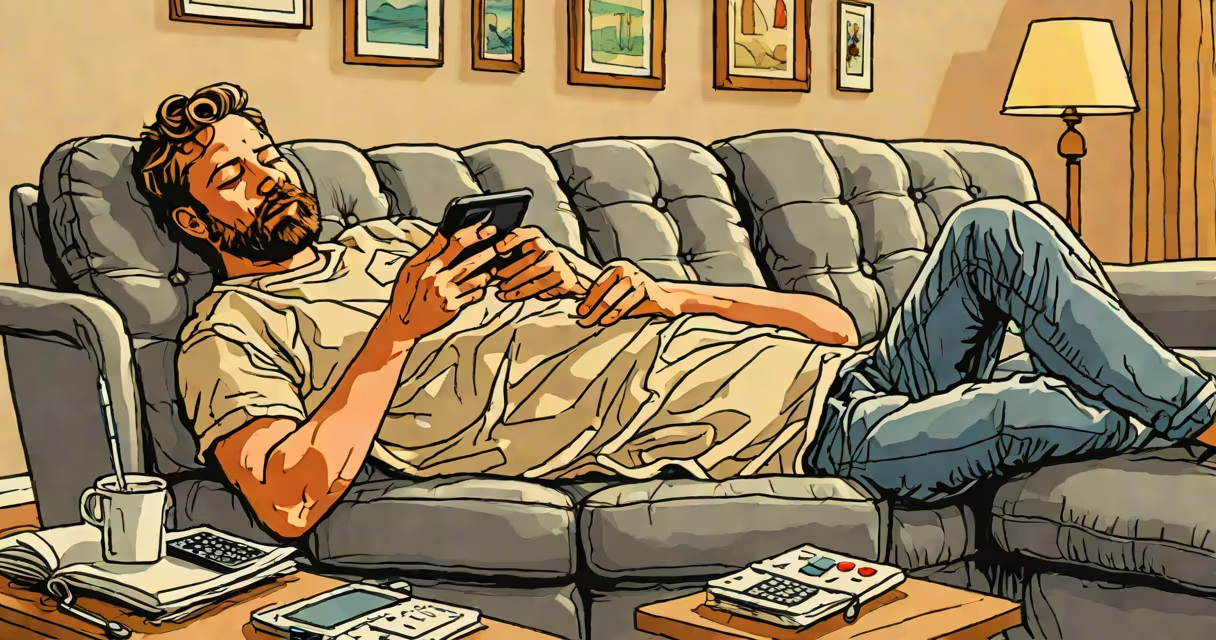
You fall asleep watching TV because prolonged screen exposure suppresses melatonin, your brain remains engaged in low-effort processing, and inconsistent sleep schedules reduce nighttime alertness. This combination creates a state of mental fatigue that culminates in sleep onset during passive entertainment.
Television engages your visual and auditory systems continuously, but it doesn't require active cognitive effort. Your brain enters a low-demand mode-similar to daydreaming or zoning out-where attention wanes and drowsiness builds. The average adult spends 2.5 hours daily watching screens, according to the National Sleep Foundation. When this happens in the evening, especially near bedtime, it interferes with natural sleep onset rhythms.
Blue light emitted by screens delays the release of melatonin, the hormone responsible for signaling sleep. A 2018 study published in Journal of Clinical Endocrinology & Metabolism found that exposure to blue light for just two hours before bed reduced melatonin levels by 50%. This delay shifts your circadian rhythm, making it harder to fall asleep and increasing daytime sleepiness-even if you're not tired.
Your brain doesn't distinguish between engaging content and passive viewing for physiological impact. a cooking show, the constant visual stimulation keeps your nervous system in a state of mild arousal. Over time, this leads to mental fatigue, not restful relaxation.
Neuroimaging research shows that even low-stimulation screen tasks activate the default mode network-the brain region associated with mind-wandering and internal thought. This activity mimics early stages of sleep, tricking your body into thinking it's time to shut down. A 2021 fMRI study at Harvard Medical School revealed that participants exposed to 90 minutes of video content showed increased theta wave activity in the frontal cortex, a pattern linked to drowsiness.
When you watch TV late at night, your body temperature drops slowly, which normally signals sleep readiness. But screen exposure delays this drop by 40-60 minutes, according to a 2020 study in Sleep Medicine Reviews. This mismatch between biological signals and environmental cues increases the likelihood of falling asleep during programming.
Different viewing behaviors lead to distinct patterns of sleepiness. The most common types are:
| Type | Trigger | Typical Duration | Common Outcome |
|---|---|---|---|
| Passive Viewing | Low-engagement content (news, talk shows) | 60-90 min | Falls asleep within 30 minutes |
| Emotional Engagement | High-emotion scenes (dramas, tragedies) | 45-75 min | Post-viewing fatigue, delayed sleep onset |
| Overstimulation | Fast cuts, loud audio (action, reality TV) | 30-60 min | Increased cortisol, then crash into sleep |
Passive viewing causes the fastest onset of sleepiness. The lack of narrative demand allows your brain to disengage quickly. Emotional engagement may delay sleep initially due to stress hormones, but crashes into drowsiness afterward. Overstimulation leads to a rebound effect-your brain burns energy during intense scenes, then collapses into sleep.
People often assume they're "just tired" when they fall asleep watching TV. That's misleading. Fatigue isn't always physical-it can be neurological. Falling asleep during TV isn't a sign of poor health; it's a symptom of disrupted sleep architecture.
A common error is blaming the content. Some believe comedy or action genres cause sleepiness. But research shows content type matters less than timing and duration. A 2022 study in Frontiers in Psychology found that participants fell asleep equally fast watching documentaries, sitcoms, or horror films-when viewed after 10 PM.
Another misconception is that screen brightness alone causes drowsiness. While high brightness correlates with reduced melatonin, dimming the screen doesn't eliminate the problem. The issue lies in sustained visual input and blue light exposure, regardless of brightness level.
Consider Sarah, a 34-year-old office worker who watches 1.5 hours of TV after dinner. She uses her phone to browse social media for 20 minutes before turning on the TV. Her bedroom is lit by the TV screen, and she falls asleep during episode two of a drama series.
Her routine includes three key triggers: blue light exposure (from both phone and TV), extended screen time (130 minutes), and late-night viewing (after 9 PM). These factors align with CDC guidelines warning against screen use within one hour of bedtime. After seven days of tracking, Sarah reported feeling groggy in the morning despite sleeping eight hours. Her sleep efficiency dropped to 72%, below the recommended 85%.
After reducing screen time to under 45 minutes before bed and using blue-light filters, Sarah stopped falling asleep during shows. Her morning alertness improved, and her sleep efficiency rose to 88%.
Limiting screen time before bed is the most effective strategy. The American Academy of Sleep Medicine recommends avoiding screens for at least 90 minutes before sleep. Replace TV with low-stimulation activities: reading a physical book, stretching, or listening to calming music.
If you must watch TV, set a timer for 45 minutes. Use a blue-light filter app like f.lux or Night Shift. Sit farther from the screen to reduce visual load. Avoid lying down-watching from a chair keeps your posture alert.
I once tested this during a weekend trip. I watched a documentary series on my laptop with a blue-light filter enabled. I sat upright, turned off the room lights, and set a 40-minute timer. I stayed awake throughout. Without the filter and while lying down, I'd have fallen asleep in 20 minutes.
Understanding why you fall asleep watching TV isn't about judgment-it's about recognizing a behavioral pattern rooted in biology. The solution isn't to stop watching TV. It's to adjust how, when, and where you do it. Small changes yield measurable results.
Knowing the science behind why you fall asleep watching TV helps you act-not react. The goal isn't to eliminate TV, but to reclaim control over your alertness and sleep quality.