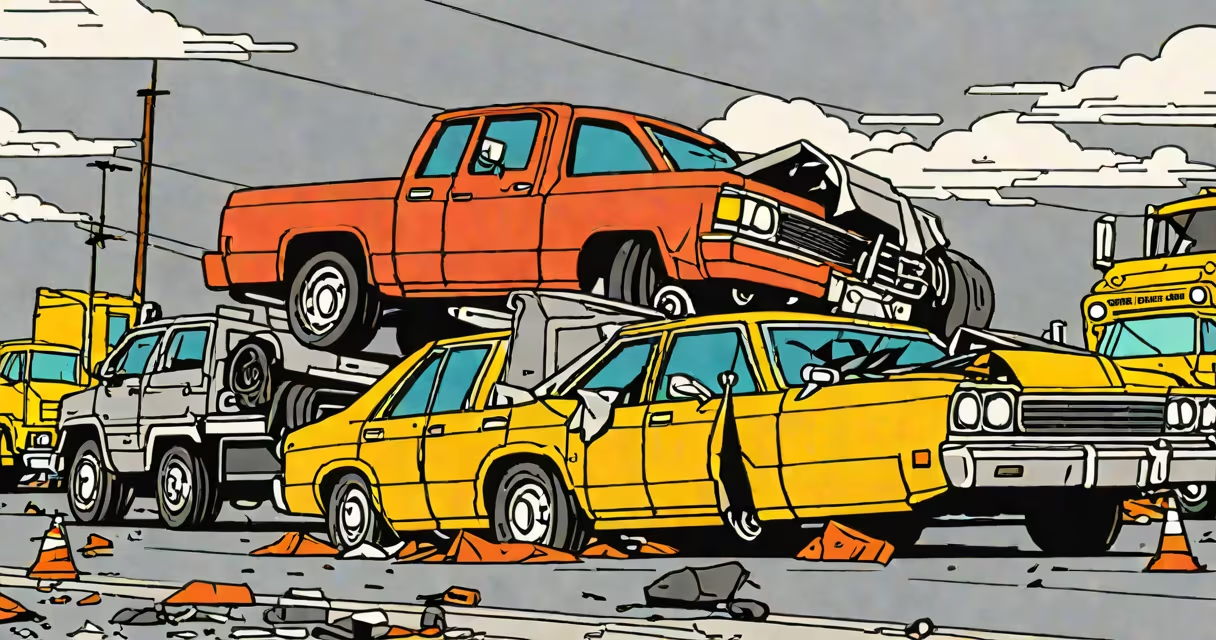
If your car is totaled, it means the cost to repair it exceeds its actual cash value, and the insurance company will declare it a total loss. You'll receive a settlement based on the car's market value minus deductible and fees. This decision is made by your insurer after assessing damage, not by you.
A totaled vehicle is not automatically repaired. Instead, the insurer determines whether repair costs exceed 70% of the car's pre-accident value-a threshold set by most insurers. For example, if your 2018 Honda Accord was worth $14,000 before the crash and repair estimates total $10,500, the insurer may declare it totaled because $10,500 is 75% of $14,000.
The National Association of Insurance Commissioners (NAIC) confirms that state laws vary on total loss thresholds, but most follow this 70% rule. Some states use 60%, others 80%. Always check your policy's specific language. The insurer's appraisal must reflect current market conditions-not just repair parts-but also depreciation, mileage, and regional demand.
After an accident, your insurer sends an adjuster to inspect the vehicle. They assess structural damage, frame integrity, airbag deployment, and electronic system failures. If critical components like the engine, transmission, or safety systems are compromised, repair feasibility drops sharply.
For instance, a 2020 Tesla Model 3 with a cracked battery pack casing cannot be safely repaired. Even if the frame is intact, the risk of thermal runaway makes replacement the only viable option. Insurers use databases like Kelley Blue Book (KBB) and Edmunds to assign pre-accident values based on trim level, mileage, and local market data.
One non-obvious fact: even if your car is totaled, you may still owe money on a loan. If the settlement is less than your outstanding balance, you're responsible for the difference unless you have gap insurance. According to the Insurance Information Institute (III), about 12% of car owners with loans face negative equity after a total loss.
Contact your insurer within 24 hours. Provide photos of the damage, police reports, and any witness statements. Most policies require prompt notification to avoid delays in processing.
Take clear photos of the vehicle from all angles, including the VIN plate, dashboard display, and license plate. These serve as evidence of condition before towing. A single photo of the front bumper with a dent won't suffice-insurers need full documentation.
I once witnessed a driver skip this step. He waited three days to report his totaled 2017 Subaru Outback. By then, the insurer had already assigned a lower value due to delayed assessment. His settlement dropped by $1,200. Documentation matters.
You'll receive a settlement offer based on the car's actual cash value (ACV)-its market worth before the accident. ACV includes depreciation, wear, and regional pricing. For example, a 2016 Toyota Camry with 80,000 miles in Texas might be valued at $9,800, while the same model in Alaska could be $10,400 due to higher demand.
Compare settlement offers using KBB's Instant Cash Offer tool or Edmunds' True Cost to Own calculator. These tools show real-time valuations based on recent sales in your zip code. If the offer is below market average, dispute it with supporting evidence.
| Option | When It Applies | Pros | Cons |
|---|---|---|---|
| Accept settlement | Car is totaled, no loan | Quick cash, no further liability | May get less than market value |
| Keep the car | Insurer offers salvage value | Can repair or sell parts | Requires inspection, may fail safety tests |
| Dispute offer | Offer below KBB/Edmunds estimate | Possible higher payout | Delays payment, requires proof |
Some drivers choose to keep the car if they plan to fix it themselves. But the insurer will deduct salvage value-typically 10-20% of ACV-from the settlement. If your car's ACV is $12,000 and salvage value is $1,500, you'd receive $10,500 net. You'd then pay for repairs out of pocket.
Salvage vehicles must pass state inspections. In California, for example, a totaled car must undergo a smog test and frame alignment check before registration. Without passing, you can't legally drive it. Many mechanics refuse to work on salvaged vehicles due to liability risks.
Once you accept the settlement, the insurer takes ownership of the vehicle. They send a tow truck to remove it from your property. You'll receive a check or direct deposit for the approved amount minus deductible and fees.
If you have collision coverage, the deductible applies. On a $15,000 car with a $500 deductible, you'd get $14,500 after the insurer pays the rest. If you don't have collision, you're responsible for all repair or replacement costs.
Always verify that the insurer has filed a lien release. If you still owe money on the car, the lender must sign off before you can register a new vehicle. Failure to do so can result in legal action.
Finally, update your auto insurance policy. Your premium may drop if you switch to a less expensive model. Or increase if you upgrade to a luxury vehicle. Compare quotes from at least three providers using tools like NerdWallet or Insurify.
Understanding what to do if my car is totaled prevents financial surprises. Know your coverage, document everything, and act quickly. The process is standardized, but outcomes depend on your choices.