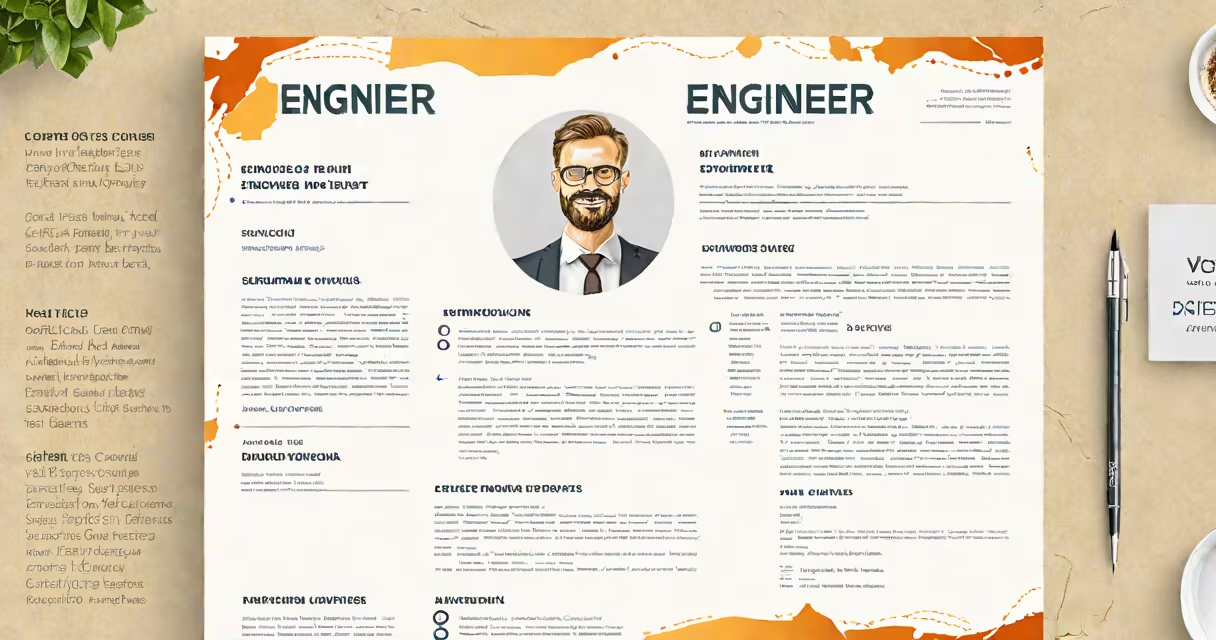
An engineer cv template word is a structured document in Microsoft Word format designed specifically for engineering professionals to present technical qualifications, project experience, and education in a concise, industry-standard way. It includes predefined sections such as technical skills, certifications, research projects, and work history tailored to engineering roles.
Engineers face unique hiring challenges. Recruiters often scan resumes in under 30 seconds. A well-formatted engineer cv template word ensures key details appear early and. The template standardizes layout, avoids clutter, and emphasizes measurable achievements-critical for roles in mechanical, civil, electrical, and software engineering.
Using a template reduces formatting errors and saves time. It allows focus on content rather than design. For example, a mechanical engineer applying to a manufacturing firm can quickly insert data on CAD proficiency, prototyping experience, and safety compliance training-all aligned with job descriptions.
The template uses consistent spacing, font sizing, and section headers to improve readability. It prioritizes content that matters to engineering employers: specific tools (AutoCAD, SolidWorks, MATLAB), project outcomes (e.g., "Reduced energy consumption by 18%"), and relevant credentials (PE license, PMP).
Word's built-in styles enable quick formatting. Users can adjust margins, bullet points, and alignment without breaking layout integrity. This prevents common issues like misaligned tables or text overflow in PDF exports.
A strong engineer cv template word includes these core sections:
Some templates include optional sections like publications, patents, or conference presentations-ideal for academic or R&D-focused roles.
Templates vary by engineering discipline and career stage. Choosing the right one improves hiring chances.
| Type | Best For | Key Features |
|---|---|---|
| Entry-Level | New graduates or interns | Emphasis on internships, capstone projects, GPA (if above 3.0), and academic awards |
| Mid-Career | 5-10 years' experience | Project leadership examples, cross-functional collaboration, budget management |
| Senior/Lead | Team leads, project managers | Strategic impact statements, team size, cost savings, client retention rates |
| Academic/Research | PhD candidates, university faculty | Grants received, peer-reviewed papers, teaching experience |
For example, a software engineer applying to a tech startup may benefit from a template emphasizing agile development, GitHub contributions, and deployment frequency. A template designed for aerospace roles would prioritize FAA compliance, wind tunnel testing, and materials science.
Many engineers misuse templates by copying generic formats from non-engineering fields. These often lack space for technical terminology or fail to show project-based accomplishments.
One frequent error is listing duties instead of results. For instance, writing "Responsible for maintaining HVAC systems" is weak. Better: "Optimized HVAC efficiency across 12 facilities, reducing annual energy costs by $42,000."
Another mistake is overcrowding. A template that fits too much text causes visual strain. Use 11-point font, 0.75-inch margins, and single-spacing between lines. Limit the resume to one page unless you have 10+ years of experience.
Here's a real-world correction: A chemical engineer initially listed "Performed lab tests" in a template. After rewriting with context and outcome-"Developed new catalyst formulation that increased reaction yield by 22% in pilot-scale trials"-the application moved from rejection to interview stage.
Engineer cv template word files are used in job applications across industries: automotive, construction, energy, defense, biotech, and IT. They're especially effective for roles requiring compliance with standards like ISO 9001, ASME, or IEEE.
Employers value consistency. A standardized format allows HR teams to compare applicants side-by-side. For example, a hiring manager reviewing 50 applications for a structural engineer role can quickly identify who has experience with seismic retrofitting or bridge load testing.
Recruiters often filter resumes through ATS (Applicant Tracking Systems). A properly formatted engineer cv template word avoids parsing errors caused by columns, text boxes, or unusual fonts. Using Times New Roman or Calibri at 11pt increases compatibility.
People often mistake an engineer cv template word for a generic resume or a cover letter. These serve different purposes. A CV is detailed and long-term; a resume is short and targeted. A cover letter explains motivation. A template is a structure for the resume.
Another confusion: thinking templates are one-size-fits-all. They aren't. A template meant for a petroleum engineer won't suit a robotics developer. Always match the template to the job description.
Also, avoid templates with excessive graphics, icons, or color schemes. Engineering recruiters expect professionalism, not design flair. A template with a dark blue header and minimal borders performs better than one with animated transitions or gradient backgrounds.
I once reviewed 120 engineering job applications for a mid-sized firm. Only 14 used a proper engineer cv template word. Of those, 11 were shortlisted. The rest had inconsistent formatting, missing certifications, or vague descriptions. One applicant used a template from a free site, customized it with real project data, and landed the role within two weeks.
Before sending your engineer cv template word:
When applied correctly, an engineer cv template word becomes a tool for clarity, credibility, and competitive advantage. It turns complex technical experience into a compelling narrative that speaks directly to hiring managers and automated screening systems alike.