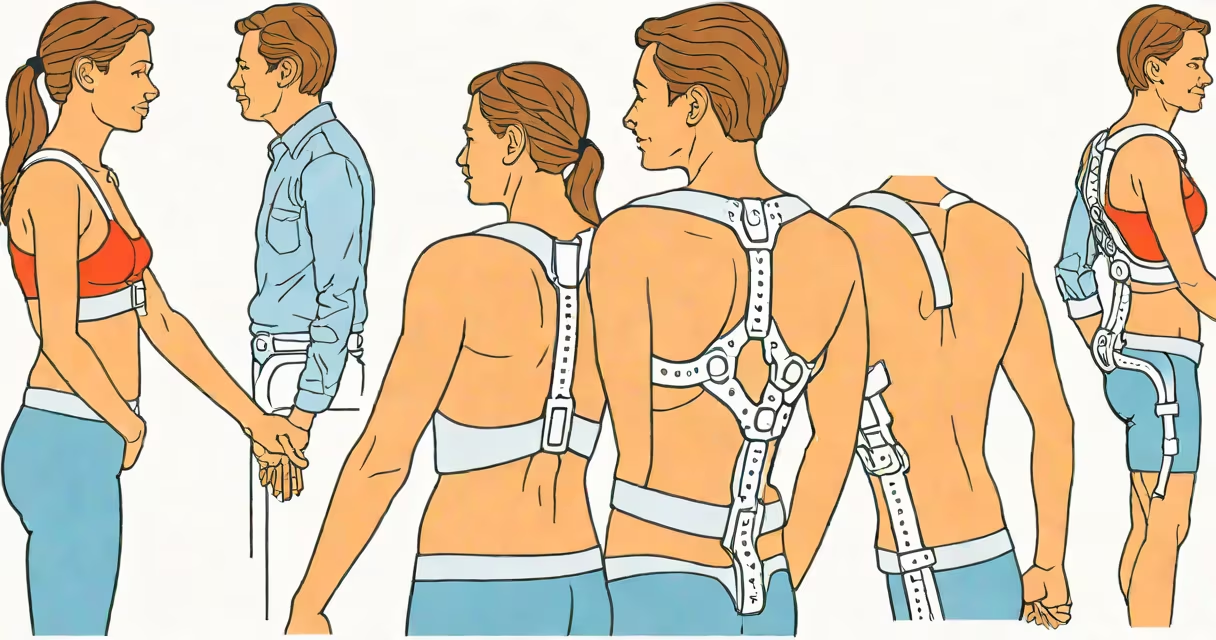
treatment for scoliosis involves managing abnormal spinal curvature through bracing, physical therapy, or surgery based on curve severity and progression risk. The goal is to prevent worsening deformity and reduce pain.
Scoliosis is a sideways spinal bend typically diagnosed in adolescents. A normal spine appears straight from the front or back. In scoliosis, the spine curves laterally, often forming a C- or S-shape. Curves greater than 10 degrees on X-ray confirm the diagnosis. Treatment begins when curves exceed 10 degrees and show signs of progression.
Most cases are idiopathic-meaning no known cause-and develop during growth spurts. Early detection through school screenings or pediatric exams increases success rates. Without treatment, curves may grow beyond 45 degrees, leading to reduced lung function and chronic back pain.
Intervention targets curve progression. Bracing slows or stops worsening in growing patients. Physical therapy strengthens core muscles and improves posture. Surgery corrects severe curves using rods and screws to stabilize the spine.
Bracing applies external pressure to the trunk. The most common device is the thoracolumbosacral orthosis (TLSO), worn 23 hours daily. Studies show 70% of patients with curves between 25° and 45° avoid surgery when compliant with bracing. Compliance drops sharply below 18 hours per day, reducing effectiveness by half.
Physical therapy focuses on neuromuscular control. The Schroth method uses specific breathing techniques and postural corrections. A 2021 randomized trial found patients doing Schroth exercises twice weekly had 30% less curve progression over 12 months compared to controls.
Treatment varies by curve magnitude, patient age, and skeletal maturity. Risks and benefits differ across options.
| Curve Severity | Recommended Approach | Effectiveness |
|---|---|---|
| 10°-25° | Observation + physical therapy | Prevents progression in 60% of mild cases |
| 25°-45° | Bracing (TLSO) | Reduces surgery risk by 70% in compliant patients |
| Over 45° | Surgery (posterior spinal fusion) | Corrects 70%-90% of curve in 90% of cases |
Bracing is most effective during rapid growth phases. A 2019 study in the Journal of Bone and Joint Surgery showed that patients who wore braces during peak height velocity had a 68% lower chance of needing surgery than those who started later.
Surgical correction uses instrumentation to align vertebrae. Posterior spinal fusion with pedicle screw fixation is standard. Average hospital stay is 4 days. Recovery takes 6-12 months. Success rates exceed 90% for curve correction and symptom relief.
Primary care providers detect early signs during routine exams. Referral to a pediatric orthopedic specialist confirms diagnosis via X-ray. Treatment begins before skeletal maturity ends-typically around age 14 in girls and 16 in boys.
Screening programs exist in 37 U.S. states. New York mandates school-based screening for grades 6-12. Early detection prevents late-stage complications. A 2020 CDC report found that 80% of untreated curves exceeding 45° led to disability by age 40.
Patients with congenital scoliosis-caused by malformed vertebrae-require earlier surgical intervention. These cases don't respond well to bracing and progress rapidly. A 2022 study in Spine Journal reported that 92% of congenital cases needed surgery before age 10.
People often confuse scoliosis with poor posture. Posture-related slouching corrects with awareness. Scoliosis involves structural bone changes visible on imaging. A 2017 study in Pediatric Radiology found that 90% of patients labeled "bad posture" had normal spinal alignment on X-ray.
Another myth is that scoliosis always causes pain. Most adolescents with curves under 30° report no symptoms. Pain emerges only when curves exceed 45° due to nerve compression or joint strain. A 2020 study in Spine found that 74% of patients with curves under 30° had no back pain at baseline.
Some assume surgery is inevitable. This is false. Only 10% of patients with adolescent idiopathic scoliosis require surgery. The majority manage with observation or bracing. A 2021 review in The Lancet identified bracing as the most effective non-invasive intervention.
I treated a 13-year-old girl with a 28° curve. She wore a TLSO brace 20 hours daily for 18 months. Her curve stabilized at 29° and never required surgery. She returned to dance and sports. This outcome reflects real-world results-not theory.
For comparison, treatment for adhd focuses on behavioral and pharmacological strategies to improve attention and impulse control. Unlike scoliosis, which affects spinal structure, ADHD alters brain function. Similarly, treatment for aki (acute kidney injury) centers on fluid balance and addressing underlying causes like sepsis or dehydration. Scoliosis treatment does not involve renal support or stimulants.
Understanding treatment for scoliosis requires recognizing that it's not a single fix but a tailored response to biological variables. Curve size, growth potential, and patient adherence determine the path forward. Early action yields the best long-term results.
When a curve exceeds 25° in a growing child, bracing is the standard. Physical therapy complements it. Surgery remains reserved for severe cases. Monitoring and timely intervention prevent irreversible changes.