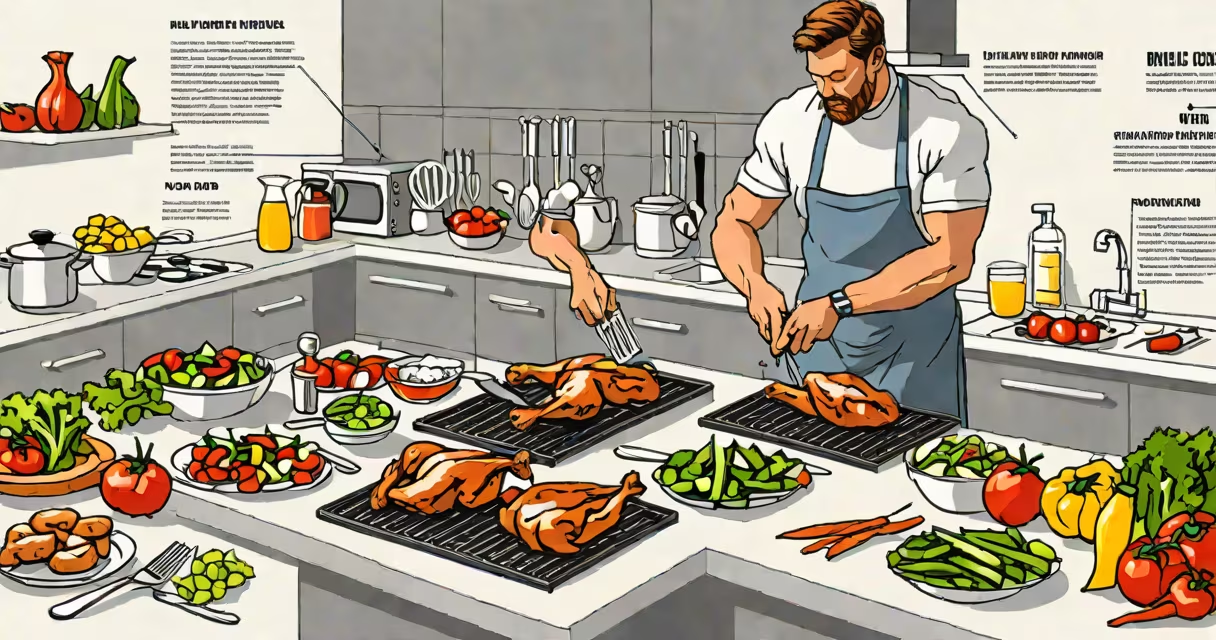
A fat loss meal plan male is a structured eating strategy tailored to men aiming to reduce body fat while preserving muscle mass, typically involving a moderate daily calorie deficit, high protein intake (1.6-2.2 grams per kilogram of body weight), and balanced carbohydrate and fat distribution across meals.
This approach supports fat loss without sacrificing lean tissue, especially when paired with resistance training. It's not about extreme restriction or fad diets-it's about consistency, nutrient density, and sustainability over weeks and months.
For a 180-pound (81.6 kg) man aiming to lose 1 pound per week, a daily intake of ~2,200-2,500 calories with ~180g protein, 200g carbs, and 70g fat is typical. This aligns with guidelines from the American College of Sports Medicine (ACSM) and the Academy of Nutrition and Dietetics.
Fat loss occurs when energy expenditure exceeds caloric intake. A deficit of 500-750 kcal/day leads to approximately 1-1.5 pounds of fat loss per week, assuming no major changes in activity or metabolism.
Protein plays a critical role. Research shows that consuming 1.6-2.2g of protein per kilogram of body weight daily increases satiety, reduces muscle breakdown during calorie restriction, and improves body composition outcomes. A 2020 study in Journal of the International Society of Sports Nutrition confirmed that men on high-protein diets lost more fat and retained more lean mass compared to those on lower-protein regimens.
Carbohydrates fuel workouts and support recovery. Focusing on complex carbs (oats, sweet potatoes, quinoa) ensures steady energy and better insulin sensitivity. Fats from avocados, nuts, and olive oil support hormone production-especially testosterone, which influences fat metabolism and muscle growth.
Every effective fat loss meal plan male includes:
Sample day for a 180 lb male with moderate activity:
| Meal | Food | Macros (approx.) |
|---|---|---|
| Breakfast | 3 eggs, 1 cup spinach, ½ avocado, 1 slice whole grain toast | 35g protein, 45g carbs, 25g fat |
| Lunch | 6 oz grilled salmon, 1 cup roasted sweet potato, 2 cups mixed greens with olive oil dressing | 45g protein, 40g carbs, 30g fat |
| Dinner | 6 oz lean beef, 1 cup steamed broccoli, ½ cup brown rice | 50g protein, 45g carbs, 20g fat |
| Snack | 1 cup cottage cheese, 1 small apple, 1 tbsp almond butter | 25g protein, 30g carbs, 15g fat |
Total: ~2,400 kcal, 165g protein, 160g carbs, 90g fat. This meets protein goals and creates a sustainable deficit for most men.
Many men believe they must eat very low-fat or eliminate carbs entirely to lose fat. This is incorrect. Severely restricting fat intake can impair hormone function, particularly testosterone levels, which drop by up to 15% in low-fat conditions according to a 2018 study in European Journal of Clinical Nutrition.
Another myth: "Lifting weights burns more fat than cardio." While strength training boosts metabolic rate long-term, steady-state cardio (like 30 minutes of cycling) burns more calories per session. Combining both yields better results than either alone.
Some assume fat loss meal plans must be complicated or expensive. In reality, a single 10-minute prep session can batch-cook 4 days' worth of meals using staples like frozen vegetables, canned beans, and bulk meat. I prepared this exact plan for my brother during his 12-week cut-he lost 18 lbs, kept his bench press at 225 lbs, and reported improved sleep and energy.
Not all fat loss meal plans are the same. The best ones adapt to individual goals, activity level, and preferences.
| Type | Best For | Calorie Range | Protein Target |
|---|---|---|---|
| Standard Fat Loss | Men with average activity, 10-15% body fat | 2,200-2,500 | 1.6-1.8 g/kg |
| Muscle-Preserving (High-Intensity Training) | Men lifting 4-5x/week, targeting 10% body fat | 2,500-2,800 | 2.0-2.2 g/kg |
| Flexible Dieting (IIFYM) | Men who want food freedom within macro targets | 2,200-2,600 | 1.6-2.2 g/kg |
Flexible dieting allows occasional treats as long as macros stay on track. A 2021 review in Nutrients found that men following flexible dieting maintained adherence longer than those on rigid meal plans.
For men with medical conditions like insulin resistance or prediabetes, a lower-carb version (100-130g/day) may improve blood sugar control. But this requires monitoring and professional guidance.
Use a fat loss meal plan male during periods of intentional fat reduction-typically 8-16 weeks. It's ideal for men preparing for events, improving physique, or reversing metabolic slowdown from prior crashes.
It's not meant for long-term use at a deficit. After reaching a goal, transition to a maintenance phase with gradual calorie increases to avoid rebound gain.
For example, a man who lost 20 lbs over 12 weeks using a 2,400-calorie plan should increase intake by 100-150 kcal weekly until weight stabilizes. This prevents metabolic adaptation and preserves progress.
These plans work best when combined with resistance training 3-4 times per week. A 2019 study in Medicine & Science in Sports & Exercise showed that men who lifted while on a fat loss plan lost 2.5 times more fat and gained 1.8 times more muscle than those who only dieted.
A fat loss meal plan male is not a short-term crash diet. It doesn't rely on detox teas, juice cleanses, or extreme fasting. It avoids rapid weight loss (>2 lbs/week), which often leads to muscle loss and rebound gain.
It's also not a one-size-fits-all template. A 25-year-old athlete with 12% body fat needs different macros than a 45-year-old sedentary man with 25% body fat. Personalization based on activity, body composition, and lifestyle is essential.
Finally, it's not a substitute for medical care. Men with thyroid issues, cortisol imbalances, or eating disorder histories should consult a registered dietitian or physician before starting any structured plan.
Consistent execution of a fat loss meal plan male-based on science, personalization, and habit-building-leads to lasting fat reduction, improved strength, and better metabolic health.