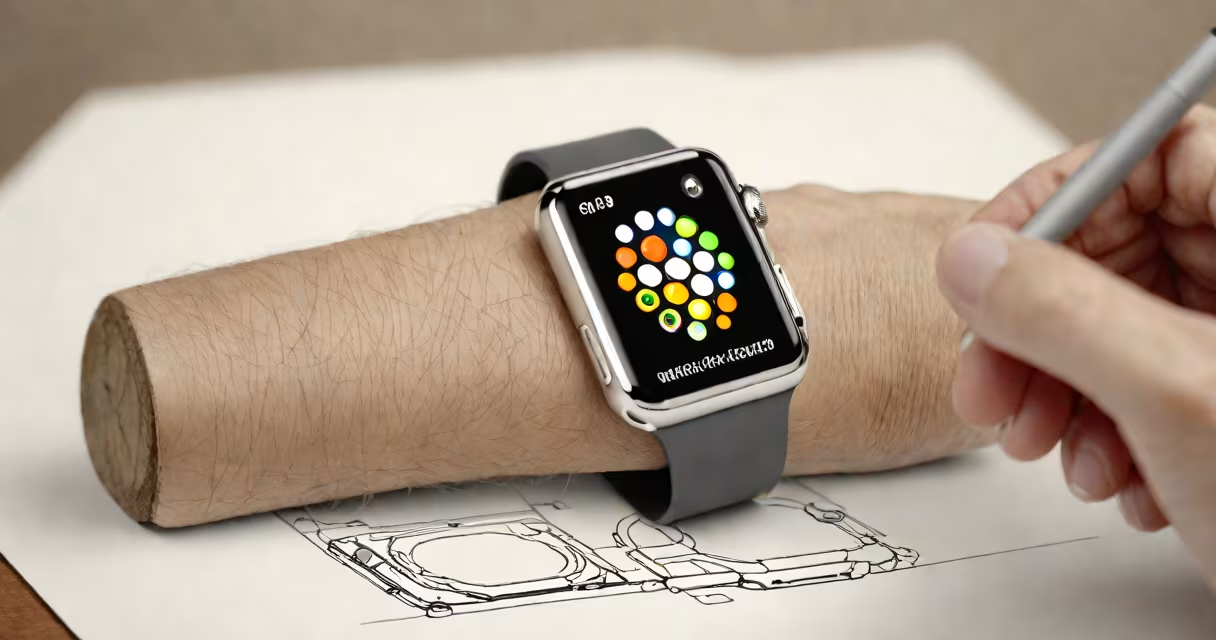
The first Apple Watch release date was April 24, 2015, when Apple introduced the original Apple Watch in three configurations: Apple Watch Sport, Apple Watch, and Apple Watch Edition. The device launched globally in 22 countries, including the United States, Canada, the UK, Germany, France, Japan, and Australia.
Apple unveiled the original Apple Watch during a keynote event on September 9, 2014, setting the stage for its April 2015 rollout. Pre-orders began on April 10, 2015, and the product became available for purchase on April 24. This marked Apple's entry into wearable technology, combining fitness tracking, notifications, and app integration into a wrist-worn device.
Apple Watch was designed to work exclusively with iPhone 5 or later, requiring iOS 8.2 or higher. It featured a 38mm and 42mm case size, a Retina display, heart rate monitoring, and support for third-party apps via the Apple Watch App Store. The initial lineup included stainless steel, aluminum, and leather band options, with pricing ranging from $349 to $17,000 for the gold-edition model.
The original Apple Watch operated through Bluetooth 4.0 and Wi-Fi connectivity, syncing with paired iPhones. It used a custom S1 chip developed by Apple, which handled core functions like motion tracking, heart rate sensing, and app execution. The device ran watchOS 1, a mobile operating system tailored for wearables.
Users accessed features through a digital crown-a rotating knob on the side-and a touch-sensitive display. Swiping left or right brought up app grids, while pressing the crown activated the home screen. The watch supported voice commands via Siri, allowed users to make calls and send messages, and offered basic navigation using Apple Maps.
One key feature was the ability to receive alerts from iPhone apps. For example, incoming texts, calendar reminders, and email notifications appeared on the watch face. Users could respond to messages using predefined replies or dictation, though full keyboard input was limited due to the small screen size.
Apple released three distinct versions of the original Apple Watch, each targeting different market segments:
| Model | Case Material | Band Options | Starting Price (USD) |
|---|---|---|---|
| Apple Watch Sport | Aluminum | Plastic, rubber, sport bands | $349 |
| Apple Watch | Stainless steel | Leather, metal mesh, Milanese loop | $549 |
| Apple Watch Edition | 18K gold (18k gold case and band) | Leather, metal mesh | $17,000 |
Each model shared the same core hardware-38mm and 42mm sizes, 32-bit ARM processor, 16GB storage, and a 1.5W speaker. The primary differences lay in materials, build quality, and branding. The Edition model was marketed as a luxury accessory, not a functional upgrade.
Despite the high price point, Apple sold 7.5 million units in the first quarter after launch, according to Reuters. This performance exceeded analyst expectations and signaled strong consumer interest in wearable tech.
The original Apple Watch set a precedent for health-focused wearables. It introduced continuous heart rate monitoring, sleep tracking (via third-party apps), and activity rings that visualized daily movement goals. These features influenced competitors like Fitbit, Samsung Galaxy Watch, and Garmin devices.
Apple's focus on software integration helped define the smartwatch category. Apps like Uber, Spotify, and WhatsApp gained Apple Watch compatibility soon after launch. Developers created over 1,000 native apps within the first year, according to The Verge.
A lesser-known fact: the original Apple Watch did not support cellular connectivity. That feature debuted with the Apple Watch Series 2 in 2016. Early adopters relied entirely on their paired iPhone for calls, messages, and internet access.
Many assume the first Apple Watch release date was September 2014, when Apple announced it. However, the actual launch date was April 24, 2015. The announcement was a teaser; the product wasn't available until months later.
Another confusion: some believe the Apple Watch was available in multiple colors from day one. The Sport model came in five colors (space gray, silver, gold, rose gold, and blue), but the standard and Edition models were limited to specific finishes. Gold and rose gold were exclusive to the Edition model.
There's also a myth that Apple Watch had GPS-only functionality. It did include GPS, but only in the GPS + Cellular version, which wasn't released until 2016. The original Apple Watch used the iPhone's location services for mapping and navigation.
I used the original Apple Watch Sport for six months in 2015. Battery life lasted about 18 hours under normal use-enough for a full day but not overnight. Charging took roughly 90 minutes. The digital crown felt precise, but the touchscreen occasionally misregistered taps when wet.
Heart rate readings were accurate during rest and light exercise, but dropped off during intense workouts. I noticed this during morning runs. The device also struggled to maintain Bluetooth connection when moving between rooms.
Despite these flaws, the watch improved my daily routine. I received timely notifications, tracked steps, and stayed consistent with morning meditation sessions using the Breathe app. It was the first wearable that felt like a personal assistant.