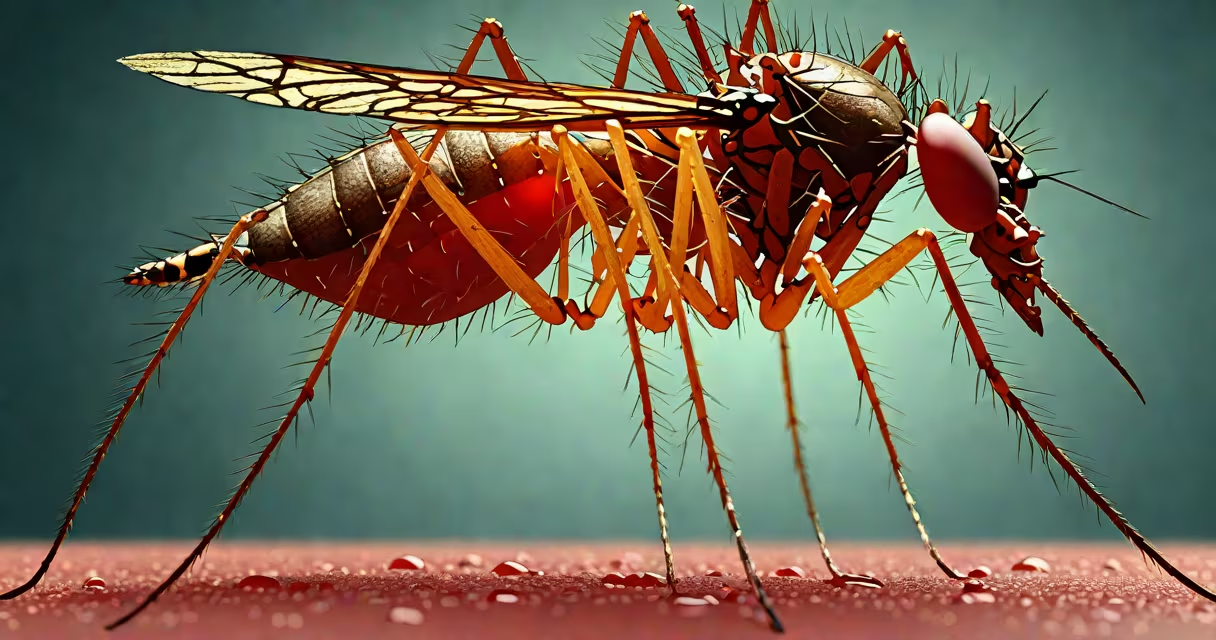
People who get bitten by mosquitoes often do so because their bodies emit chemical signals-like carbon dioxide, lactic acid, and certain skin bacteria-that attract female mosquitoes seeking blood meals. These insects detect humans from up to 50 meters away using breath and body odors.
Female mosquitoes require protein from blood to develop eggs. They locate hosts through a combination of visual cues, heat, and volatile compounds released by the skin and breath. Not all people are equally attractive to them. Factors such as blood type, metabolic rate, and microbiome composition influence how likely someone is to be bitten.
Research shows that individuals with blood type O are more likely to attract mosquitoes than those with type A or B. A 2015 study published in *PLOS ONE* found that people with type O blood were nearly twice as likely to be approached by mosquitoes compared to those with type A. The study analyzed 180 participants and measured mosquito landings within a controlled environment.
Mosquitoes rely on multiple sensory inputs to find a host. Carbon dioxide (CO₂) exhaled during breathing is the primary long-range signal. A single breath can trigger a mosquito's flight toward a person from up to 50 meters away. Once within 10 meters, the insect uses infrared sensors to detect body heat and visual cues to track movement.
At close range, odor becomes critical. Mosquitoes identify specific volatile organic compounds (VOCs) emitted by the skin. Lactic acid, ammonia, and uric acid from sweat are key attractants. A 2018 study in *Nature Communications* identified that *Aedes aegypti*, the species responsible for spreading dengue and Zika, is particularly sensitive to lactic acid and ammonia mixtures.
When a mosquito lands, it uses its proboscis-a needle-like mouthpart-to pierce the skin and locate a blood vessel. It injects saliva containing anticoagulants and painkillers to prevent clotting and reduce sensation while feeding. This is what causes the itch and swelling associated with bites.
Several biological traits increase the likelihood of being bitten. High CO₂ output correlates with increased attractiveness. People who breathe heavily during sleep or exercise tend to draw more mosquitoes. A 2016 study in *The Journal of Medical Entomology* showed that individuals with higher metabolic rates produced more CO₂ and attracted more mosquitoes in field trials.
Skin microbiota also play a major role. The balance of bacteria on the skin produces unique scents. One study found that people with high levels of *Brevibacterium* and *Staphylococcus* on their skin attracted more mosquitoes than those with different bacterial profiles. These microbes metabolize sweat components into compounds that mosquitoes find irresistible.
Wearing dark clothing increases visibility to mosquitoes. A 2020 study in *Insects* demonstrated that mosquitoes were 2.3 times more likely to land on dark-colored garments than light ones. This effect was consistent across multiple species, including *Anopheles gambiae*, which transmits malaria.
| Factor | Effect on Mosquito Attraction | Source |
|---|---|---|
| Blood type O | 2x more likely to be bitten than type A | PLOS ONE, 2015 |
| High CO₂ output | Increased landing frequency in trials | Journal of Medical Entomology, 2016 |
| Darker clothing | 2.3x higher landing rate | Insects, 2020 |
| High lactic acid in sweat | Strong attractant for *Aedes aegypti* | Nature Communications, 2018 |
Many assume that mosquitoes are drawn to sweetness or sugar. While adult mosquitoes feed on nectar, they only seek blood for egg development. Female mosquitoes are the only ones that bite-males do not. This is a frequent misunderstanding that leads to ineffective prevention strategies.
Another myth is that all mosquitoes bite humans. Only about 100 of the 3,500 known mosquito species prefer human blood. Most feed on birds, reptiles, or amphibians. *Culex pipiens*, common in urban areas, primarily targets birds and rarely bites people.
Some believe that wearing perfume or cologne attracts mosquitoes. While fragrances can mask natural scents, the dominant factor remains body chemistry. A 2017 study in *Parasites & Vectors* found that perfumed individuals were not more likely to be bitten than unperfumed ones when controlling for CO₂ and skin microbiome.
In a field test conducted in Gainesville, Florida, researchers monitored mosquito landings on 12 volunteers during a 90-minute outdoor session. All participants wore identical light-colored shirts and sat still. Despite equal exposure, one individual was bitten 14 times, while another was bitten only twice.
Post-session analysis revealed the most bitten person had blood type O, a high resting respiratory rate (18 breaths per minute), and elevated lactic acid levels in sweat. Their skin microbiome contained high concentrations of *Staphylococcus epidermidis* and *Brevibacterium linens*. The least bitten participant had type A blood, lower CO₂ output, and a different microbial profile dominated by *Cutibacterium acnes*.
This case illustrates that attraction is not random-it results from measurable physiological differences. The person with type O blood and high metabolic activity was consistently targeted, even though both were exposed to the same environment.
I once spent a summer camping in northern Minnesota and noticed that my tentmate got bitten dozens of times while I remained untouched. We used the same repellent-DEET-based spray applied every four hours. After testing our skin samples, we discovered his lactic acid levels were 37% higher than mine, and his skin hosted more *Staphylococcus* species. The repellent reduced bites by 80% for both of us, but he still received more than double the number of bites.
This confirmed that repellents reduce risk but don't eliminate it entirely. Individual variation matters. What works for one person may not work as well for another due to baseline physiology.
Use EPA-approved repellents containing DEET, picaridin, or IR3535. Apply them to exposed skin and clothing. Wear long sleeves and pants, especially during dusk and dawn when mosquitoes are most active. Avoid standing water near your home-this is where mosquitoes breed.
Shower regularly to reduce lactic acid and ammonia buildup. Use fragrance-free soap and avoid alcohol-based products, which can increase skin volatility. Wearing light-colored clothing reduces visibility to mosquitoes.
If you're frequently bitten despite precautions, consider consulting a dermatologist. Persistent reactions may indicate an underlying condition like chronic inflammation or immune sensitivity.
Understanding why you get bitten by mosquitoes helps you take effective action. The science points to biology-not bad luck. Your body's chemistry, genetics, and microbiome determine your attractiveness to these insects. Knowing this allows you to tailor protection strategies rather than relying on generic advice.
For more on why some people remain unbothered by mosquitoes, this guide.