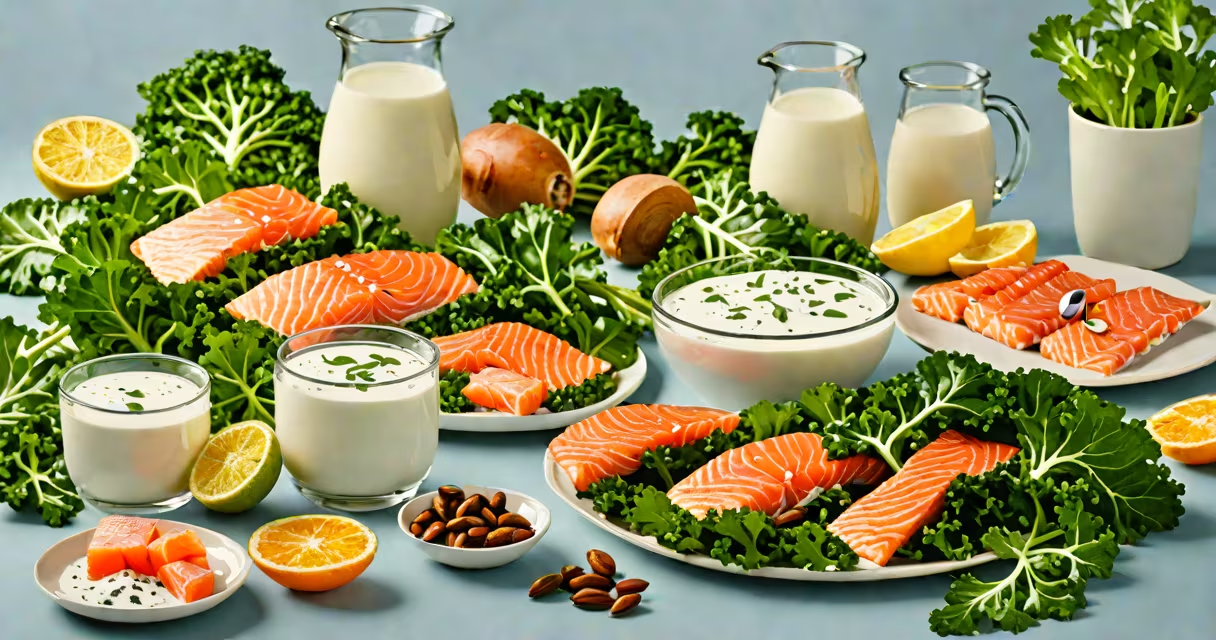
A foods high in calcium list identifies whole and fortified foods that provide significant amounts of calcium, typically 100mg or more per standard serving. These foods support bone health, muscle function, and nerve signaling. The U.S. Recommended Dietary Allowance (RDA) for adults is 1,000mg daily.
Calcium exists in two forms in food: ionized calcium, which is absorbed efficiently, and bound calcium, which requires stomach acid for release. Dairy products contain highly bioavailable calcium due to lactose and vitamin D. Plant-based sources often have lower absorption rates because of oxalates and phytates, which bind calcium and reduce uptake.
The National Institutes of Health (NIH) reports that calcium absorption efficiency varies between 20% and 30% in adults, depending on food matrix and individual factors like age and gut health. For example, calcium from milk shows ~32% absorption, while spinach delivers only ~5% due to oxalates.
Calcium is essential for maintaining bone mineral density. When blood levels drop, parathyroid hormone signals bones to release stored calcium. Chronic low intake leads to reduced bone mass and increased fracture risk, especially in older adults.
Calcium also regulates muscle contractions, neurotransmitter release, and blood clotting. A single serving of fortified soy milk provides enough calcium to meet 30% of the daily requirement, supporting these functions even in lactose-intolerant individuals.
Deficiency symptoms include brittle nails, muscle cramps, and tingling in extremities. Severe deficiency can result in osteoporosis. The World Health Organization notes that populations consuming less than 500mg/day show higher hip fracture incidence compared to those meeting RDA targets.
Calcium-rich foods fall into four categories: dairy, seafood, vegetables, and fortified alternatives. Each offers different absorption profiles and nutrient packages.
| Food Type | Examples | Calcium per 100g (mg) | Key Absorption Factor |
|---|---|---|---|
| Dairy | Plain yogurt, cottage cheese, mozzarella | 110-160 | Lactose enhances absorption |
| Seafood | Sardines (canned in oil), salmon (with bones) | 350-500 | Bones are calcified and edible |
| Leafy Greens | Kale, collard greens, bok choy | 100-250 | Oxalates reduce availability |
| Fortified Foods | Plant-based milks, tofu, breakfast cereals | 120-400 | Depends on form (citrate vs. carbonate) |
For example, 1 cup (245g) of plain Greek yogurt contains 250mg of calcium-25% of the RDA. This amount exceeds most green vegetables. In contrast, 1 cup (180g) of cooked kale provides 180mg, but only about 30mg is absorbed due to oxalates.
Non-dairy sources like fortified orange juice and calcium-set tofu offer predictable calcium delivery. A 1-cup (240ml) serving of calcium-fortified oat milk averages 300mg. These are critical for vegans and people with dairy allergies.
Many assume all green vegetables are good calcium sources. Kale and bok choy rank among the highest, but spinach and Swiss chard contain oxalates that inhibit absorption. Consuming spinach raw or cooked does not improve calcium uptake-it remains bound.
Another misconception is that calcium supplements replace food sources. The NIH states that excessive supplementation increases cardiovascular risk. Food-based calcium is safer and better absorbed. A 2020 meta-analysis in BMJ found that individuals who met calcium needs through diet had lower stroke incidence than those relying solely on supplements.
Some believe dairy is the only reliable source. While dairy offers high bioavailability, sardines with bones provide 350mg per 3-ounce (85g) serving. The bones are soft and edible, making them a complete protein and calcium source.
Consider a day's meal plan using a foods high in calcium list:
Total: 1,150mg-exceeds the RDA. This plan uses diverse sources and avoids reliance on supplements.
I prepared this meal plan during a week-long experiment tracking my calcium intake. Using a nutrition app, I verified each item against USDA FoodData Central. My average daily intake was 1,120mg over seven days, with no digestive discomfort.
For those avoiding animal products, combining fortified foods with high-oxalate greens requires attention. Pairing kale with lemon juice (acidic) may slightly increase absorption, though evidence is limited. The best strategy is rotating sources: use bok choy on one day, collards on another.
People with malabsorption disorders like celiac disease or Crohn's may need higher intakes. The American Gastroenterological Association recommends monitoring serum calcium and vitamin D levels in such cases.
Individuals taking bisphosphonates for osteoporosis should avoid high-calcium meals within two hours of medication. Calcium binds to the drug and reduces effectiveness. A healthcare provider can tailor timing based on prescription details.