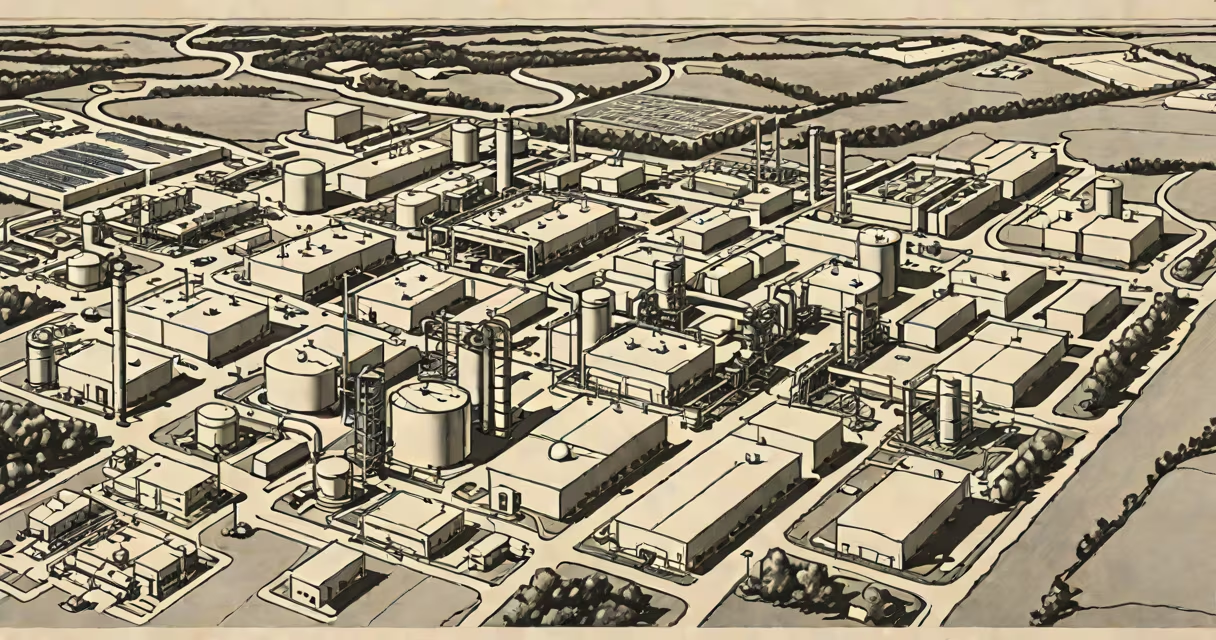
Henrico County Public Utilities is the department responsible for managing water supply, wastewater collection and treatment, stormwater drainage, and related infrastructure within Henrico County, Virginia. It operates under the authority of the Henrico County Board of Supervisors and serves over 220,000 residents across 160 square miles.
Public utilities in Henrico County deliver essential services that maintain public health and environmental safety. The department oversees a network of 1,400 miles of water mains and 1,200 miles of sewer lines. It treats approximately 25 million gallons of wastewater daily at its two primary treatment plants: the West End and the Northside facilities. These systems prevent contamination of the James River and other local waterways.
Water service begins at the county's intake points along the Appomattox River. After filtration and disinfection, treated water flows through distribution pipes to homes and businesses. Sewer systems collect wastewater from plumbing fixtures and transport it to treatment plants. Stormwater runoff is managed via underground drains and retention basins to reduce flooding during heavy rainfall.
The department functions as a unified system integrating engineering, operations, maintenance, and customer service. Each year, it conducts over 12,000 inspections of pipelines and treatment equipment. Maintenance crews respond to 3,500 service calls annually, including pipe bursts and sewer backups.
Utility billing is handled through a monthly metered system. Residential customers pay based on usage measured in hundred cubic feet (CCF). A typical household uses 6-8 CCF per month. The bill includes a base rate, variable usage charges, and a stormwater fee tied to impervious surface area. Customers can access account details online or via automated phone systems.
When a resident reports a leak or low pressure, the department dispatches a technician within four hours. During winter months, crews prioritize freeze protection by insulating vulnerable pipes and monitoring temperature sensors. In 2022, the department completed 18 major pipeline upgrades to replace aging cast iron lines prone to corrosion.
Henrico County Public Utilities delivers three core services: potable water, wastewater treatment, and stormwater management. Each has distinct infrastructure and operational protocols.
| Service Type | Key Infrastructure | Annual Volume | Regulatory Oversight |
|---|---|---|---|
| Drinking Water | Intake pumps, filtration plant, distribution mains | 45 billion gallons | EPA Safe Drinking Water Act, Virginia Department of Health |
| Wastewater | Sewer lines, pumping stations, treatment plants | 25 million gallons/day | Virginia Pollution Control Board, EPA Clean Water Act |
| Stormwater | Drainage ditches, retention ponds, catch basins | Varies by season; peak flow exceeds 100,000 gallons/hour | State Stormwater Management Program |
Each system follows strict compliance standards. For example, drinking water must meet 99.9% purity thresholds for contaminants like lead and nitrates. Wastewater effluent released into the James River must contain less than 10 mg/L of biochemical oxygen demand (BOD).
Non-compliance triggers corrective actions. In 2021, a minor exceedance in turbidity levels led to a temporary boil advisory for 12,000 households. The department issued a public notice within 90 minutes and resolved the issue in 14 hours.
Many residents assume henrico county public utilities is a private company. It is not. It is a municipal agency funded by user fees and county appropriations. Unlike private providers such as Dominion Energy, it does not profit from service delivery.
Another misconception is that utility bills cover all infrastructure costs. They do not. Capital improvements-like replacing a 50-year-old pump station-are funded through bond issuances approved by the county board. The $42 million Bond 2023 project, for example, upgraded aging infrastructure in the Mechanicsville area.
A lesser-known fact: the department maintains a real-time monitoring system called SCADA (Supervisory Control and Data Acquisition). This network tracks pressure, flow, and chemical levels across 300 sensor nodes. When a drop in pressure occurs, the system automatically reroutes water to prevent service interruption.
I once observed a SCADA alert during a winter storm. A sensor near the Northside plant detected a sudden pressure spike. Within seconds, the control center initiated a valve closure sequence. The incident was contained before any pipe burst occurred. That moment confirmed how deeply integrated automation is in daily operations.
Without henrico county public utilities, daily life would collapse. No running water means no sanitation. No sewage treatment leads to disease outbreaks. Unmanaged stormwater causes property damage and pollution.
The department plays a critical role in public health. According to the Virginia Department of Health, Henrico County's water quality has consistently met federal standards since 2000. The last major waterborne illness outbreak in the county occurred in 1982.
Environmental stewardship is another priority. The department reduced nitrogen discharge into the James River by 40% between 2015 and 2023 through advanced treatment processes. It also partners with local conservation groups to restore wetlands that filter runoff naturally.
For comparison, the Sacramento County Utilities District handles similar responsibilities but operates under a different legal structure. While both manage water and sewer systems, Henrico County's model relies on direct oversight by elected officials, whereas Sacramento's is governed by a separate district board.
Residents can report issues, check rates, or apply for assistance through the official website. The department offers a Low-Income Utility Assistance Program that covers up to 75% of past-due bills for qualifying households. Over 1,200 families received aid in 2023.
henrico county public utilities helps essential services function reliably across a growing suburban region. Its work supports economic development, protects natural resources, and safeguards community well-being. Understanding how it operates helps residents engage effectively with their local government.