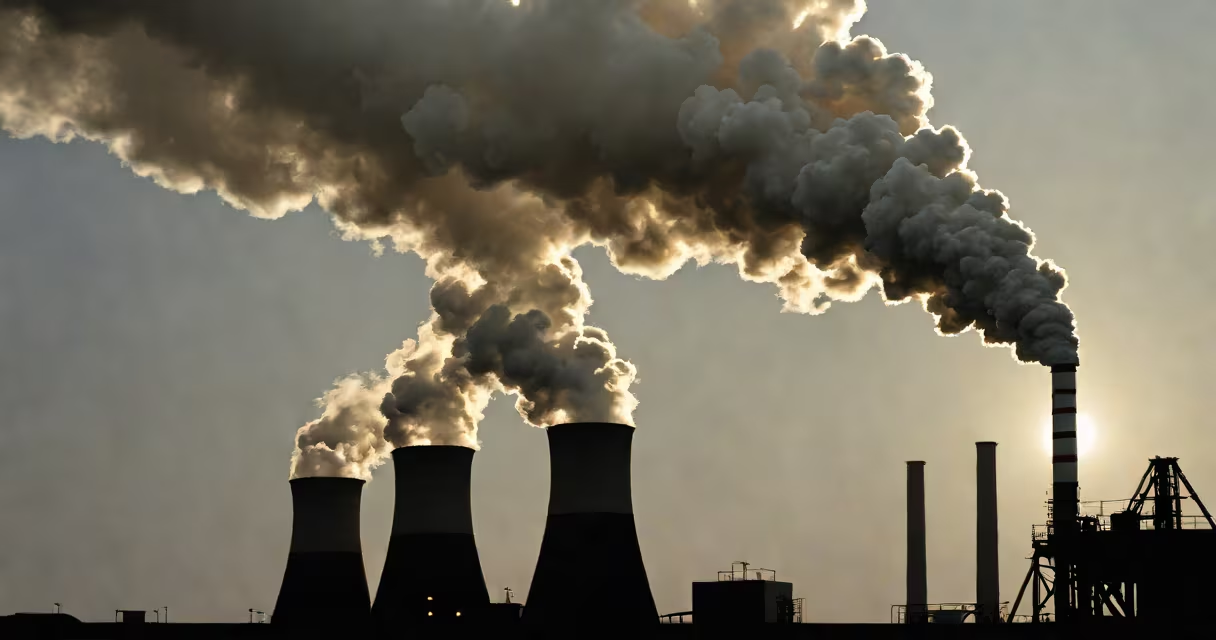
Fossil fuels-coal, oil, and natural gas-release carbon dioxide and other pollutants when burned, accelerating climate change, degrading air and water quality, and damaging ecosystems. Their extraction and use disrupt landscapes and contribute to long-term environmental degradation.
When fossil fuels combust, they emit carbon dioxide (CO₂), methane (CH₄), and nitrous oxide (N₂O)-gases that trap heat in the atmosphere. This process intensifies the greenhouse effect, leading to global temperature rise. The Intergovernmental Panel on Climate Change (IPCC) confirms that human activities, especially fossil fuel combustion, have caused a 1.1°C increase in global average temperatures since pre-industrial times. This warming drives extreme weather events, sea level rise, and system shifts.
Coal combustion produces sulfur dioxide (SO₂) and nitrogen oxides (NOₓ), which form acid rain. Acid rain damages forests, corrodes buildings, and acidifies lakes and rivers. A 2020 study published in *Environmental Science & Technology* found that coal plants in the U.S. contributed to 15% of annual acid deposition in the Northeast. Oil spills from drilling and transport contaminate marine habitats. The 2010 Deepwater Horizon spill released 4.9 million barrels of crude oil into the Gulf of Mexico, killing over 100,000 birds and thousands of marine mammals.
Burning fossil fuels releases several harmful substances. Carbon dioxide is the primary driver of global warming. Methane, emitted during oil and gas production, has 28 times the warming potential of CO₂ over 100 years. Nitrogen oxides contribute to ground-level ozone, a key component of smog that irritates lungs and reduces crop yields.
Particulate matter (PM2.5) from diesel engines and coal plants penetrates deep into the respiratory system. The World Health Organization (WHO) estimates that outdoor air pollution causes 4.2 million premature deaths annually, with fossil fuel combustion responsible for 70% of PM2.5 exposure in urban areas.
| Pollutant | Primary Source | Environmental Effect | Health Impact |
|---|---|---|---|
| Carbon dioxide (CO₂) | Power plants, vehicles, industrial processes | Global warming, ocean acidification | Indirect via climate-related illness |
| Sulfur dioxide (SO₂) | Coal-fired power plants | Acid rain, soil degradation | Respiratory distress, bronchitis |
| Methane (CH₄) | Natural gas leaks, oil extraction | Short-term warming spike | None direct, but accelerates climate effects |
| Particulate matter (PM2.5) | Diesel engines, coal burning | Reduced visibility, system damage | Lung disease, heart attacks |
Extracting fossil fuels alters landscapes permanently. Mountaintop removal mining in Appalachia strips entire ridges of forest and rock, destroying watersheds and displacing wildlife. Over 1 million acres of land were disturbed by such mining between 1995 and 2015, according to the U.S. Environmental Protection Agency (EPA).
Oil sands operations in Alberta require vast amounts of water and energy. Extracting one barrel of oil from tar sands uses 2.5 barrels of water and emits 3.5 times more CO₂ than conventional oil. These operations create tailings ponds-large artificial lakes holding toxic waste. One such pond, the Syncrude Tailings Pond, covers 16 square kilometers and contains carcinogens like naphthenic acids.
Offshore drilling risks seabed disruption. Drilling platforms destabilize sediment layers, releasing buried methane and disturbing marine life. In 2018, a study in *Nature Geoscience* found that drilling sites in the North Sea had 40% lower biodiversity in surrounding seafloor zones compared to undisturbed areas.
Many assume that "clean coal" eliminates environmental harm. However, even advanced coal technologies like carbon capture and storage (CCS) cannot eliminate all emissions. CCS captures only 50-70% of CO₂ from power plants under current deployment, and the energy required to run the system reduces net efficiency by 10-20%, according to the International Energy Agency (IEA).
Another misconception is that natural gas is a "bridge fuel" that safely transitions to renewables. While it burns cleaner than coal, methane leakage during extraction and transport offsets its benefits. A 2021 study in *Science* found that methane leaks from U.S. natural gas infrastructure amounted to 2.3% of total production-equivalent to 10 million metric tons of CO₂ annually.
I once visited a coal mine in West Virginia where surface water was visibly brown and oily. Local residents reported skin rashes and respiratory issues. Testing revealed high levels of arsenic and selenium-elements leached from exposed rock due to mining. This firsthand observation confirmed that environmental damage often begins long before combustion.
The cumulative impact of fossil fuel use exceeds historical norms. Global CO₂ concentrations reached 420 parts per million in 2023, the highest in at least 800,000 years, according to NOAA's Earth System Research Laboratory. This concentration correlates directly with rising global temperatures and increased frequency of droughts, wildfires, and hurricanes.
Transitioning away from fossil fuels is not optional-it is necessary for planetary stability. Renewable energy sources like solar and wind produce negligible emissions during operation. The IPCC states that limiting warming to 1.5°C requires phasing out fossil fuels entirely by 2050. Countries like Denmark and Costa Rica already generate over 50% of their electricity from renewables, demonstrating that alternatives are viable.