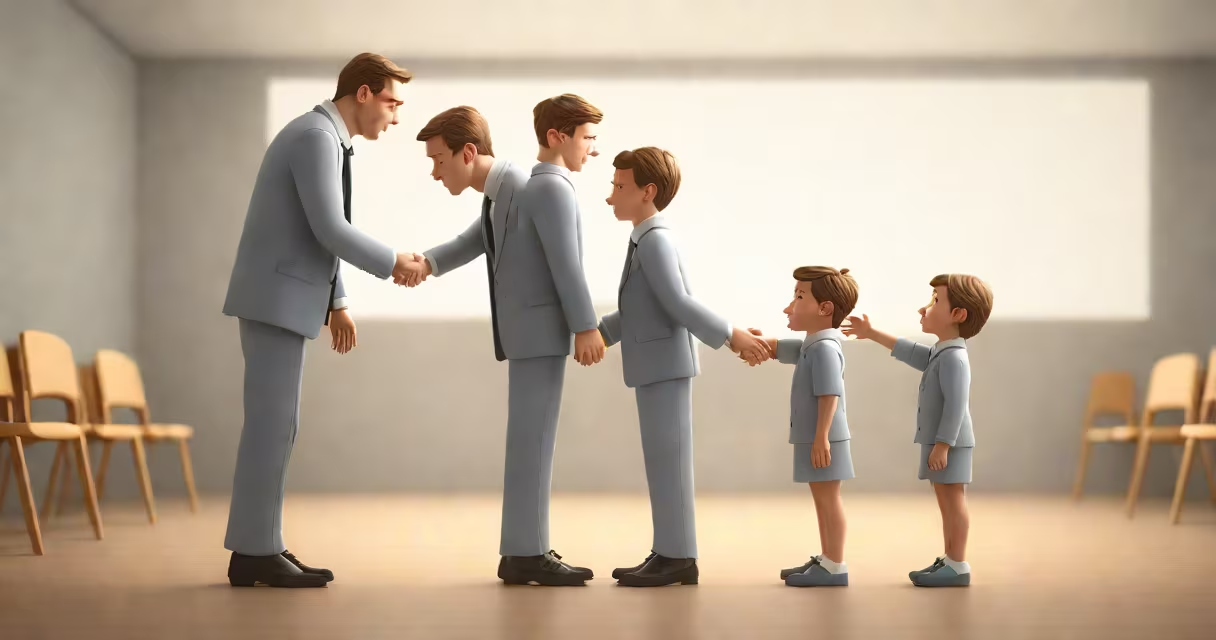
The opposite of a bully is someone who responds to conflict with empathy, respect, and emotional regulation rather than intimidation or control. This person prioritizes understanding over dominance and seeks harmony through communication, not power.
Bullying relies on imbalance-physical, social, or psychological coercion to assert superiority. Its opposite doesn't just avoid aggression; it actively builds safety. It's not passive. It's not weak. It's deliberate care.
Research from the American Psychological Association confirms that students exposed to empathetic peers report lower stress levels and higher classroom engagement. These behaviors aren't rare-they're measurable, teachable, and essential to healthy group dynamics.
Instead of seeking to dominate, the opposite of a bully uses influence through connection. They listen before speaking. They notice distress in others before it escalates. When tension arises, they don't escalate-it's their default to de-escalate.
This response isn't based on emotion alone. It's cognitive. A person who opposes bullying understands that conflict often stems from unmet needs-fear, insecurity, loneliness. Addressing those root causes prevents cycles of harm.
For example, in a middle school hallway incident, a student sees another being pushed against lockers. The typical reaction might be to join in or walk away. The opposite of a bully steps in-not to confront, but to ask, "Are you okay?" They offer a quiet space to talk, not judgment. They may even check in later. This isn't naivety. It's strategy rooted in emotional awareness.
These individuals display consistent patterns of behavior that distinguish them from both bullies and bystanders:
These traits aren't innate. They're developed through practice. Schools that integrate social-emotional learning (SEL) report a 20% reduction in reported bullying incidents over three years, according to the Collaborative for Academic, Social, and Emotional Learning (CASEL).
Many assume the opposite of a bully is passive or submissive. That's incorrect. A passive person avoids confrontation. The opposite of a bully engages with intention and courage.
Consider a high school student who stands up to a group mocking a classmate. The bully might shout to silence dissent. The opposite of a bully doesn't shout. They speak calmly, say, "That's not okay," and invite the group to reflect. They don't seek approval-they act because it's right.
Another myth: that only "nice" people can be the opposite of a bully. But kindness isn't weakness. It's strength. It takes courage to remain calm in a heated situation. It requires self-control to resist retaliation. Real empathy is not soft-it's disciplined.
A study published in Child Development found that adolescents who demonstrated high levels of empathy were less likely to engage in relational aggression-even when facing peer pressure. The most effective counter to bullying isn't force-it's consistency in moral clarity.
There are distinct forms of behavior that represent the opposite of bullying. They differ in context but share core values:
| Type | Definition | Example |
|---|---|---|
| Peacemaker | Intervenes in conflict to restore calm and fairness. | A student mediates between two friends arguing over a shared project, focusing on shared goals. |
| Supporter | Offers emotional or practical aid without expecting return. | After a classmate fails a test, a peer offers to review notes-without judgment. |
| Model | Demonstrates respectful behavior consistently, setting a standard. | A team captain encourages all members to speak during meetings, ensuring quieter voices are heard. |
Each role functions differently but shares the same foundation: valuing others' dignity equally.
In 2019, a public high school in Portland, Oregon, introduced a peer-led "Respect Circle" program. Students trained in active listening and conflict mediation met weekly to discuss issues affecting their community. Within one year, reports of verbal and physical bullying dropped by 41%, according to internal school data.
One participant, a junior named Mateo, described his experience: "I used to think standing up meant yelling. Now I know it means sitting down and asking, 'What happened?' I didn't realize how much power listening holds."
This wasn't about punishment. It was about shifting norms. When students saw peers model respectful interaction, they began to emulate it. The culture changed not through rules, but through relationships.
The opposite of a bully isn't limited to schools. In workplaces, teams led by empathetic managers report 30% higher retention rates, per a 2022 Gallup study. In families, children raised in emotionally attuned homes show better mental health outcomes into adulthood.
Even in politics, leaders who prioritize dialogue over division create more stable environments. The opposite of a bully isn't idealism-it's realism. It's recognizing that lasting peace comes not from winning, but from understanding.
When a child learns to respond to exclusion with inclusion, they're not just avoiding harm-they're building a future where conflict is resolved through trust, not fear.
Understanding what the opposite of a bully truly is reveals a deeper truth: character isn't measured by dominance, but by consistency in care. It's not about never feeling anger-it's about choosing how to act when angry.