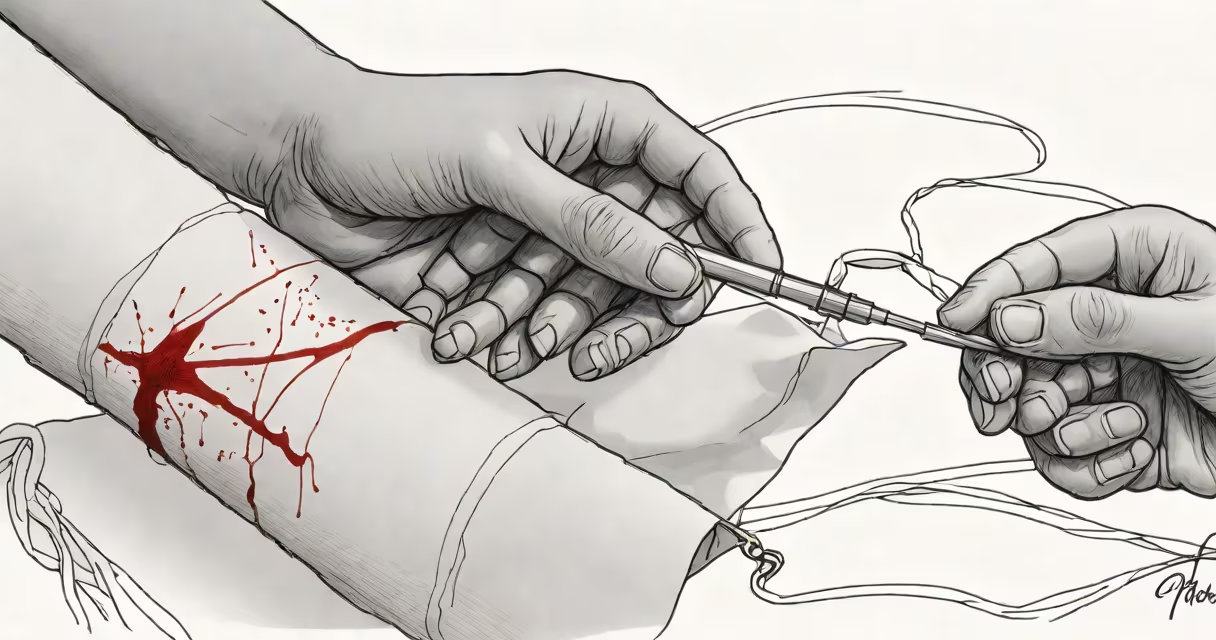
A standard whole blood donation is 473 milliliters-approximately one pint. This volume is consistent across U.S. blood centers and aligns with FDA and AABB standards.
Donors give whole blood, which contains red cells, plasma, platelets, and white cells. The average adult has about 5 liters of blood. Losing 473 mL represents roughly 9% of total blood volume, a safe amount for healthy adults.
The American Red Cross and the AABB (Association for the Advancement of Blood & Biotherapies) both confirm that 473 mL is the standard unit for whole blood donations. This volume is measured in a sterile, single-use collection bag connected via a needle to the donor's vein.
Donors enter a mobile unit or blood center, where staff verify eligibility through a brief health screening. Important signs-including blood pressure, pulse, and hemoglobin levels-are checked. A finger-prick test confirms iron levels are sufficient.
If eligible, the donor lies down or sits in a reclining chair. A sterile needle is inserted into a vein in the inner forearm. Blood flows through tubing into a sealed plastic bag. The process takes 8 to 10 minutes.
After donation, donors rest for 10 minutes and consume fluids and snacks. The body replaces lost plasma within 24 hours and red cells within four weeks.
Not all donations are the same size. Different donation types serve different medical needs and have distinct volumes.
| Type | Volume | Frequency | Use Case |
|---|---|---|---|
| Whole Blood | 473 mL (1 pint) | Every 56 days | General transfusions for trauma, surgery, cancer treatment |
| Power Red (Apheresis) | 2 units (approx. 946 mL) | Every 112 days | High-demand red cell needs, especially for sickle cell patients |
| Platelets (Apheresis) | 1 unit (approx. 300-400 mL) | Every 7 days, up to 24 times/year | Cancer therapy, transplant recovery, bleeding disorders |
| Plasma (Apheresis) | 600-800 mL | Every 28 days | Treatment for clotting disorders, burn victims |
Power Red donations use a machine to separate red cells from other components and return plasma and platelets to the donor. This allows collection of double the red cells in one session.
Platelet and plasma apheresis require longer sessions-up to 2 hours-but are safer for donors because they return most blood components.
473 mL was chosen based on decades of clinical research. The FDA and AABB established this volume as optimal for donor safety and recipient benefit.
Studies show that donors who give 473 mL experience minimal drop in blood pressure and no significant long-term health effects. The body replenishes lost fluid within 24 hours and red cells within four weeks.
Donors must weigh at least 110 pounds and have a minimum hematocrit level of 38%. These thresholds prevent anemia and ensure adequate oxygen delivery during recovery.
Many people think donating blood causes fatigue or weakens immunity. This is false. Healthy donors report no lasting energy loss. The immune system remains intact.
Another myth: "I can't donate if I'm on medication." Not true. Most medications-like those for high blood pressure or cholesterol-don't disqualify donors. The key is whether the medication affects blood count or clotting.
Some believe donations are painful. The insertion of the needle feels like a quick pinch. Most donors describe the sensation as mild and brief.
In 2022, a 35-year-old woman weighing 145 pounds donated whole blood at a local Red Cross drive. Her hemoglobin was 13.8 g/dL (within normal range). She gave 473 mL over 9 minutes.
Post-donation, her blood pressure dropped slightly-from 120/80 to 110/70-but returned to baseline within 15 minutes. She drank orange juice and ate a granola bar. She felt fine and resumed work the next day.
Her blood was tested for HIV, hepatitis B and C, syphilis, and West Nile virus. All results were negative. The unit was shipped to a hospital and used in a trauma surgery six days later.
Donated blood is separated into components: red cells, platelets, and plasma. Each is stored under specific conditions-red cells at 4°C for up to 42 days, platelets at room temperature for 5 days, plasma frozen at -30°C for up to 1 year.
Each unit undergoes multiple tests. Results are linked to the donor's identity for follow-up if needed. The donor receives a confirmation email and a letter with their test results.
Can you donate more than 473 mL? No. The standard is capped at 473 mL for whole blood. Higher volumes are only collected through specialized apheresis procedures.
Does donating affect athletic performance? Only temporarily. A study published in Transfusion (2021) found that elite runners showed no decline in VO₂ max or endurance for up to 72 hours post-donation.
How often can you donate? Whole blood donors may give every 56 days. Power Red donors wait 112 days between sessions. Platelet donors can give every 7 days, up to 24 times per year.
Is 473 mL dangerous? No. The human body regenerates plasma within 24 hours and red cells in four weeks. The American Association of Blood Banks states that routine donation poses no long-term risk to healthy individuals.
During my first donation, I noticed a slight dizziness after standing up. The staff had me sit and drink water. Within five minutes, I felt normal. That's why post-donation rest is required.
how much blood do you donate is answered: 473 milliliters, or one pint, is the standard volume for whole blood donation. This amount is safe, effective, and universally accepted across blood services.