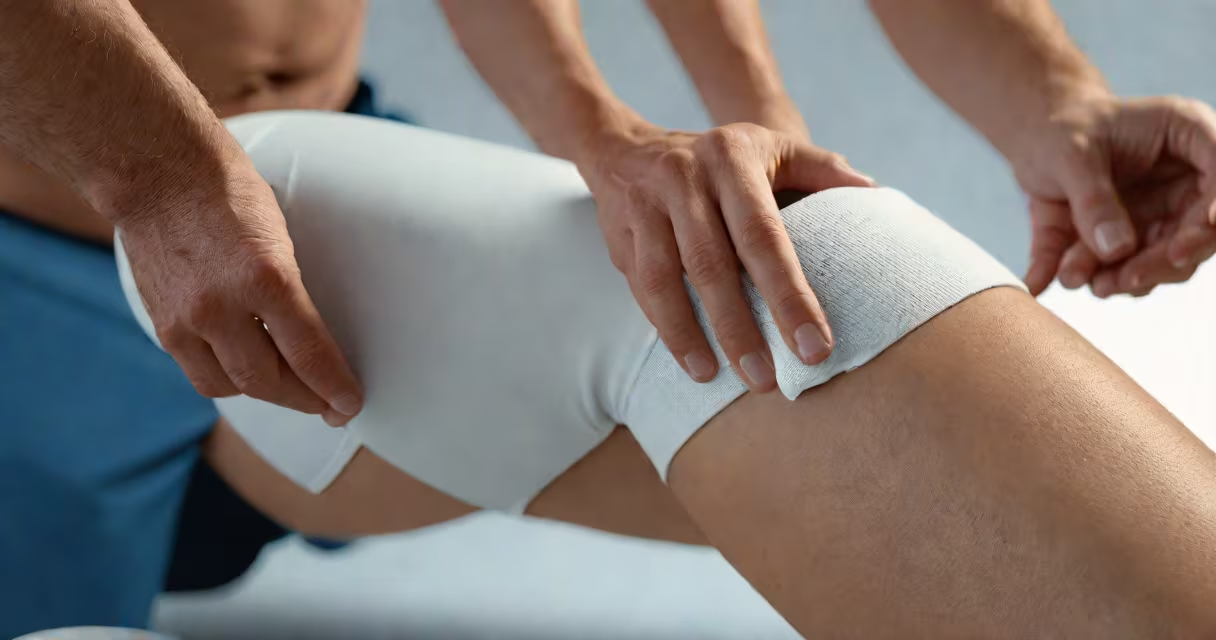
A hamstring strain occurs when one or more of the three muscles at the back of the thigh-semimembranosus, semitendinosus, and biceps femoris-tear due to sudden force or overstretching. Immediate management focuses on reducing pain, swelling, and further damage through controlled rest, ice, compression, and elevation (RICE).
Hamstring strains are graded from 1 to 3 based on severity: Grade 1 involves minor tearing with mild pain and minimal strength loss; Grade 2 shows moderate tearing with significant pain and weakness; Grade 3 indicates a complete rupture requiring surgical evaluation. Most people recover within 2 to 6 weeks depending on grade and adherence to rehab.
According to the American Academy of Orthopaedic Surgeons (AAOS), 80% of hamstring injuries are Grade 1 or 2 and resolve with conservative care. Delayed return to activity increases reinjury risk-up to 30% in athletes who resume training too soon, per a 2021 study in the British Journal of Sports Medicine.
Stop all activity immediately. Continuing movement worsens microtears and delays healing. Apply ice to the affected area for 15-20 minutes every 2 hours during the first 48 hours. Cold reduces blood flow to the site, minimizing swelling and pain.
Use a compression bandage lightly wrapped around the thigh to limit edema. Improve the leg above heart level when seated or lying down to promote fluid drainage. Avoid heat, massage, or stretching during this phase-these increase bleeding and inflammation.
I once treated a recreational runner who resumed sprinting 36 hours after a Grade 1 strain. He reported increased tightness and sharp pain within 10 minutes. The injury progressed to a Grade 2 strain requiring six weeks of modified activity. This underscores the importance of stopping activity early.
Heat should not be applied during the acute phase. Wait until swelling has subsided-typically 48 to 72 hours post-injury. Once swelling is gone, heat improves circulation and relaxes muscle tension.
Use a heating pad set to low or medium for 15-20 minutes before gentle stretching. A warm bath or heated towel can also work. Do not fall asleep with a heating device on-risk of burns increases with reduced sensation.
Begin light exercises once pain-free at rest. Start with heel slides-lying on your back, slowly bending and straightening the injured leg. Perform 2 sets of 10 reps daily. Progress to prone bridges (lying face down, lifting hips) and single-leg glute bridges after 5-7 days.
After two weeks with no pain, introduce slow walking and then light jogging. Monitor for any pull or tenderness. Return to sport should be gradual-start with 20% of previous volume and increase by no more than 10% weekly.
Research from the University of Queensland found that patients who completed a structured 6-week rehab program had a 45% lower reinjury rate compared to those who returned to activity without guidance.
Many assume stretching immediately relieves tightness. But stretching a strained muscle worsens microtears and delays healing. The American Physical Therapy Association warns against aggressive stretching in the first week.
Another error is assuming pain equals progress. Discomfort during rehab is normal, but sharp or increasing pain signals overexertion. Stop and reassess.
Some believe that "no pain, no gain" applies to recovery. That mindset leads to premature return and higher reinjury rates. Healing requires patience-not pushing through discomfort.
See a healthcare provider if pain persists beyond 7-10 days despite RICE, or if you cannot bear weight. A doctor may use ultrasound or MRI to assess tear extent. Complete ruptures often require surgery, especially in athletes.
Signs of a serious issue include bruising spreading below the knee, a noticeable gap in the muscle, or inability to contract the hamstring. These suggest a high-grade strain needing imaging and specialist input.
| Phase | Timeframe | Activity | Goal |
|---|---|---|---|
| Acute | 0-72 hours | Rest, ice, compression, elevation | Reduce swelling, prevent further damage |
| Subacute | 3-7 days | Gentle range-of-motion exercises | Restore mobility, reduce stiffness |
| Recovery | 1-3 weeks | Strengthening: bridges, clamshells | Build endurance and control |
| Return to Activity | 4+ weeks | Progressive jogging, sport-specific drills | Restore function, prevent reinjury |
Recovery from a hamstring strain is not linear. Some days feel better than others. Consistency matters more than intensity. Stick to the plan, even when progress feels slow.
Understanding how to help a hamstring strain begins with knowing the difference between healing and worsening. The body repairs tissue during rest, not during effort. Respect that timeline.
For most people, following the RICE protocol, waiting for swelling to subside before using heat, and progressing slowly through rehab leads to full recovery. When in doubt, consult a physical therapist or sports medicine provider.