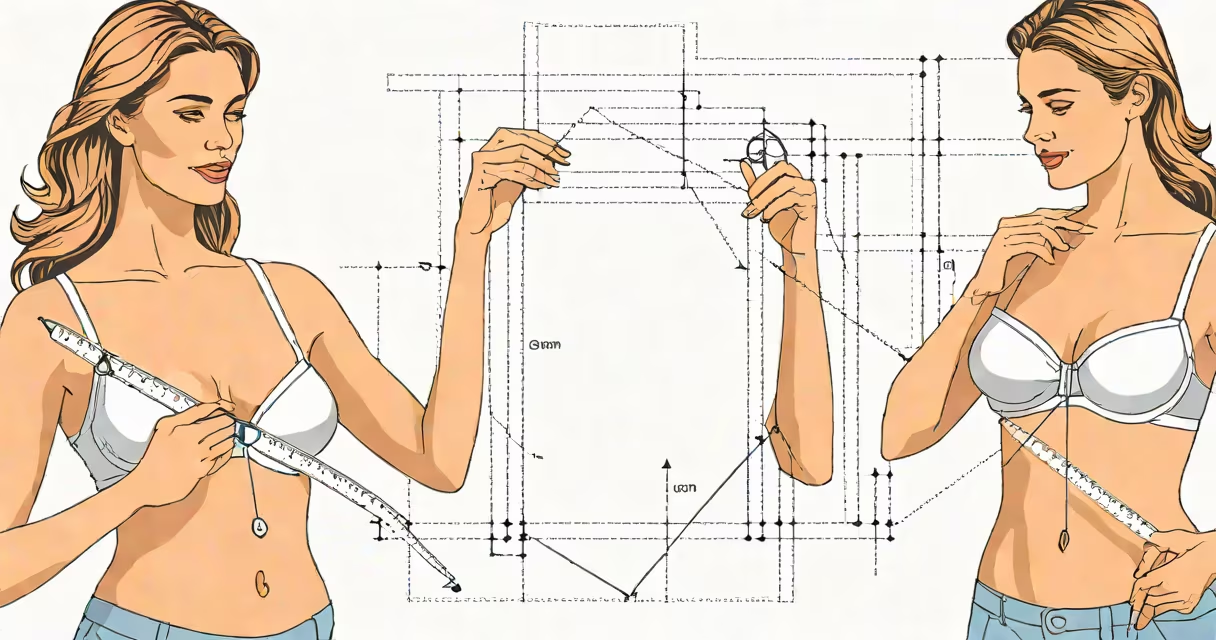
To determine your correct bra size, measure your band size around the ribcage just below the bust, then measure your bust at the fullest part. Subtract the band measurement from the bust measurement to find your cup size. This method yields a standard US bra size like 34B.
Proper bra sizing begins with accurate measurements. A bra that fits poorly can cause discomfort, poor posture, and long-term breast support issues. The standard sizing system uses a number (band size) and letter (cup size). Band size reflects the circumference under the bust, while cup size corresponds to the difference between bust and band measurements.
Use a flexible, non-stretch tape measure. Wrap it snugly but not tightly around the ribcage, just below the breasts. Keep the tape level and parallel to the floor. For most people, this is the narrowest part of the torso, typically just above the hips and below the bra line. Record the measurement in inches.
Stand upright with arms relaxed at your sides. Place the tape measure around the fullest part of your bust-usually at the nipple line. Ensure the tape is horizontal and not angled. Do not pull it tight; it should lie flat against the skin without compressing tissue.
For accuracy, take multiple readings. Some women have asymmetrical breasts, so measure both sides and average the results. If one side is larger, choose the size that fits the larger side comfortably. A 1-inch difference between sides is normal; a 2-inch or greater difference may require a custom-fit bra.
Record the bust measurement in inches. This number will be used later to determine cup size. According to the American Society for Aesthetic Plastic Surgery, nearly 80% of women wear the wrong bra size, often due to inconsistent measurement techniques.
Subtract your band measurement from your bust measurement. The result determines your cup size:
For example: If your band size is 32 inches and your bust measures 36 inches, the difference is 4 inches. That corresponds to a D cup. Your full bra size is 32D.
Cup sizes increase in 1-inch increments. However, some brands use different standards. For instance, UK sizing sometimes uses a different cup scale. Always check the brand's size chart before purchasing.
Many people measure too loosely or too tightly. A tape that sags creates a false low band measurement. A tape pulled taut increases the number and leads to a larger band size than needed. The tape should rest gently against the skin, allowing for natural breathing.
Another error is measuring at the wrong location. Measuring at the top of the bust instead of the fullest part gives inaccurate results. The bust measurement must reflect the actual volume of breast tissue, not the surface contour.
Some women assume their size stays constant over time. Weight fluctuations, pregnancy, breastfeeding, and aging affect breast size. Re-measure every 6 to 12 months or when significant changes occur. The National Breast Cancer Foundation recommends reassessment after childbirth or major weight shifts.
While home measurement works for many, professional fittings offer precision. A certified fitter uses standardized tools and techniques to assess fit, symmetry, and support. They can detect issues like wing flare, center gore misalignment, or strap slippage.
I once attended a fitting event at a department store where a woman thought she wore a 36C. After measurement, her band was 34 inches and bust 38 inches-making her size 34D. She reported immediate relief from shoulder pain and improved posture after switching to the correct size.
Not all brands follow the same sizing. For example, Victoria's Secret tends to run small in band size but true to cup. However, Maidenform often runs large in band size and slightly small in cup. Always consult the specific brand's size chart before ordering.
Some brands use international sizing. European sizes list band size first, then cup (e.g., 80B). Asian brands may use centimeters. Convert measurements correctly to avoid errors. A 34-inch band equals 86 cm, and a 36-inch bust is 91 cm.
| Bust - Band Difference | Cup Size (US) | Cup Size (UK) |
|---|---|---|
| 1 inch | A | A |
| 2 inches | B | B |
| 3 inches | C | C |
| 4 inches | D | D |
| 5 inches | DD/E | E |
Always measure in the same conditions. Wear a non-padded bra or none at all. Avoid measuring after exercise or during hormonal shifts, such as menstruation, when breasts may swell.
Take measurements at the same time of day-preferably in the afternoon when body swelling is minimal. Measure standing, not lying down. Keep the tape parallel to the floor and avoid twisting the torso.
Keep a record of your measurements. Update it annually or when you notice changes in fit. Many women benefit from owning two sizes-one for daily wear and another for special occasions or athletic activity.