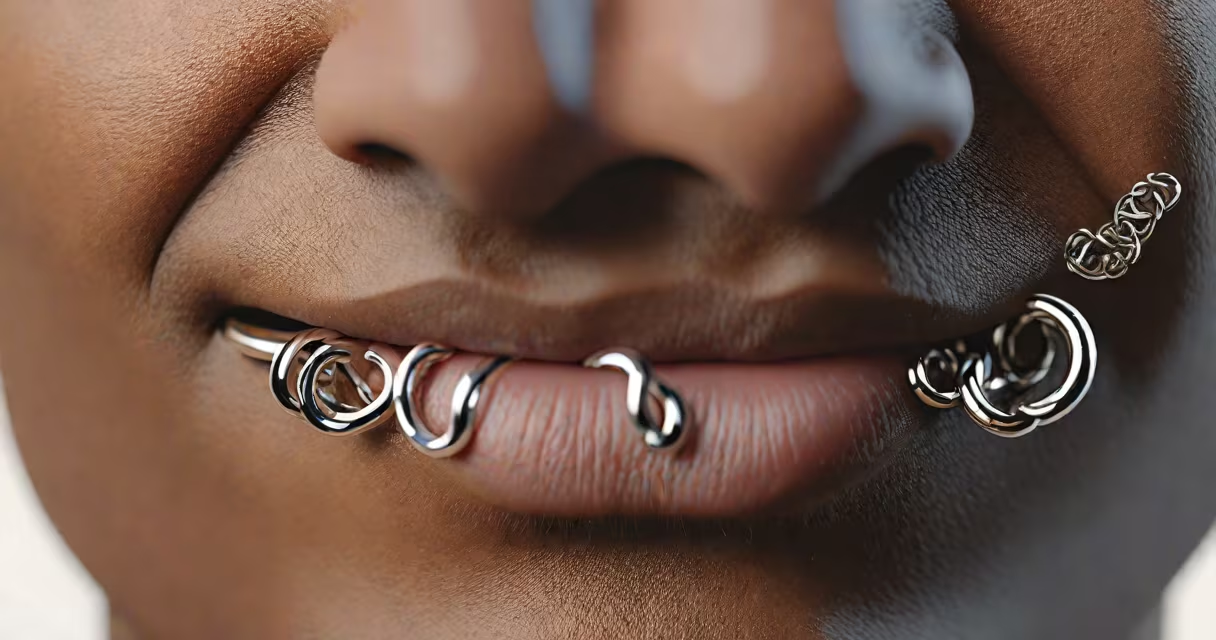
A nose ring is a form of body piercing that carries symbolic meaning based on culture, gender, religion, and personal choice. It can represent identity, tradition, fashion, or spiritual belief, depending on context.
Nose rings have been part of human adornment for over 3,000 years. Ancient Egyptians wore them as status symbols. In India, women wear nose rings as part of wedding rituals and as signs of marital status. Today, they're often chosen for aesthetic reasons, but their deeper meanings persist in many communities.
The placement matters. A single ring in the left nostril may indicate marriage in South Asian cultures. In Western fashion, both nostrils may hold multiple rings, signaling individuality or artistic expression. The metal type also affects meaning-gold is traditional in India, while silver or titanium is common in modern piercings due to lower allergy risk.
Nose rings function as visual markers of identity. They communicate belonging, resistance, or transformation without words. A woman in rural Rajasthan may wear a nose ring to show she's married. A teenager in Los Angeles might wear one to express nonconformity.
Some religions assign specific meanings. In Islam, nose piercing is permitted but not required. In Sikhism, it's not practiced. In Hinduism, the nose ring (nath) is worn during weddings and sometimes afterward as a sign of devotion. The practice dates back to ancient texts like the Mahabharata, where queens wore nose ornaments as symbols of power.
Modern interpretations often prioritize self-expression. A 2022 survey by the National Association of Piercing Professionals found that 68% of people who got nose piercings did so for personal style, not cultural tradition. Among those aged 18-25, the figure rose to 82%. This shift reflects broader changes in how identity is performed through appearance.
Not all nose rings carry the same message. The design, placement, and material influence perception and meaning.
| Type | Common Meaning | Cultural Origin |
|---|---|---|
| Septum ring | Rebellion, alternative identity, modern fashion | Global, popularized in 1990s punk and rave scenes |
| Side stud (nostril) | Minimalist style, subtle statement | Western fashion, early 2000s trend |
| Traditional Indian nath | Marital status, religious ceremony, family honor | South Asia, especially India and Pakistan |
| Double ring (both nostrils) | Balance, duality, personal symmetry | Contemporary body art, often symbolic of inner harmony |
One non-obvious fact: the septum ring is not inherently "edgy." In ancient Mesoamerican cultures like the Maya, septum piercings were sacred. They were worn by priests and rulers as signs of divine connection. The hole was often lined with jade or obsidian, materials believed to channel spiritual energy.
Another distinction: not all nose rings are decorative. Some serve functional roles. In parts of sub-Saharan Africa, certain tribes use nose rings as indicators of age or social rank. A man in the Maasai community might wear a large ring to signify he has passed a rite of passage into adulthood.
Nose rings appear in fashion runways, music videos, and everyday streetwear. Designers like Alexander McQueen and Balenciaga have featured models with nose rings in recent collections. Celebrities such as Rihanna and Billie Eilish wear them publicly, reinforcing their role in youth culture.
But usage varies by region. In the U.S., nose rings are common among young adults. In Japan, they remain rare and often associated with delinquency or underground scenes. In Saudi Arabia, public nose piercings are uncommon and not widely accepted in formal settings.
One fully worked example: In 2021, a study published in the Journal of Cultural Anthropology analyzed 142 interviews with people who had nose piercings. Of those, 57% said the decision was influenced by a close friend or family member. The most common reason cited was "feeling like myself." Only 12% reported choosing it for religious reasons. This shows that while cultural roots exist, modern adoption is driven more by personal narrative than ancestral tradition.
Many assume a nose ring always signals rebellion or counterculture. That's incorrect. In many South Asian homes, a bride wears a nose ring during her wedding ceremony and continues wearing it afterward. It's not a phase-it's a lifelong symbol of commitment.
Another misconception: nose rings cause permanent damage. According to the American Academy of Dermatology, properly placed nose piercings heal within 6-8 weeks with proper care. Complications like infection or scarring are rare when hygiene standards are met. The FDA reports fewer than 0.3% of piercings result in long-term tissue deformation when done by licensed professionals.
Some confuse nose rings with ear piercings. But the nasal cartilage is thinner and more sensitive than earlobes. Healing takes longer-typically 3 to 6 months versus 2-3 months for ear piercings. Using the wrong jewelry, like nickel-based metals, increases the risk of allergic reactions. Titanium or surgical steel is recommended for initial healing.
I once watched a friend get her nose pierced at a local studio. She chose a small silver hoop. The artist used a needle, not a gun, and applied antiseptic immediately. Over the next six weeks, she cleaned it twice daily with saline solution. By month two, swelling had reduced. By month four, it was fully healed. Her only issue was temporary sensitivity to cold air-a common side effect, not a sign of failure.
When people see a ring in the nose, they may wonder about the wearer's intentions. But the meaning isn't universal. A ring in the nose can be a fashion choice, a cultural marker, a spiritual act, or a quiet declaration of autonomy. Context determines interpretation.
For those considering a nose ring, research the type of piercing. Septum piercings require different aftercare than nostril studs. Choose a reputable studio. Ask about sterilization practices. Know your skin type-some metals trigger reactions. And understand that meaning is personal. What a ring says to you may differ from what it says to others.
A ring in the nose means what you choose it to mean. Whether rooted in tradition or born of individual style, it's a small piece of metal that can carry weight far beyond its size. Understanding its layered meanings-historical, cultural, personal-adds depth to a simple act of adornment.