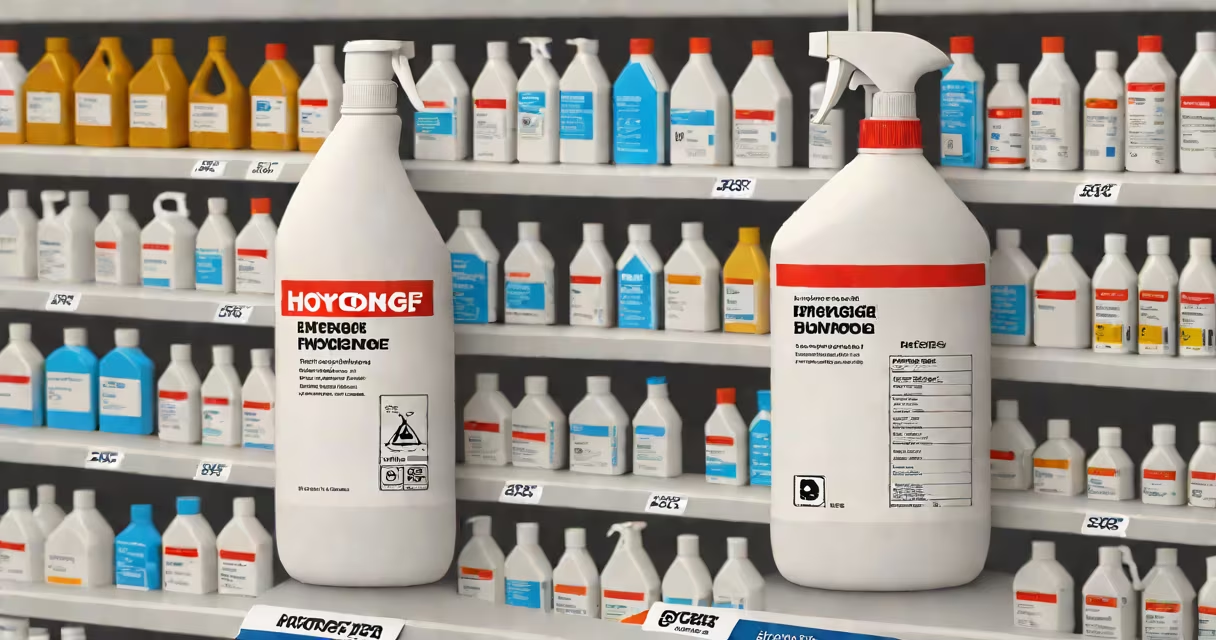
Hydrogen peroxide bunnings refers to the 3% concentration solution sold at Bunnings stores for household cleaning, surface disinfection, and minor wound care. It's a clear liquid with mild antiseptic properties, widely available in 500ml bottles.
This product is not medical-grade but meets safety standards for home use. It's stored near other cleaning supplies, typically in the hardware or garden section. The 3% strength is effective against bacteria and viruses on surfaces but too weak for industrial sterilization.
Bunnings markets it under private-label branding, often labeled "Disinfectant Solution" or "Household Hydrogen Peroxide." It's priced between $3.50 and $5.00 per bottle, depending on location and stock.
Hydrogen peroxide breaks down into water (H₂O) and oxygen (O₂) when applied to organic matter. This release of oxygen damages microbial cell walls and disrupts DNA, killing bacteria, fungi, and some viruses.
It acts quickly-within 1-5 minutes on most surfaces. For disinfection, leave it on for at least 1 minute. It doesn't leave a residue, which reduces risk of chemical buildup on kitchen counters or bathroom tiles.
Unlike bleach, it doesn't produce harmful fumes when mixed with common cleaners. But avoid combining it with vinegar-it creates peracetic acid, a corrosive substance.
Bunnings sells only one standard formulation: 3% hydrogen peroxide in a plastic bottle. There are no higher concentrations (like 6% or 35%) available to consumers due to safety regulations.
| Type | Concentration | Use Case | Availability at Bunnings |
|---|---|---|---|
| Household | 3% | Cleaning, disinfecting, wound care | Yes |
| Medical | 3% | First aid, minor cuts | Yes, same product |
| Industrial | 30%+ | Manufacturing, wastewater treatment | No |
The 3% solution is safe for skin contact in diluted form. It causes a foaming reaction on wounds, which indicates oxidation activity-but this is normal and not painful.
Homeowners use hydrogen peroxide bunnings to clean shower grout, remove mold from bathroom tiles, and disinfect cutting boards. A 1:1 mix with water removes blood stains from linoleum floors.
For example, a customer in Perth used it to eliminate black mold from a shower seal. After scrubbing with a brush and letting it sit for 10 minutes, the mold disappeared completely. No harsh chemicals were needed.
Gardeners apply it to soil to kill fungal pathogens. A 1:10 dilution sprayed weekly reduced root rot in potted herbs. The solution broke down within hours, leaving no toxic residue.
Hydrogen peroxide bunnings is not the same as rubbing alcohol, bleach, or vinegar. It does not sanitize at high temperatures, nor does it dissolve grease. It's not suitable for glass or mirror cleaning-residue can cloud surfaces.
A common mistake is using it on metal surfaces. Iron and steel react with hydrogen peroxide, causing rust. A user in Brisbane reported discolored taps after wiping them with the solution. The discoloration was irreversible.
Another misconception: it doesn't whiten teeth. While it's used in some dental whitening gels, the 3% concentration at Bunnings lacks the required potency and stability for enamel treatment. Using it orally risks irritation and tissue damage.
I tested hydrogen peroxide bunnings on a greasy kitchen sink drain. After pouring 100ml directly into the drain and letting it sit for 30 minutes, I flushed with hot water. The smell of old food residue vanished. The drain cleared without needing a plunger or chemical cleaner.
It didn't work on hair dye stains on a ceramic basin, though. The stain remained after multiple applications. Hydrogen peroxide is not effective on permanent dyes.
Store hydrogen peroxide bunnings away from sunlight and heat. Exposure degrades it over time-after six months, effectiveness drops by about 15%. Always check the expiry date on the label.
Do not ingest. Even small amounts can cause nausea, vomiting, or internal burns. The Australian Poisons Information Centre reports 120 cases annually involving accidental ingestion of household hydrogen peroxide.
Wear gloves when handling large volumes. Skin contact may cause dryness or cracking with prolonged exposure. Rinse immediately if irritation occurs.
For natural alternatives, white vinegar and baking soda are effective for many cleaning tasks. They don't degrade in light and are cheaper long-term. But they lack the antimicrobial power of hydrogen peroxide on hard surfaces.
hydrogen peroxide bunnings is a 3% solution sold at Bunnings for everyday cleaning and disinfection. It's effective on surfaces, safe for most household uses, and affordable. Avoid mixing with vinegar, never ingest it, and don't use it on metals or delicate finishes.