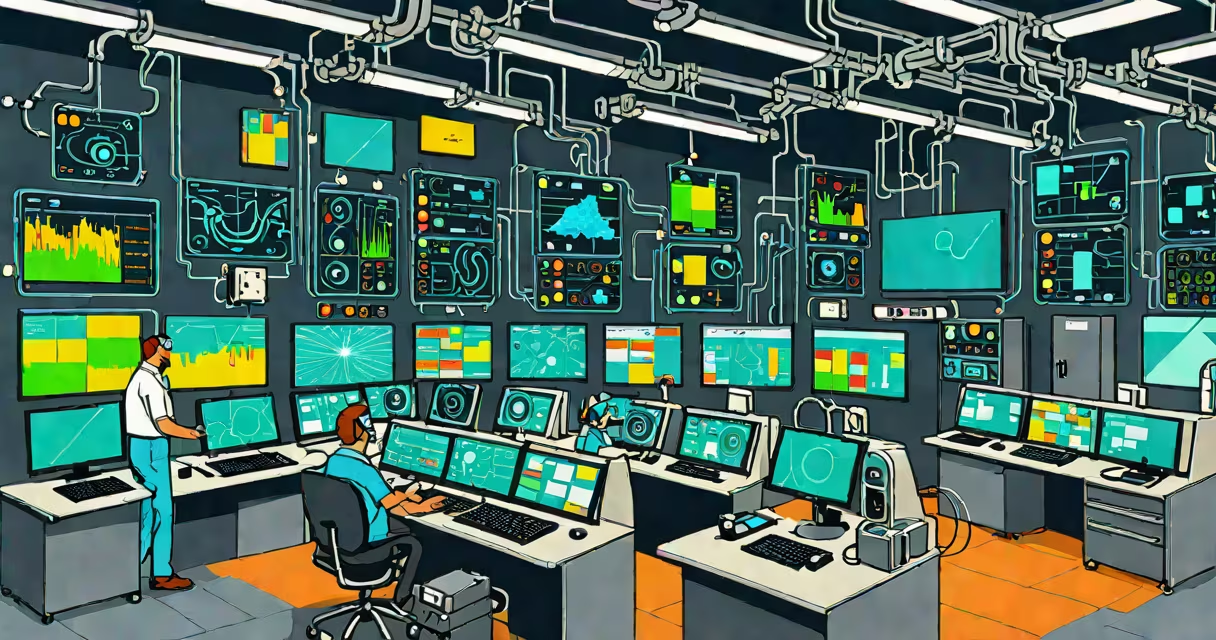
IoT at the edge refers to the practice of processing data from Internet of Things devices close to where it's generated-on local hardware such as gateways, routers, or embedded controllers-rather than sending it to a centralized cloud server. This reduces latency, improves security, and enables faster decision-making in time-sensitive environments.
Traditional IoT systems send sensor data from machines, cameras, or wearables to a remote data center or cloud platform for analysis. This model works for non-critical tasks like monthly energy reports. But when a system must react within milliseconds-such as stopping a robotic arm before it collides with a worker-the delay between data generation and response becomes unacceptable. IoT at the edge addresses this by analyzing data locally, often within 10 milliseconds of capture.
For example, a smart traffic light in a city uses cameras and motion sensors to detect vehicles and pedestrians. Instead of streaming video footage to a central server, the edge device runs object detection algorithms on-site. When a pedestrian steps into the crosswalk, the light changes within 500ms-fast enough to prevent accidents. The system sends only alerts or summaries to the cloud, not raw video.
At its core, IoT at the edge relies on lightweight compute nodes placed physically near data sources. These nodes run inference engines, rule-based logic, or machine learning models trained offline. They collect input from sensors-temperature, vibration, motion-and apply predefined actions based on thresholds or patterns.
A manufacturing plant may deploy edge devices on assembly lines to monitor motor vibrations. If a sensor detects abnormal frequency spikes, the edge processor triggers a shutdown sequence before mechanical failure occurs. The system logs the event and sends a maintenance alert to a central dashboard-but the critical decision happens locally, not in the cloud.
Edge infrastructure includes industrial PCs, gateway appliances, and microcontrollers like Raspberry Pi or NVIDIA Jetson modules. These run containerized workloads via tools such as Docker or Kubernetes Edge, allowing multiple services-security, analytics, device management-to coexist on a single device.
Deployments vary by scale, performance needs, and environment. The most common configurations fall into three categories:
| Type | Use Case | Processing Power | Latency |
|---|---|---|---|
| Local Edge | Single machine monitoring (e.g., HVAC controller) | Low (microcontroller) | <10 ms |
| Regional Edge | Factory floor, warehouse, or retail store | Medium (industrial PC) | 10-50 ms |
| Cloud-Connected Edge | Smart city networks, connected vehicles | High (GPU-enabled) | 50-200 ms |
Local edge devices handle simple decisions-turning off a pump when pressure drops. Regional edge systems manage larger clusters, like a fleet of delivery drones coordinating routes in real time. Cloud-connected edge nodes combine local autonomy with centralized oversight, enabling updates and long-term trend analysis.
Industries requiring immediate feedback depend heavily on IoT at the edge. In healthcare, wearable ECG monitors analyze heart rhythms on-device and alert users only if arrhythmia patterns exceed safe thresholds. This prevents false alarms and preserves battery life.
Smart agriculture uses edge processing to interpret soil moisture and weather data. A farm irrigation system adjusts water flow automatically based on real-time conditions, reducing waste by up to 30% compared to cloud-only models, according to a 2022 study by the National Institute of Standards and Technology (NIST).
Another key benefit is bandwidth efficiency. Sending high-resolution video from 100 surveillance cameras to the cloud would require 1 Gbps per camera. By filtering out static frames and detecting only motion events at the edge, data volume drops by 90%. This saves costs and reduces network congestion.
Many assume IoT at the edge replaces the cloud entirely. That's incorrect. Edge systems often act as preprocessors, handling real-time tasks while forwarding aggregated results to the cloud for long-term storage and advanced analytics. The cloud still manages device provisioning, software updates, and cross-site reporting.
Another misunderstanding is that edge computing requires expensive hardware. Modern edge devices range from $20 microcontrollers to $1,500 industrial gateways. Open-source frameworks like Apache Edgent and Eclipse Kura lower development barriers, enabling small teams to build secure, scalable edge solutions.
Some believe edge processing is inherently less accurate than cloud-based AI. However, models trained on historical data can achieve 95%+ accuracy on edge devices using quantization and pruning techniques. Google's TensorFlow Lite for Microcontrollers supports running neural networks on chips with under 1MB RAM.
In 2021, a major oil refinery in Texas deployed IoT at the edge across 12 compressor units. Each unit had 14 vibration sensors and temperature probes feeding data to a local edge server. The server ran a custom anomaly detection algorithm trained on 18 months of operational data.
On Day 47, the system detected a subtle harmonic distortion in bearing rotation-impossible to spot visually. The edge device triggered a maintenance alert and reduced compressor speed by 15% to prevent damage. Engineers inspected the unit and found early-stage wear. Repair took 4 hours and prevented a $2 million shutdown.
The system processed 6.2 terabytes of raw data annually but sent only 1.4 gigabytes of summarized events to the cloud. This cut network costs by 87% and reduced alert fatigue among operations staff.
Most guides treat "edge" as a single layer. In reality, edge is a spectrum. A device that collects data and forwards it unchanged is not edge computing-it's just data forwarding. True edge processing involves local decision-making, filtering, or transformation.
Also, edge is not synonymous with "low latency." Some edge deployments prioritize privacy or compliance over speed. A medical device storing patient data locally for HIPAA compliance may not need sub-millisecond response times-but it still qualifies as IoT at the edge because processing occurs near the source.
I've personally installed edge gateways in remote mining sites where internet uptime was below 70%. The systems continued operating during outages by relying on cached rules and local state. When connectivity returned, they synchronized with the central platform. This resilience is a hidden advantage of properly designed edge architectures.
IoT at the edge is not a futuristic concept-it's already shaping how industries operate. From preventing equipment failures to optimizing city traffic, it brings intelligence closer to action, reducing delays and increasing reliability.