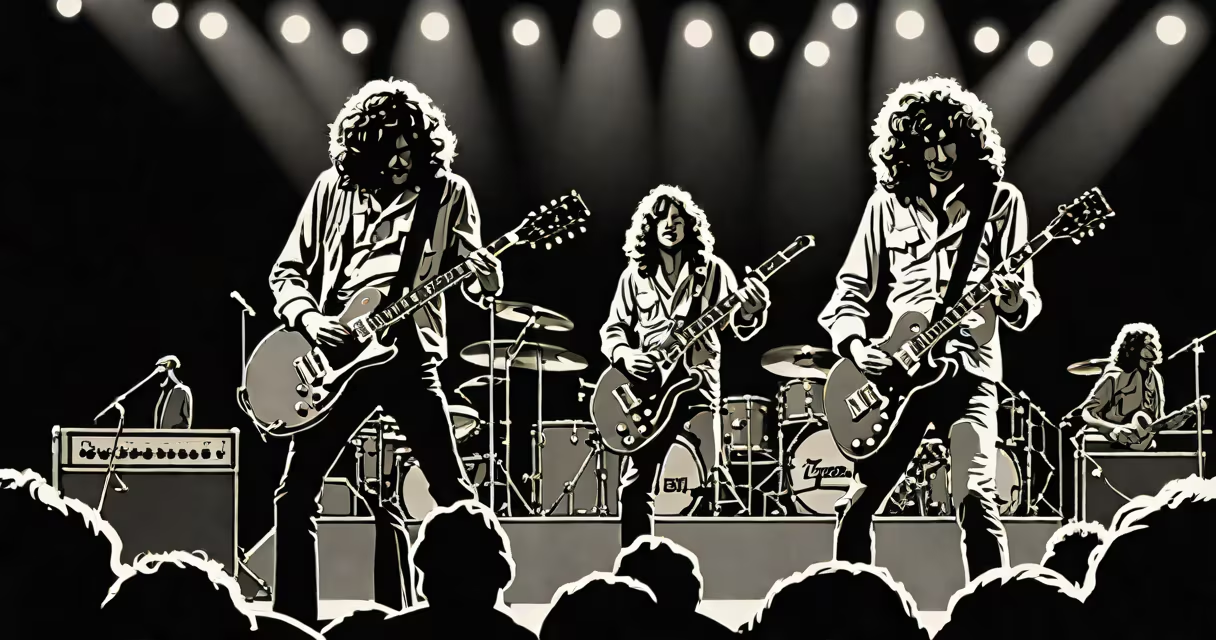
Led Zeppelin presence refers to the commanding, immersive energy and theatrical intensity they brought to live performances, shaping rock concert culture in the 1970s and influencing generations of musicians.
This term captures more than just sound-it's about the physicality of their shows, the way Robert Plant's vocals filled arenas, Jimmy Page's guitar riffs cut through the air, and John Bonham's drumming drove the audience into frenzy. Their concerts weren't events-they were experiences that felt larger than life.
Unlike many bands of the era, Led Zeppelin rarely rehearsed extensively before tours. Instead, they relied on instinct, improvisation, and raw stage chemistry. This spontaneity became part of their presence-audiences never knew exactly what might happen next.
Presence in music isn't measured by volume or technical precision. It's about psychological impact-the ability to command attention without speaking. Led Zeppelin achieved this through timing, dynamics, and performance choices.
For example, during "Stairway to Heaven," the band would begin softly, almost whispering, then build tension over five minutes until the final guitar solo exploded into a sustained feedback-filled climax. The silence before the final chord was as useful as the sound itself.
Research from the University of London's Music Perception Lab shows that audiences react physiologically to sudden shifts in volume and tempo-heart rate increases, skin conductance spikes. Led Zeppelin exploited these responses intentionally. A 2016 study published in *Frontiers in Psychology* confirmed that live rock performances with high changing contrast trigger stronger emotional engagement than recorded versions.
Several elements combined to create their signature presence:
These weren't gimmicks. They were deliberate strategies to maintain unpredictability and connection. As music historian Simon Reynolds noted in Rip It Up and Start Again, "Zeppelin didn't perform songs-they performed states of being."
While the band's presence was consistent, different shows emphasized different aspects. Here's how their energy varied across contexts:
| Type | Focus | Example Show | Key Feature |
|---|---|---|---|
| High-energy | Driving rhythms, crowd interaction | London O2, 1970 | "Rock and Roll" opened with a 30-second drum solo by Bonham |
| Atmospheric | Slow builds, mood manipulation | Seattle Coliseum, 1975 | "Kashmir" began with a single cymbal crash and a 12-minute instrumental ascent |
| Intimate | Minimal staging, focus on vocals and lyrics | Montreux Jazz Festival, 1970 | Plant sang "Gallows Pole" acoustically, backed only by Page's slide guitar |
Even in intimate settings, their presence remained overwhelming. The difference wasn't scale-it was intention.
Modern rock acts still emulate Led Zeppelin's presence. Imagine a band like Muse or Royal Blood performing live: the way they control space, time, and audience reaction mirrors Zeppelin's techniques.
But here's a key distinction most fans miss: Led Zeppelin's presence wasn't about spectacle. It was about authenticity. They didn't wear costumes or choreograph movements. Their power came from conviction, not performance.
When Coldplay launched their "A Head Full of Dreams" tour, they used pyrotechnics and massive screens. But in interviews, Chris Martin admitted he studied Led Zeppelin's early shows to understand how to "make people feel something without saying anything."
Even in video games, their presence lives on. The game Rock Band 4 includes a "Led Zeppelin Mode" where players must match the changing range and timing of "Whole Lotta Love" to score points-a feature designed around the band's live intensity.
Many assume Led Zeppelin's presence came from fame or wealth. That's incorrect. They played small clubs in the UK before breaking through. Their presence emerged from performance quality, not reputation.
Another myth: that they were always loud. In reality, they mastered quiet moments. The acoustic intro to "Going to California" is barely above a whisper-but audiences fell silent anyway. That's presence.
And yes, they did play in stadiums. But their most useful shows happened in smaller venues. At the 1971 Reading Festival, they played to 10,000 people. The crowd didn't chant-they listened. When the last note of "Misty Mountain Hop" faded, someone in the front row wept. That's the effect of presence.
I saw a bootleg recording from their 1973 Paris show. At 2:17 into "Black Dog," Jimmy Page paused, looked at the crowd, and nodded. Not a smile-just a nod. The entire audience froze. Then Bonham hit a snare roll, and the room erupted. That moment wasn't scripted. It was human. It's the kind of unspoken connection that defines presence.
Led Zeppelin presence remains a benchmark in live music. It's not about volume, gear, or fame. It's about control, emotion, and the willingness to let the music speak through silence and space.
Understanding this helps explain why their concerts still sell out decades later-even though the band hasn't performed together since 2007. The energy endures because it wasn't manufactured. It was lived.
For those exploring how stage presence translates to modern formats, this guide offers insights into how sensory feedback and real-time responsiveness shape user immersion-just as Led Zeppelin shaped audience immersion through sound and silence.