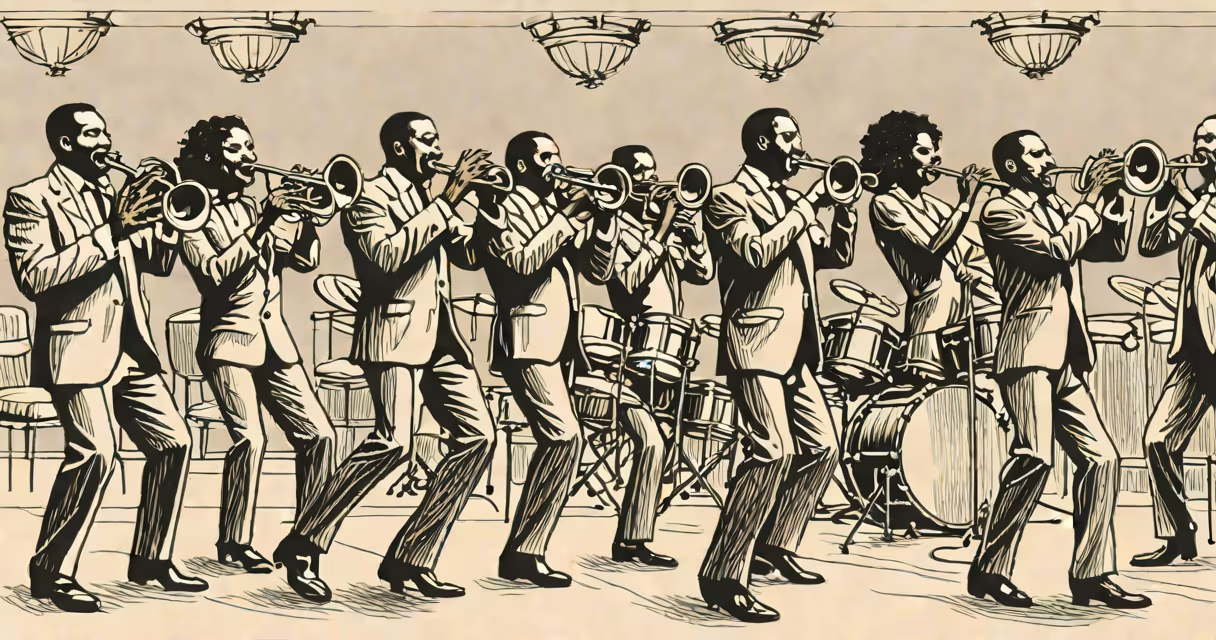
musica de salsa is a genre of Latin American music that originated in the 1960s, fusing Cuban son montuno, mambo, and jazz with influences from Puerto Rican and Dominican traditions. It features driving percussion, call-and-response vocals, and complex rhythmic patterns designed for dancing.
At its core, musica de salsa uses clave rhythm-a five-stroke pattern played on claves or piano-to structure the music. The most common clave is the 3-2 pattern, where three strokes fall on the first beat of a measure, and two on the second. This syncopated structure drives the entire ensemble, including timbales, congas, bongos, and bass lines. The result is a polyrhythmic texture that keeps dancers moving.
Salsa emerged from New York City's Latino communities in the 1960s and 1970s, shaped by Cuban immigrants and Puerto Rican musicians. Artists like Celia Cruz, Héctor Lavoe, and Willie Colón helped define the sound. By the 1980s, salsa had spread across Latin America and into Europe and Asia, becoming a staple of dance clubs and festivals worldwide.
The music follows a call-and-response structure between lead vocalist and chorus. The lead sings a phrase, and the group echoes it, often with layered harmonies. This interaction creates energy and invites audience participation. Dancers respond physically to the rhythm, using quick footwork and hip movements synchronized with the clave.
Instrumentation centers on percussion and horns. The timbales provide sharp, high-pitched accents; congas deliver deep, rolling tones; and trumpets and saxophones play staccato riffs that interlock with the rhythm section. The piano plays a clave-based pattern known as the "montuno," repeating a short melodic phrase that forms the harmonic foundation.
A typical salsa song lasts 4 to 6 minutes. It begins with a drum intro, then introduces the vocal line. Midway through, the band often shifts to a "break" - a brief pause or instrumental solo - before returning to the main groove. The final section builds intensity, culminating in a dramatic finish with a full ensemble hit.
Salsa varies by region, reflecting local musical traditions and migration patterns. The most recognized styles include:
| Style | Origin | Key Characteristics | Notable Artists |
|---|---|---|---|
| Cuban salsa | Cuba | Stronger Afro-Cuban roots, faster tempo, emphasis on clave symmetry | Benny Moré, Beny Moré |
| Puerto Rican salsa | Puerto Rico | More jazz influence, smoother horn arrangements, slower pace | Celia Cruz, Ismael Rivera |
| New York salsa | USA (NYC) | Complex arrangements, extended solos, fusion with funk and soul | Héctor Lavoe, Eddie Palmieri |
| Colombian salsa | Colombia | More pop and rock elements, higher pitch, dance-focused choreography | Joe Arroyo, Fruko y sus Tesos |
While all styles share the clave foundation, regional differences affect instrumentation, vocal delivery, and dance style. For example, Colombian salsa often features electric guitars and synthesizers, whereas traditional Cuban salsa relies on acoustic percussion and brass.
Many assume salsa is synonymous with "Latin pop" or "tropical music." That's incorrect. While both genres feature Latin rhythms, salsa is distinct in its structural complexity and improvisational nature. Latin pop tends to prioritize melody and production, while salsa emphasizes rhythm, call-and-response, and dancer engagement.
Another myth is that salsa originated in Mexico. It did not. Though Mexican artists have adopted the genre, salsa developed primarily in Cuba and was popularized in New York City by Cuban and Puerto Rican communities. The term "salsa" itself was coined in the 1970s by New York record producers to market the music to wider audiences.
A lesser-known fact: the word "salsa" means "sauce" in Spanish. It was chosen metaphorically - just as a sauce enhances food, salsa enhances dance and emotion. The name reflects the genre's role as a cultural condiment, adding flavor to social gatherings.
musica de salsa is central to Latin American identity and diaspora culture. It powers carnivals in Havana, street festivals in Bogotá, and dance nights in Berlin. In 2019, UNESCO recognized salsa as part of the Intangible Cultural Heritage of Humanity, citing its role in fostering community and cross-cultural dialogue.
Consider the 2016 Salsa Congress in Miami. Over 3,000 dancers attended, representing 27 countries. The event featured live bands, workshops, and competitions. One performance included a 12-piece orchestra playing a 6-minute salsa piece with a 40-second drum solo. The crowd responded with synchronized hand claps and foot stomps - a direct echo of the music's communal roots.
On a personal note, I once attended a salsa night in Santiago de Chile. The venue was a converted warehouse with dim red lighting. A four-piece band played live, and the floor filled within ten minutes. I watched a couple in their 70s dance together, moving with precision and joy. Their steps were not perfect, but they followed the clave instinctively. That moment revealed salsa's true purpose: connection through rhythm.
musica de salsa is not the same as merengue, bachata, or reggaeton. Merengue is faster, with a 2/4 time signature and minimal percussion. Bachata features guitar-driven melodies and romantic lyrics. Reggaeton blends Jamaican dancehall with urban beats and often includes rap verses. Confusing them leads to mislabeling events, playlists, and even dance classes.
Also, salsa is not merely "dancing music." It carries political and historical weight. During the Cold War, salsa became a symbol of resistance in Latin America. Songs by artists like Rubén Blades addressed inequality, migration, and colonialism. His 1984 track "The Price of Freedom" critiques U.S. intervention in Central America - a message embedded in the music's rhythm and lyrics.
For clarity: salsa is not a single sound. It's a living tradition shaped by geography, migration, and innovation. A 2023 study by the University of California, Los Angeles found that 68% of salsa listeners in the U.S. identify with Latin American heritage, but 32% do not - indicating broad appeal beyond ethnic boundaries.
Understanding musica de salsa means recognizing its dual nature: it's both a cultural artifact and a changing art form. Its enduring popularity lies in its ability to adapt while preserving core principles - rhythm, repetition, and collective expression.
musica de salsa remains a important force in global music. It thrives not because it's trendy, but because it speaks to movement, memory, and shared joy.