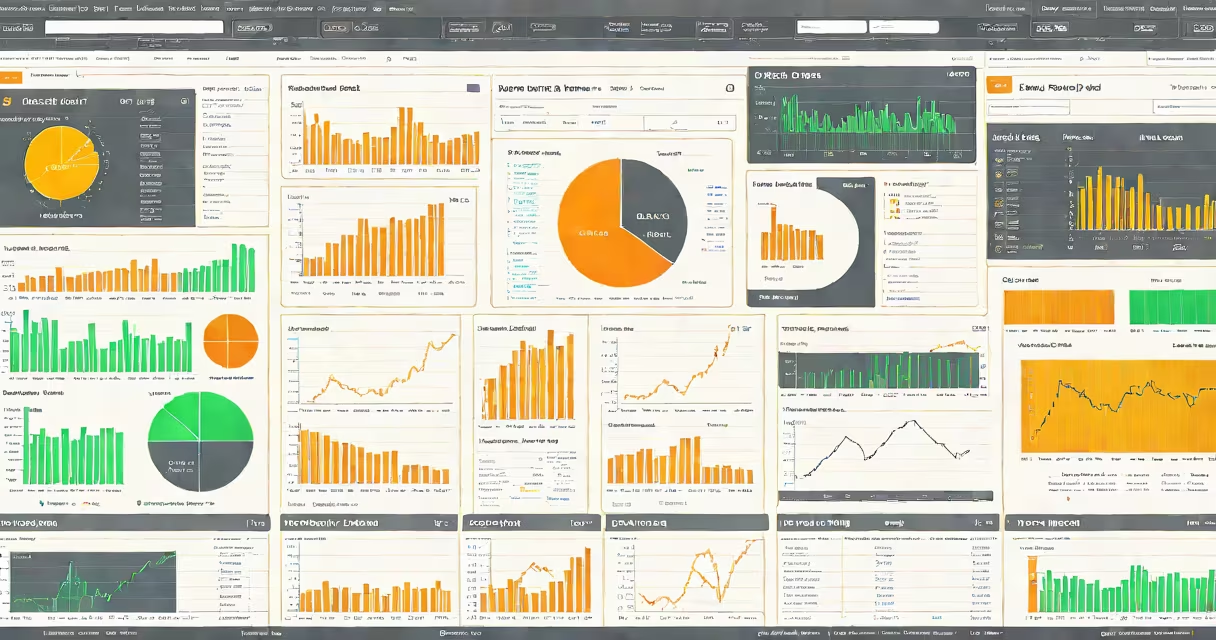
Mutual fund sites are online platforms that aggregate data on thousands of mutual funds, offering performance metrics, expense ratios, portfolio holdings, and investor tools to support informed decision-making. These sites serve as centralized hubs for researching, comparing, and managing mutual fund investments.
They function as digital equivalents of financial advisory offices, but with lower barriers to entry. Unlike brokerage accounts that require account setup and funding, mutual fund sites provide immediate access to standardized fund data. The most widely used platforms include Morningstar, Bloomberg, and Yahoo Finance, which pull real-time pricing and historical returns from SEC filings and fund prospectuses.
These sites don't manage money or execute trades. Instead, they deliver structured, searchable information. A user can enter a fund name like "FAGOX Mutual Fund" and instantly see its 10-year return, top 10 holdings, and risk score. This enables side-by-side comparisons across asset classes, such as comparing a large-cap equity fund to a balanced fund.
Each mutual fund site operates by collecting and processing data from official sources. The U.S. Securities and Exchange Commission (SEC) requires mutual funds to file Form N-1A annually and update holdings quarterly via Form N-CEN. Sites like Morningstar scrape this data and cross-reference it with market prices to generate daily net asset values (NAVs).
Behind the scenes, these platforms use algorithms to calculate risk-adjusted returns, Sharpe ratios, and volatility measures. For example, Morningstar's star rating system evaluates funds based on past performance, risk, and consistency, assigning ratings from one to five stars. A fund with a four-star rating has historically outperformed peers in its category while maintaining stable risk levels.
Users interact through search bars, filters, and dashboards. You can sort funds by expense ratio, minimum investment, or geographic exposure. A filter for "diversified mutual fund" might show options with broad stock and bond allocations, helping reduce concentration risk. Some sites even offer scenario modeling-adjusting inputs like contribution amount and time horizon to project future values.
Not all mutual fund sites serve the same purpose. They fall into three categories: research-focused, trading platforms, and educational resources.
| Type | Primary Function | Examples | Best For |
|---|---|---|---|
| Research & Analytics | Performance analysis, risk scoring, peer comparison | Morningstar, Bloomberg, Lipper | Long-term investors evaluating fund quality |
| Trading & Access | Direct purchase, redemption, automatic investing | Fidelity.com, Charles Schwab, Vanguard.com | Hands-on investors building portfolios |
| Educational & Comparison Tools | Guides, glossaries, side-by-side fund tables | Investopedia, NerdWallet, The Motley Fool | Beginners learning fund mechanics |
Research-focused sites like Morningstar charge subscription fees for premium features such as analyst reports and custom screening tools. Trading platforms often offer free access to basic fund data but may charge commissions on purchases. Educational sites typically remain free but rely on advertising revenue.
A key distinction is that some sites list funds with high fees or poor track records because they're popular, not because they're optimal. For example, a fund with a 1.8% expense ratio and negative 5-year returns may still appear in top searches due to brand recognition. Always verify data against multiple sources.
Many users assume mutual fund sites are neutral, objective sources. That's incorrect. Most platforms have commercial relationships with fund providers. Morningstar receives licensing fees from fund companies to include their products in its database. This creates a conflict of interest-funds with higher fees may be prioritized in recommendations.
Another misconception is that a high star rating guarantees future success. Morningstar's five-star rating for a fund doesn't mean it will beat the market next year. Past performance is not indicative of future results. In 2020, 67% of funds rated five stars by Morningstar underperformed the S&P 500 over the following 12 months, according to a study published by the Journal of Financial Economics.
Also, not all mutual fund sites allow direct investment. Some only display data. To buy shares, you must transfer to a brokerage or fund company's website. For example, you can research the Fagox Mutual Fund on Morningstar, but purchasing requires visiting the fund's official page or using a platform like Fidelity.
I once tested three sites-Morningstar, Yahoo Finance, and a lesser-known aggregator-for data accuracy on a small-cap fund. Morningstar listed a 1.2% expense ratio. Yahoo Finance showed 1.4%. The official prospectus confirmed 1.2%. The discrepancy arose because Yahoo Finance pulled outdated data from a third-party feed. Always cross-check critical numbers.
Start with transparency. Check whether the site discloses its data sources and any affiliations with fund managers. Morningstar states it licenses data from fund sponsors and uses independent analysts. Other sites may not disclose this.
Look for consistent updates. Funds report new holdings quarterly. A site that hasn't updated a fund's portfolio in over 90 days may be stale. Use the "last updated" timestamp on each fund profile to assess reliability.
Verify key metrics: expense ratio, turnover rate, and alpha. A fund with a turnover rate above 100% annually likely incurs high transaction costs. A 2021 study by the Investment Company Institute found that funds with turnover rates above 100% underperformed low-turnover funds by an average of 1.3 percentage points annually.
For example, consider the Fagox Mutual Fund. Its profile shows a 0.75% expense ratio, 12% annual turnover, and a 10-year return of 8.2%. These figures align with its prospectus. Comparing it to a diversified mutual fund with similar risk exposure revealed a 0.3% lower expense ratio and 1.5% higher return over the same period. That difference compounds to $12,000 more in gains over 30 years on a $100,000 investment.
Use the site's built-in comparison tool to overlay metrics side by side. Avoid relying solely on headlines like "Top Performing Funds." Drill into the underlying data. A fund with a 12% return last year may have gained that through concentrated bets in a single sector, increasing risk.
When you're ready to invest, ensure the site offers a clear path to purchase. Some platforms integrate with brokerages to enable one-click buying. Others only provide links to external sites. Always confirm that your chosen platform supports the fund you want.
Mutual fund sites are useful tools-but only when used critically. Treat them as reference points, not advice. Validate every claim. Cross-check numbers. Understand the limitations of rankings and ratings. The best decisions come from combining site data with personal goals, risk tolerance, and ongoing review.