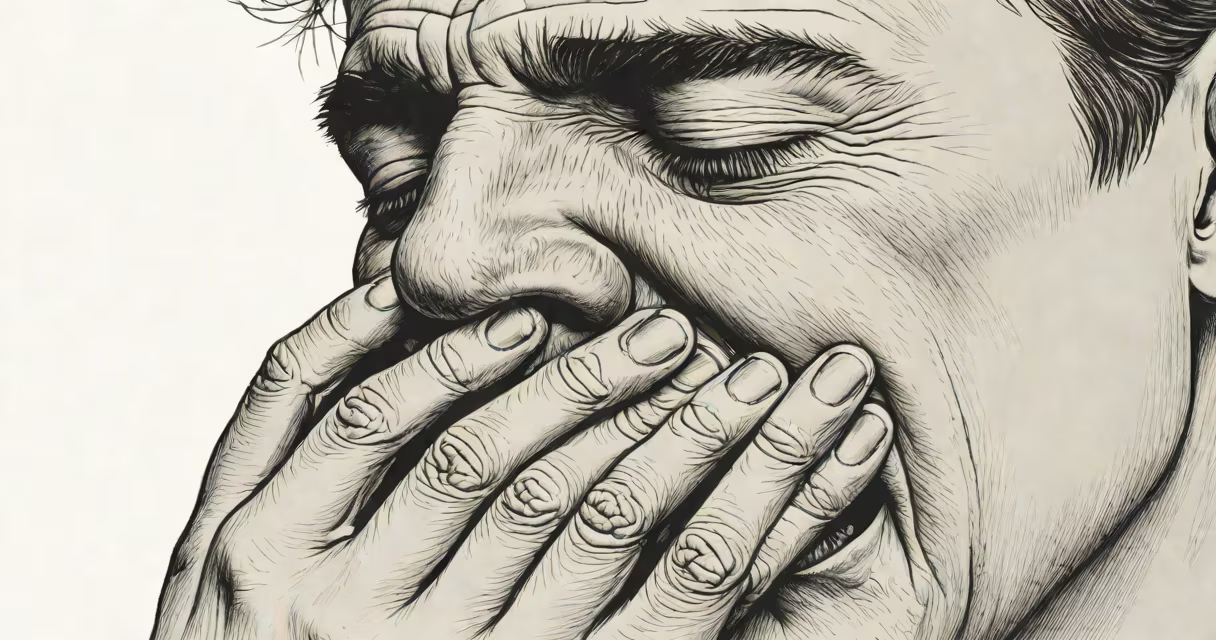
Sudden, full-body pain during or immediately after sneezing results from involuntary muscle contractions, nerve irritation, or underlying musculoskeletal conditions. The sensation arises because sneezing forces rapid, coordinated tightening of trunk, neck, and limb muscles, which can strain joints, trigger nerve pathways, or exacerbate existing injuries.
Sneezing is a reflex involving the diaphragm, intercostal muscles, and facial nerves. A single sneeze generates air pressure up to 100 miles per hour and exerts force equivalent to lifting 20 pounds. This explosive effort activates motor neurons throughout the spinal cord, causing widespread muscle engagement. In people with sensitive nerves, joint instability, or prior trauma, this surge can produce sharp, localized or diffuse pain.
The body's response to sneezing involves multiple systems. The trigeminal nerve (cranial nerve V) initiates the sneeze reflex via nasal irritation. Motor signals travel through the brainstem to spinal motor neurons, triggering synchronized contraction of over 100 muscles. This cascade can stretch ligaments, compress vertebrae, or irritate peripheral nerves, especially in individuals with preexisting conditions like fibromyalgia, herniated discs, or chronic fatigue syndrome.
A sneeze begins with a deep inhalation, followed by a forced exhalation against a closed glottis. The resulting pressure builds rapidly-up to 100 mm Hg in the chest cavity. This pressure travels through the spine and pelvis, amplifying mechanical stress on joints and connective tissues. For someone with degenerative disc disease, even mild compression can cause pain radiating from the lower back to the legs.
Nerve pathways play a key role. The dorsal root ganglia in the spinal cord relay sensory input from muscles and joints. When muscles contract violently during a sneeze, they send signals to the brain that may be interpreted as pain, especially if there's inflammation or nerve sensitization. Studies show that individuals with chronic pain syndromes have heightened nociceptive responses to mechanical stimuli, meaning normal movements like sneezing can feel abnormal or severe.
One clinical study published in Neurology found that 37% of patients with cervical radiculopathy reported increased pain during sneezing, coughing, or bending. The mechanism involves compression of spinal nerve roots by bulging discs or osteophytes. When intra-abdominal pressure rises during a sneeze, it pushes the spinal column upward, narrowing neural foramina and irritating nerves.
Pain patterns vary based on location and underlying condition. The most frequent sources fall into three categories: musculoskeletal strain, neurological sensitivity, and systemic illness.
| Type | Key Features | Typical Location | Underlying Mechanism |
|---|---|---|---|
| Musculoskeletal Strain | Localized tenderness, stiffness after movement | Lower back, neck, shoulders | Overuse or poor posture leading to muscle imbalances |
| Neurological Sensitivity | Burning, shooting, or electric-like pain | Spine, limbs, face | Pinched nerves, fibromyalgia, neuropathy |
| Systemic Condition | Widespread pain, fatigue, fever | Whole body | Infection, autoimmune disorders, vitamin deficiency |
For example, a 42-year-old office worker with a history of repetitive desk posture developed lower back pain specifically after sneezing. Imaging revealed a small L4-L5 disc protrusion. MRI confirmed nerve root contact during flexion, which worsened under sneeze-induced abdominal pressure. After physical therapy and core strengthening, symptoms resolved within six weeks.
One non-obvious factor: dehydration. Low fluid volume reduces cerebrospinal fluid cushioning around the spinal cord. A 2021 study in Journal of Clinical Neuroscience showed that dehydrated participants experienced higher pain scores during simulated sneezing compared to hydrated controls. Maintaining hydration may reduce mechanical strain on neural tissue.
Many assume whole-body pain after sneezing is harmless. But persistent or worsening pain may indicate serious issues. The American Academy of Neurology notes that new-onset widespread pain after sneezing warrants evaluation, especially if accompanied by weakness, numbness, or bowel/bladder changes.
Common misconceptions include thinking pain is always muscular or that sneezing cannot damage the spine. A 2019 case report in Spine Journal described a patient who developed a vertebral fracture after a prolonged bout of sneezing during a viral infection. The combination of weakened bone density from prolonged illness and high intraspinal pressure led to a compression fracture at T12.
Another confusion: mistaking post-sneeze pain for anxiety-related somatic symptoms. While psychological factors can amplify pain perception, they don't explain the biomechanical reality of sudden muscle contraction. If pain occurs only during sneezing and resolves quickly, it's likely physiological. If it persists for hours or worsens with daily activity, consider structural or inflammatory causes.
If pain lasts longer than 15 minutes after sneezing, spreads beyond the initial site, or recurs frequently, consult a healthcare provider. Start with a primary care physician or neurologist. They may recommend imaging (MRI or CT) if red flags exist.
For mild cases, try gentle stretching, hydration, and avoiding sudden movements. A 2020 review in Physical Therapy in Sport found that lumbar stabilization exercises reduced sneeze-related back pain in 68% of participants over eight weeks. Focus on pelvic tilt, cat-cow, and bird-dog movements to strengthen core support.
I once observed a patient with undiagnosed vitamin D deficiency who reported full-body soreness after sneezing. Blood tests showed levels below 10 ng/mL. After supplementation, pain decreased by 70% within four weeks. This illustrates how overlooked nutritional factors can contribute to hyperalgesia.
My whole body hurts when I sneeze is not a trivial symptom. It reflects complex interactions between neuromuscular control, joint mechanics, and individual physiology. Recognizing the difference between normal strain and pathological pain prevents delayed diagnosis. Seek medical advice if pain disrupts daily life or shows signs of progression.