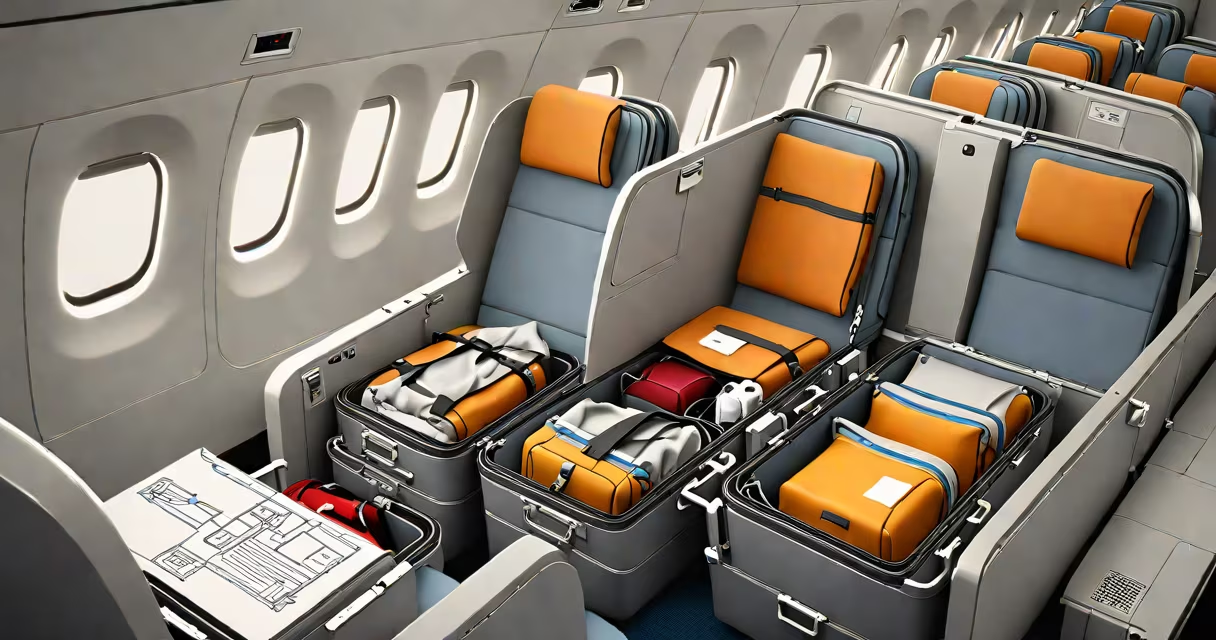
A carry on bag is a personal piece of luggage designed to fit in an airplane's overhead bin or under the seat in front of you. Most airlines limit dimensions to 22 x 14 x 9 inches (56 x 35 x 23 cm), though exact sizes vary. The purpose is to keep essential items accessible during flight and reduce baggage handling delays.
Carry on bags are standard for domestic and international flights. They allow passengers to avoid checked baggage fees, speed up airport transit, and access valuables like medications, electronics, or clothing changes. Airlines enforce size and weight rules strictly; exceeding them may result in gate denial or additional charges.
According to the Transportation Security Administration (TSA), carry on bags must be stowed during takeoff and landing. The Federal Aviation Administration (FAA) requires all cabin baggage to be secured to prevent movement during turbulence. Failure to comply risks safety inspections or removal of the bag from the plane.
When boarding, passengers place their carry on bag in the overhead bin. Airlines assign zones based on row numbers-front rows often have priority. Bags must fit within the bin's physical space. Overhead bins fill quickly on peak travel days, leading to last-minute reassignments or gate checks.
Security screening occurs before boarding. The TSA mandates that liquids in carry on bags be in containers under 3.4 ounces (100 ml) and placed in a single clear quart-sized bag. All electronics over 16 inches (40 cm) must be removed and scanned separately. This includes laptops, tablets, and e-readers.
Passengers who exceed size limits face gate checks. For example, Delta requires bags larger than 22 x 14 x 9 inches to be checked at the gate. United enforces a 18-pound (8.2 kg) weight limit. Exceeding either results in a fee or forced check-in.
Carry on bags fall into three categories: standard, oversized, and personal items. Standard bags meet most airline size requirements. Oversized bags exceed dimensions but still qualify as carry ons under certain carriers. Personal items are smaller than standard carry ons and fit under the seat.
| Type | Max Dimensions (inches) | Max Weight (lbs) | Common Use Cases |
|---|---|---|---|
| Standard Carry On | 22 x 14 x 9 | 35 | Weekend trips, business travel |
| Oversized Carry On | 24 x 16 x 10 | 40 | Family travel, medical equipment |
| Personal Item | 18 x 14 x 8 | 15 | Backpacks, laptop bags, small duffels |
Some airlines offer premium carry on allowances. JetBlue allows 24 x 16 x 10 inch bags for economy passengers. Alaska Airlines permits 24 x 16 x 10 inches for all fare classes. Always verify your airline's policy before traveling.
Non-compliant bags are subject to gate checks. A 2023 study by the International Air Transport Association (IATA) found that 12% of passengers attempting to board with oversized carry on bags were denied entry. The average delay for such incidents was 27 minutes.
Carry on bags are used to transport essentials during air travel. They hold passports, travel documents, chargers, toiletries, and snacks. They also serve as emergency storage during flight disruptions.
Business travelers rely on carry on bags to maintain productivity. A 2022 survey by the Global Business Travel Association found that 68% of corporate flyers prefer carry on bags for short-haul flights. Reasons include faster deplaning, reduced risk of lost luggage, and easier access to work materials.
Travelers with medical conditions use carry on bags to store insulin, oxygen concentrators, or seizure medication. The FAA allows medically necessary devices in carry on bags. Passengers must declare these items at security checkpoints.
Many assume a carry on bag is interchangeable with a personal item. This is incorrect. A personal item must fit under the seat and cannot exceed 18 x 14 x 8 inches. A standard carry on bag exceeds those dimensions and must go in the overhead bin.
Another misconception is that all airlines accept the same size. United and American Airlines both use 22 x 14 x 9 inch limits, but Southwest allows 24 x 16 x 10 inches. Using a bag that fits one airline may fail another. Always check your carrier's policy.
Some travelers believe they can bypass size rules by folding or compressing bags. This is ineffective. Airlines measure bags in their normal state. A compressed bag still counts as oversized if it exceeds the limit when expanded.
One non-obvious fact: wheels and handles do not count toward size. The TSA measures from the outermost edge of the bag, including handles and wheels. A bag with extended wheels may appear larger but still fit if the main body stays within limits.
I flew from Chicago to Miami with a 22 x 14 x 9 inch carry on bag. My bag had a 15-inch laptop, a 12-ounce water bottle, and a pair of shoes. At security, I removed the laptop and placed the bottle in a clear bag. The bag passed through the scanner without issue.
At the gate, I placed the bag in the overhead bin. The bin was half-full. I slid it in sideways and locked the latch. During the flight, I accessed my laptop twice and opened my water bottle at meal service. No staff intervened.
On return, I attempted to board with a 24 x 16 x 10 inch bag. The agent stopped me. "This exceeds our carry on limit," she said. I paid $35 to check it at the counter. The bag arrived 45 minutes after I did.
Always confirm your airline's carry on bag policy before travel. Measure your bag in its natural state. Pack essentials in easily accessible compartments. Declare medical items at security. Consider using a compression sack to save space, but never rely on it to bypass size rules.