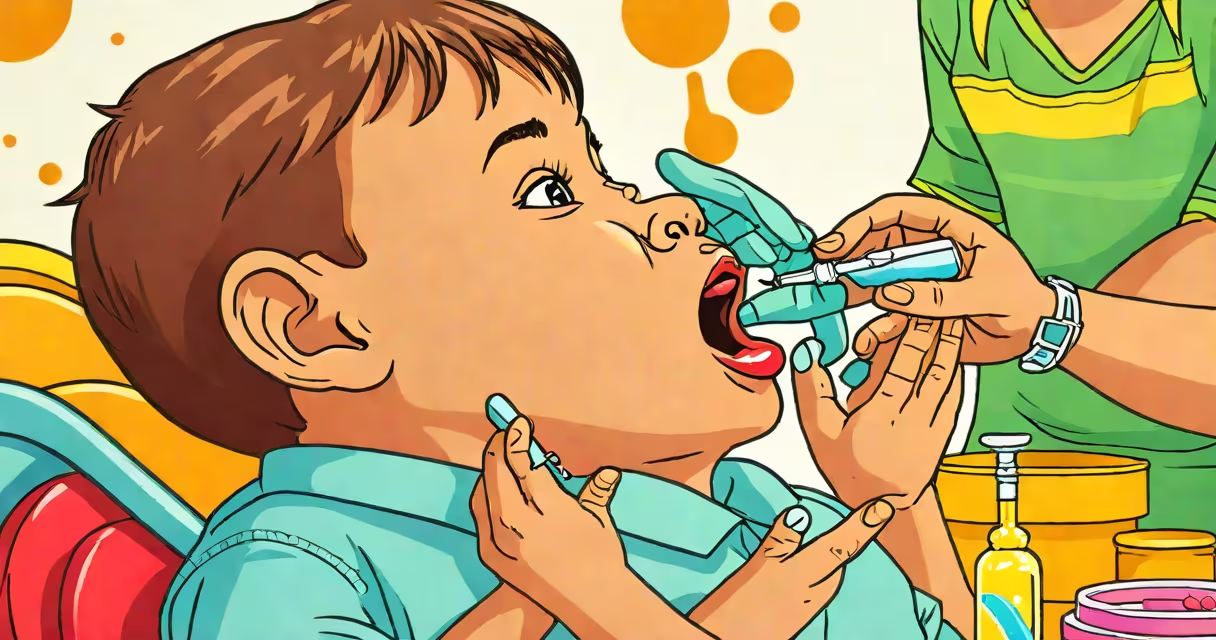
The name of oral polio vaccine is OPV, a live attenuated vaccine given by mouth to prevent infection from poliovirus types 1, 2, and 3. It contains weakened strains of the virus that stimulate immunity without causing disease in healthy individuals.
OPV was developed in the 1960s by virologist Albert Sabin and replaced earlier inactivated polio vaccines (IPV) in many countries due to its ease of administration and ability to induce intestinal immunity. It remains a key tool in global eradication efforts, especially in regions with limited healthcare infrastructure.
Each dose delivers a small amount of live, weakened poliovirus into the digestive tract. The immune system responds by producing antibodies in the gut and bloodstream. This dual protection prevents both illness and fecal shedding of wild virus, reducing transmission during outbreaks.
When ingested, OPV replicates briefly in the intestines, mimicking natural infection. This triggers local IgA antibodies in the gut lining-the first line of defense against poliovirus entering through the mouth. Systemic immunity develops as B and T cells activate throughout the body.
Because the virus is attenuated (weakened), it cannot cause paralytic polio in immunocompetent people. However, in rare cases, the vaccine strain can mutate and revert to neurovirulent forms, leading to vaccine-derived poliovirus (cVDPV) in under-immunized populations.
A single dose of OPV generates protective immunity in about 80% of recipients. Three doses increase effectiveness to over 95%, making it highly efficient for mass vaccination campaigns.
There are two main formulations of OPV:
| Type | Virus Strains | Use Case | Source |
|---|---|---|---|
| Monovalent OPV (mOPV) | One serotype (1, 2, or 3) | Outbreak response | WHO |
| Trivalent OPV (tOPV) | All three serotypes | Routine immunization | WHO |
As of 2023, the World Health Organization phased out tOPV in favor of mOPV1 and mOPV2 for targeted outbreak control. This shift reduces the risk of cVDPV emergence by limiting exposure to multiple serotypes.
OPV is supplied as a liquid suspension in a vial or on a sugar cube. It is stable at room temperature for up to 14 days, enabling delivery in remote areas without refrigeration.
OPV is used in national immunization programs across low- and middle-income countries. It is central to the Global Polio Eradication Initiative (GPEI), which aims to eliminate wild poliovirus worldwide.
India declared itself polio-free in 2014 after 12 years of uninterrupted OPV use. The country conducted over 100 million doses in annual National Immunization Days, demonstrating OPV's scalability in high-population settings.
Despite its benefits, OPV is not used in countries with high routine vaccination coverage and low risk of importation. The United States switched entirely to IPV in 2000 because of the risk of cVDPV, even though the chance is less than 1 in 2.4 million doses.
Many assume OPV causes polio. This is false in healthy individuals. The risk of vaccine-associated paralytic poliomyelitis (VAPP) is extremely low-about 1 in 2.7 million doses. The risk is higher in immunodeficient individuals, who may shed the virus for months.
Another misconception is that OPV is outdated. It remains essential in outbreak zones. For example, in 2022, Nigeria used mOPV1 to stop a cVDPV1 outbreak in Kano State, preventing over 500 potential cases.
Some confuse OPV with IPV. While both protect against polio, IPV uses killed virus and is injected. It provides strong systemic immunity but weaker gut immunity. OPV offers better community protection due to fecal-oral transmission of the vaccine virus, which can passively immunize unvaccinated contacts.
In 2018, I observed a polio vaccination campaign in northern Afghanistan. Health workers distributed OPV drops at roadside clinics during Ramadan. Children sat on mats while mothers held them steady. A single nurse administered 300 doses in four hours. The vaccine was stored in insulated boxes with ice packs, but ambient temperatures reached 42°C. The vials remained effective-proof of OPV's resilience in extreme conditions.
Understanding the difference between OPV and IPV is critical for public health planning:
Both vaccines are recommended by the WHO. Countries use a combination strategy: IPV for primary series, OPV for supplementary campaigns.