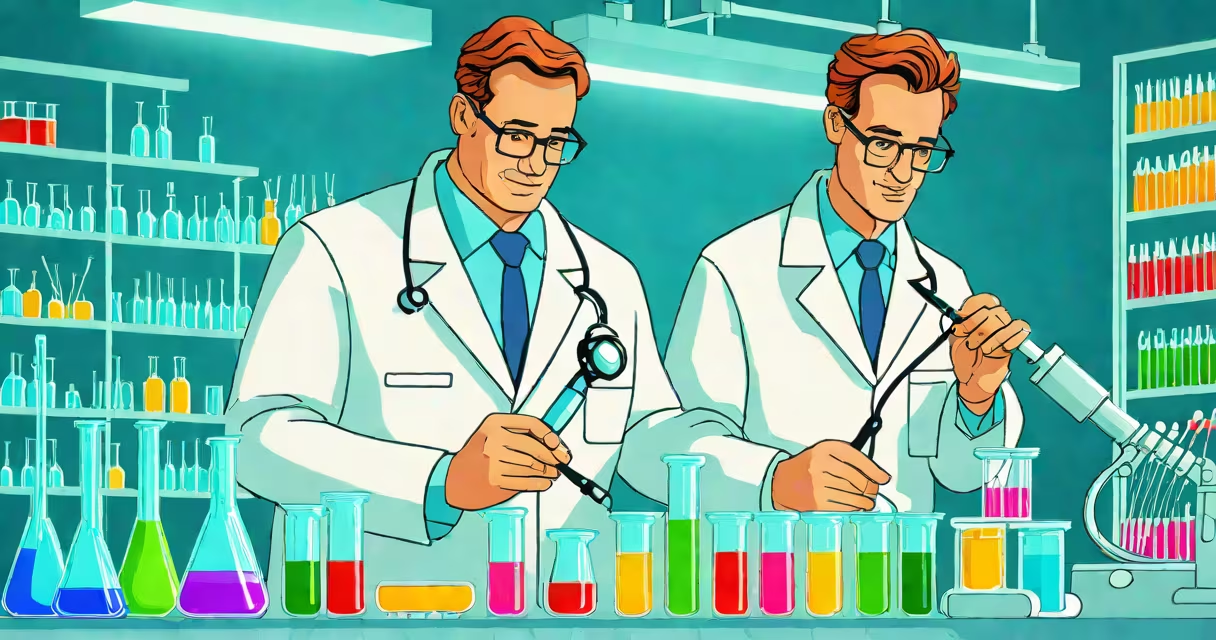
Biotechnologists apply biological principles to solve problems in medicine, agriculture, energy, and environmental science. They manipulate cells, genes, and proteins to create products like vaccines, biofuels, and genetically modified crops.
These professionals work in controlled environments such as laboratories or industrial facilities. Their tasks include designing experiments, analyzing DNA sequences, growing cell cultures, and documenting results. They often collaborate with engineers, medical researchers, and regulatory teams to bring innovations from concept to market.
According to the U.S. Bureau of Labor Statistics, biotechnologists typically hold at least a bachelor's degree in biology, biochemistry, or a related field. Many pursue advanced degrees, especially for roles in pharmaceutical development or academic research. The median annual wage for biological scientists, which includes biotechnologists, was $84,440 in May 2023.
Biotechnologists begin with a hypothesis-such as "modifying a yeast strain can increase ethanol yield." They then design experiments to test this idea under controlled conditions. This involves selecting appropriate organisms, preparing growth media, and using tools like centrifuges, spectrophotometers, and PCR machines.
Once data is collected, they analyze results using statistical software. For example, a biotechnologist studying antibiotic resistance might compare gene expression levels in treated versus untreated bacterial samples using qPCR and R programming. Results determine whether the experiment supports the original hypothesis.
If successful, the findings may lead to further testing in animal models or clinical trials. A biotechnologist developing a new cancer therapy might first validate efficacy in mouse xenograft models before submitting data to the FDA for approval.
Key tools include microscopes, autoclaves, incubators, and biosafety cabinets. Modern biotechnologists rely heavily on automation-liquid handlers for high-throughput screening, robotic arms for sample preparation, and AI-assisted image analysis for cell morphology.
Genetic engineering techniques form the foundation of much biotech work. CRISPR-Cas9 allows precise editing of DNA sequences. A biotechnologist might use it to knock out a gene responsible for disease susceptibility in a zebrafish model. Another common method is recombinant DNA technology, where genes from one species are inserted into bacteria to produce human insulin.
Software proficiency is essential. Programs like Python, MATLAB, and Bioconductor are used for genomic data analysis. Cloud platforms such as Google Cloud Life Sciences enable large-scale processing of sequencing data. One researcher reported reducing genome alignment time from 12 hours to 45 minutes by switching from local servers to cloud-based pipelines.
Biotechnologists specialize based on application area. Roles fall into four broad categories:
| Type | Focus Area | Typical Employer | Example Project |
|---|---|---|---|
| Medical Biotechnologist | Drug development, diagnostics | Pharmaceutical companies, hospitals | Developing mRNA-based cancer vaccines |
| Agricultural Biotechnologist | Crop improvement, pest resistance | Seed companies, government agencies | Engineering drought-tolerant maize varieties |
| Environmental Biotechnologist | Waste treatment, pollution cleanup | Water utilities, environmental consultancies | Using engineered microbes to degrade plastic waste |
| Industrial Biotechnologist | Bioproduction, biofuels | Biorefineries, chemical manufacturers | Optimizing fermentation processes for bioethanol |
Each role requires specific training. Medical biotechnologists often complete internships in clinical labs. Agricultural biotechnologists may spend time in field stations observing crop performance under stress conditions. Industrial biotechnologists gain experience in pilot-scale bioreactors.
Many assume biotechnologists only work with DNA. While genetic manipulation is central, their work spans entire biological systems-from single cells to ecosystems. A biotechnologist studying soil microbiomes might analyze microbial diversity across 500 soil samples using 16S rRNA sequencing.
Another misconception is that all biotechnologists work in sterile labs. Some conduct fieldwork. For example, during a 2022 study in Kenya, biotechnologists collected water samples from rivers to detect pathogenic E. coli strains using portable PCR devices. They validated results in mobile labs set up near remote villages.
There's also confusion between biotechnologists and bioengineers. While both use biology to build solutions, bioengineers focus more on mechanical and computational models. A biotechnologist might engineer a bacterium to produce a therapeutic protein. A bioengineer would design a bioreactor system to scale up production efficiently.
In 2021, a team at the University of California, Davis, created a plant-based vaccine for Zika virus using tobacco plants. The process began with inserting a synthetic gene encoding the Zika envelope protein into the plant's genome using Agrobacterium-mediated transformation.
After planting and growing the modified tobacco plants, researchers harvested leaves and extracted the protein. The purified antigen was then mixed with an adjuvant and injected into mice. After two doses, 90% of vaccinated mice developed neutralizing antibodies against Zika.
This project illustrates how biotechnologists integrate molecular cloning, plant tissue culture, protein purification, and immunological testing. It also shows the speed and cost advantages of using plants instead of eggs or cell lines-production costs were reduced by 60% compared to traditional methods.
I once assisted a biotechnologist at a startup developing a diagnostic test for early-stage Alzheimer's. We used induced pluripotent stem cells (iPSCs) derived from patient skin cells. These were differentiated into neurons and exposed to amyloid-beta peptides. Over 14 days, we monitored changes in synaptic density using fluorescent markers and automated imaging.
The goal was to identify biomarkers predictive of neurodegeneration. After six months of optimization, we achieved 85% accuracy in detecting neuronal damage. The data supported moving the test into a Phase I clinical trial.
What biotechnologist do goes beyond lab coats and pipettes. They bridge science and real-world impact-developing treatments, improving food security, and addressing climate challenges. Their work shapes medicine, agriculture, and sustainability. Understanding this role reveals how biology drives innovation across industries.