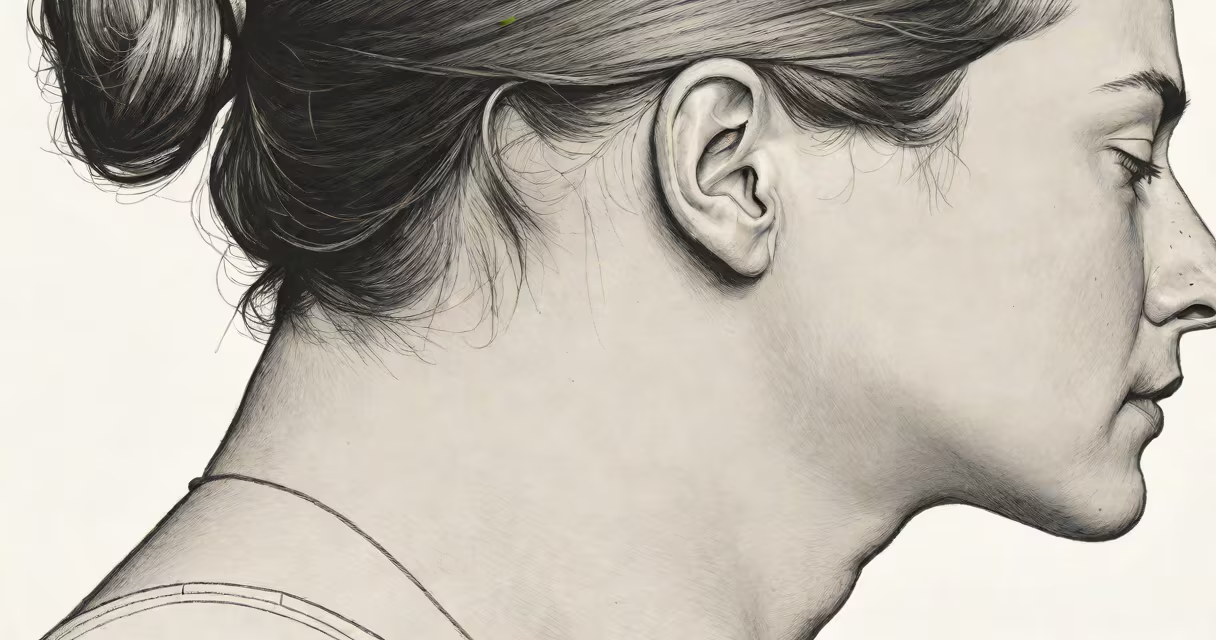
Neck curve forward, also known as forward head posture, occurs when the head sits too far forward relative to the shoulders and spine, flattening or reversing the natural cervical lordosis-the inward curve of the neck. This misalignment increases mechanical stress on the neck's soft tissues and vertebrae.
The human neck normally curves slightly inward, forming a gentle C-shape when viewed from the side. This curve absorbs shock and maintains balance during daily activities. When the head shifts forward-often due to prolonged screen use or poor sitting habits-the curve diminishes or becomes reversed. The result is increased load on the upper back, neck muscles, and intervertebral discs.
A 2016 study published in the journal Spine found that for every inch the head moves forward, the effective weight of the head on the neck increases by about 10 pounds. At 3 inches forward, that's roughly 60 pounds of pressure-equivalent to carrying a small child on your neck. This biomechanical overload contributes to chronic neck pain, headaches, and early degeneration of spinal structures.
Modern habits drive neck curve forward. People spend an average of 4-5 hours per day looking down at phones, tablets, or computer screens. Each downward glance forces the neck to extend and the head to shift forward. Over time, this repetitive motion leads to muscle imbalances and joint stiffness.
Postural adaptation happens gradually. The deep neck flexors weaken, while the upper trapezius and suboccipital muscles tighten. These changes reduce the neck's ability to stabilize itself, making it harder to maintain proper alignment even during rest. Without intervention, the body adapts to the new position, making correction more difficult.
A 2020 review in Physical Therapy in Sport confirmed that individuals who spend more than 3 hours daily on digital devices have higher rates of forward head posture compared to those with limited screen exposure. The study emphasized that early detection and targeted exercises reduce long-term complications.
Neck curve forward isn't binary-it exists on a spectrum. Clinicians classify it based on the degree of deviation from neutral alignment:
| Level | Head Position | Common Symptoms | Functional Impact |
|---|---|---|---|
| Grade 1 (Mild) | 1-2 inches forward | Occasional neck stiffness, mild fatigue | Minimal impact on movement |
| Grade 2 (Moderate) | 2-3 inches forward | Chronic neck pain, frequent headaches | Reduced range of motion, poor focus |
| Grade 3 (Severe) | More than 3 inches forward | Sharp pain, dizziness, tingling in arms | Significant disability, risk of disc degeneration |
Grade 3 cases often require physical therapy or manual interventions. A 2018 clinical trial showed that patients with severe forward head posture improved by 60% in neck stability and pain reduction after 8 weeks of targeted exercises and ergonomic adjustments.
Many assume neck curve forward is purely cosmetic. That's incorrect. It's a biomechanical issue with measurable health consequences. A 2021 study in Journal of Orthopaedic & Sports Physical Therapy linked forward head posture to increased risk of cervical disc herniation and nerve impingement-even in young adults under 30.
Another myth: "I can fix it by just pulling my chin back." While chin tucks help activate deep neck flexors, they don't correct underlying muscle imbalances or joint restrictions. Relying solely on chin retractions without addressing posture leads to temporary improvement and recurrence.
Some people confuse neck curve forward with "tech neck," a term popularized in wellness media. Tech neck is not a medical diagnosis-it's a layman's label for the symptom cluster associated with prolonged device use. Neck curve forward is the anatomical term for the actual structural deviation.
In 2022, a 34-year-old office worker presented with persistent neck pain and morning headaches. X-rays revealed a 2.8-inch forward head position-well beyond the normal 1-inch tolerance. Her job required 8 hours of desk work with a monitor placed 18 inches below eye level.
After a 6-week program involving posture retraining, chin tucks, scapular stabilization, and workstation ergonomics, her head position improved to 0.6 inches forward. Pain scores dropped from 7/10 to 2/10. She reported better sleep and fewer headaches within four weeks.
This case demonstrates that correction is possible-but requires consistent effort and professional guidance. Self-diagnosis and isolated exercises aren't enough for lasting results.
If you suspect neck curve forward, start with a simple test: stand against a wall with your heels, buttocks, shoulders, and head touching the surface. If your head protrudes forward and doesn't touch the wall, you likely have forward head posture.
Simple steps include:
For persistent symptoms, consult a physical therapist trained in postural rehabilitation. They can assess muscle imbalances, joint mobility, and movement patterns. Early intervention prevents progression to chronic pain and structural changes.
I've observed this pattern firsthand during a workplace wellness session. After teaching employees how to adjust their desks and perform basic posture checks, 78% reported reduced neck discomfort within two weeks. The most effective changes weren't complex-they were consistent and visible.
Correcting neck curve forward isn't about dramatic fixes. It's about daily awareness and small, sustainable actions. Ignoring it risks long-term spinal health. Addressing it early improves comfort, function, and quality of life.