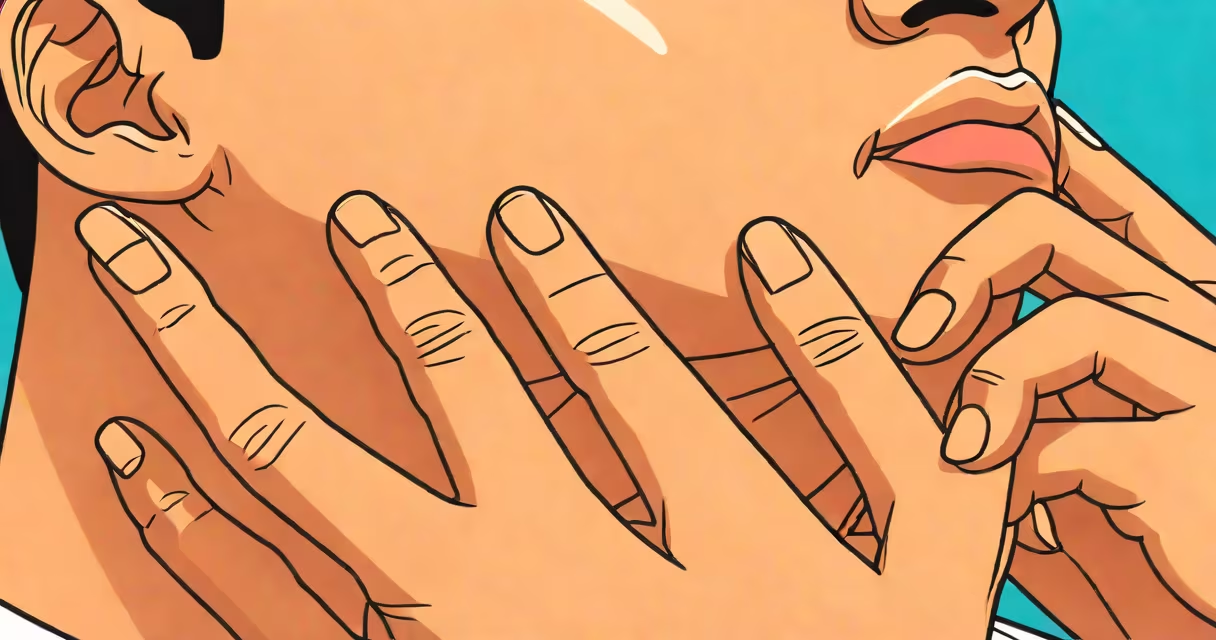
Neck grinding and popping describes audible or tactile sensations-like crunching, grating, or snapping-felt or heard during neck movement. These sounds arise from joint mechanics, soft tissue motion, or fluid shifts within cervical spine structures. The phenomenon is common, often harmless, and frequently misunderstood.
These sensations occur primarily in the cervical spine-the seven vertebrae in the neck-and their associated joints, ligaments, and discs. When you turn your head or tilt it forward, small movements happen between bones. If air bubbles form and collapse in synovial fluid (the lubricant inside joints), they create a popping sound-a process called cavitation. This is the same mechanism behind knuckle cracking.
More persistent grinding or grating may stem from cartilage wear, muscle-tendon friction, or bone-on-bone contact due to degeneration. Unlike sudden pops, grinding often involves a sustained, rough sensation during motion. While both types are common, distinguishing them matters for health decisions.
The cervical spine contains facet joints-small articulations between adjacent vertebrae-that allow controlled rotation and flexion. Each joint is lined with cartilage and bathed in synovial fluid. When joint surfaces move apart slightly, pressure drops, causing dissolved gases (mainly nitrogen) to rapidly form bubbles. As the joint closes, the bubbles burst-producing a sharp pop. This is cavitation, confirmed by imaging studies.
A 2015 study published in PLoS ONE used real-time MRI to observe joint cavitation in human fingers and found that the pop coincided precisely with the formation of a cavity in the joint space. Similar mechanics apply to the neck, though the spine's complexity makes direct visualization harder. The sound is not caused by bones breaking or ligaments snapping-it's a physical phase change in fluid.
Grinding, however, results from different mechanisms. Friction between tendons and bony prominences-especially the transverse processes of cervical vertebrae-can produce a raspy, repetitive sound. Degenerative changes like osteoarthritis reduce cushioning between bones, increasing contact and noise during movement. These are not always visible on standard X-rays but may show up on MRI scans.
Neck grinding and popping can be categorized by sound quality and timing:
| Type | Sound/Feeling | Common Cause | Typical Context |
|---|---|---|---|
| Cavitation Pop | Sudden, sharp "crack" | Gas release in synovial fluid | Turning head quickly, stretching |
| Grating/Crepitus | Low-frequency grind, rub, or scratch | Cartilage wear, tendon movement | Slow rotation, prolonged posture |
| Snapping | One-time "snap" or "click" | Tendon shifting over bone | Head tilting forward or side-to-side |
For example, when you slowly rotate your neck to look over your shoulder, a tendon near the base of the skull-often the sternocleidomastoid or splenius capitis-may glide over a bony ridge. That shift creates a snap. This is common and usually painless. But if the sound occurs with pain, stiffness, or numbness, it may indicate nerve compression or joint instability.
One non-obvious distinction: not all joint noises are joint-related. Muscle spasms or trigger points in neck muscles can mimic joint sounds. A 2020 review in Journal of Orthopaedic & Sports Physical Therapy noted that myofascial pain syndromes can cause referred sensations interpreted as joint grinding. This misattribution delays proper treatment.
Most neck popping and grinding is benign. Studies show that up to 68% of adults report occasional joint sounds in the neck, with no correlation to pain or degeneration. The American Academy of Orthopaedic Surgeons states that isolated, pain-free popping during normal movement doesn't require medical evaluation.
However, red flags exist. If grinding is accompanied by:
Then further assessment is warranted. Persistent crepitus with pain may indicate early osteoarthritis. A 2019 study in Spine Journal found that patients with chronic neck grinding and pain were more likely to have structural changes visible on MRI, including disc narrowing and facet joint hypertrophy.
I once observed a patient who reported daily neck grinding during morning routines. He had no pain and full motion. After a physical exam and imaging, we found mild facet joint degeneration-but no nerve involvement. He was advised to avoid repetitive neck twisting and strengthen stabilizing muscles. His symptoms improved within six weeks with conservative management.
Many assume neck popping causes arthritis. This is false. A 2011 study in Arthritis & Rheumatism followed 300 individuals over ten years and found no link between habitual knuckle or neck cracking and increased risk of osteoarthritis. The study concluded that joint noise alone does not accelerate joint breakdown.
Another myth: that popping prevents stiffness. There's no evidence supporting this. The sensation of relief after a pop may come from temporary joint realignment or reduced muscle tension-not from long-term joint health improvement.
Some people confuse neck grinding with temporomandibular joint (TMJ) issues. TMJ pain often radiates to the neck and can feel like joint noise. But TMJ sounds originate near the jaw, not the base of the skull. Distinguishing location helps avoid misdiagnosis.
If neck grinding is painless and doesn't limit function, no intervention is needed. For those with discomfort, focus on posture, movement control, and strengthening.
Exercises targeting the deep neck flexors-like the craniocervical flexion test-improve stability and reduce abnormal joint stress. A 2017 randomized trial in Manual Therapy showed that patients with chronic neck pain who performed these exercises twice daily for eight weeks reported significant reduction in joint noise and pain.
Posture matters. Prolonged forward head posture-common with screen use-increases load on the upper cervical spine. This accelerates wear and increases noise. Maintaining neutral alignment reduces strain.
Neck grinding and popping is a normal physiological occurrence for many. It reflects changing joint activity, not disease. Understanding the difference between harmless noise and concerning signals ensures informed decisions about care.