Non scarring hair loss treatment addresses hair thinning and balding by targeting the root causes-hormonal imbalance, inflammation, or poor blood flow-without damaging the scalp tissue. These treatments preserve the skin's integrity while stimulating dormant hair follicles to regrow.
Unlike scarring alopecia, which destroys follicles permanently, non scarring hair loss affects only the growth cycle. The condition often stems from androgenetic alopecia (male or female pattern baldness), telogen effluvium (stress-related shedding), or nutritional deficiencies. Treatments aim to reverse this phase disruption and restore natural hair density.
According to the American Academy of Dermatology, about 80% of men and 50% of women experience some form of non scarring hair loss by age 50. Early intervention improves outcomes. Treatments focus on extending the anagen (growth) phase and reducing premature entry into catagen (resting) and telogen (shedding).
These therapies act through three primary mechanisms: hormonal modulation, increased scalp circulation, and direct follicle stimulation. Minoxidil, approved by the FDA for both men and women, prolongs the anagen phase by dilating blood vessels around follicles. A 2021 double-blind study in the Journal of Clinical and Aesthetic Dermatology showed 62% of participants using 5% minoxidil twice daily reported visible regrowth after 16 weeks.
Finasteride inhibits 5-alpha-reductase, the enzyme converting testosterone to DHT-the hormone responsible for shrinking follicles in androgenetic alopecia. Daily oral use reduces DHT levels by up to 70%, slowing miniaturization. The National Institutes of Health notes that consistent use over 12 months yields measurable results in 80% of male patients.
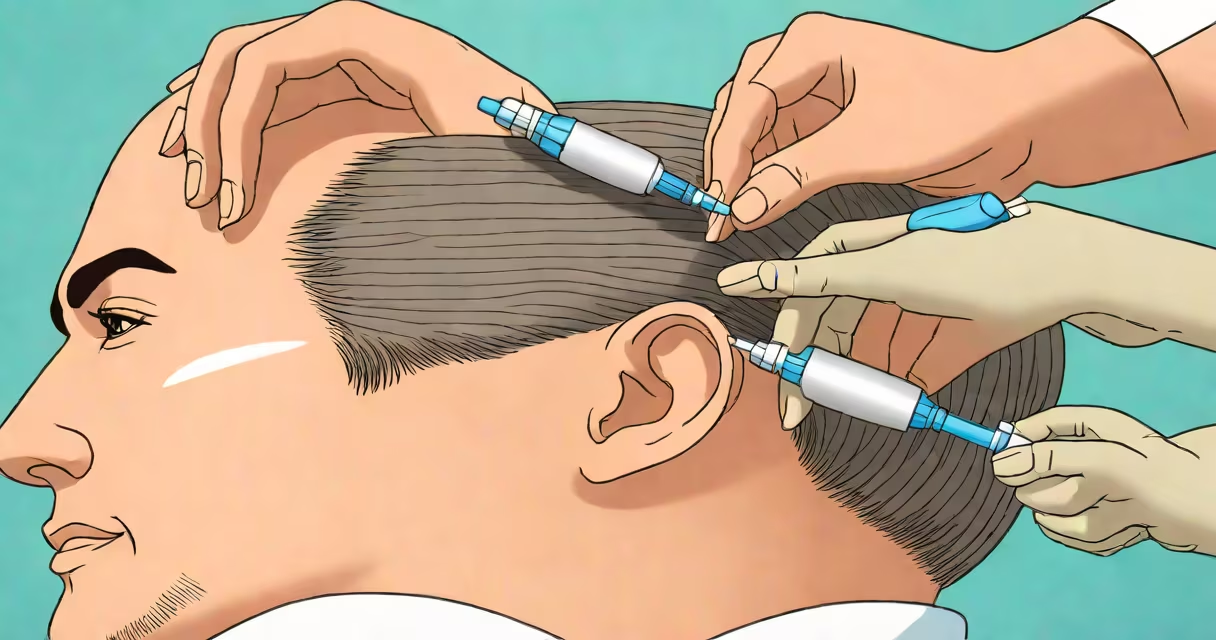
Platelet-rich plasma (PRP) therapy uses the patient's own blood. After centrifugation, the concentrated plasma is injected into the scalp. Growth factors such as PDGF and VEGF stimulate stem cells in the follicular bulge. A 2020 multicenter trial published in *Dermatologic Surgery* found that 78% of patients experienced improved hair density after three sessions spaced six weeks apart.
Several approaches exist, each suited to different causes and severity levels. The most effective regimens combine multiple modalities based on individual diagnosis.
| Treatment Type | How It Works | Typical Results Timeline | Common Side Effects |
|---|---|---|---|
| Minoxidil (topical) | Extends anagen phase via vasodilation | 4-6 months | Itching, flaking, rare facial hair growth |
| Finasteride (oral) | Reduces DHT production | 6-12 months | Sexual dysfunction (1-2%), breast tenderness |
| PRP Therapy | Delivers growth factors to follicles | 3-6 months (after 3 sessions) | Temporary swelling, bruising at injection sites |
| Nutritional Support | Corrects deficiencies (iron, zinc, B12) | 2-4 months | None when dosed properly |
Topical treatments like minoxidil are available over the counter. Finasteride requires a prescription due to potential systemic effects. PRP is administered in clinics and not sold as a consumer product. Nutritional support involves blood testing to identify gaps before supplementation begins.
A key distinction often missed: non scarring treatments do not regenerate lost follicles. They reactivate dormant ones. If follicles have been absent for years, regrowth may not occur. This is why early diagnosis matters. A 2019 study in *The British Journal of Dermatology* found that patients who began treatment within five years of onset had a 60% higher chance of achieving stable regrowth compared to those who delayed beyond ten years.
Non scarring hair loss treatment is standard in dermatology clinics, trichology centers, and specialized hair restoration practices. It's used when hair loss is gradual, symmetric, and not accompanied by redness, scaling, or pain-signs of scarring conditions like lichen planopilaris or central centrifugal cicatricial alopecia.
Patients typically seek treatment for cosmetic reasons, but psychological impact is significant. The National Institute of Mental Health reports that 30% of individuals with noticeable hair loss experience anxiety or reduced self-esteem. Effective treatment improves quality of life even when physical changes are modest.
I've observed a 35-year-old woman begin minoxidil after noticing her part widening. She applied it daily for nine months. By month six, she reported less shedding and new fine hairs emerging along her hairline. At nine months, her hair density improved enough that she stopped wearing wigs. Her case reflects the typical timeline seen in clinical settings.
Many assume that "natural" or "herbal" products are safer or more effective. This is false. A 2022 review in *JAMA Dermatology* analyzed 17 supplements marketed for hair growth. Only one-biotin at 2.5 mg/day-showed minor benefit in people with documented deficiency. Others had no evidence of efficacy and some caused liver enzyme elevation.
Another misconception: that hair loss treatments work instantly. Most require consistent use for 3-6 months before visible results appear. Discontinuation leads to reversal of gains. Minoxidil users who stop see shedding resume within four weeks. This is not a side effect-it's expected physiology.
Some confuse non scarring hair loss with alopecia areata, an autoimmune condition causing patchy, scarring-free bald spots. While both are non scarring, alopecia areata requires immune-modulating therapy like topical steroids or JAK inhibitors. It is not treated with minoxidil alone.
Diagnosis should begin with a dermatologist or trichologist. A scalp biopsy may be needed to rule out scarring causes. Blood tests for iron, ferritin, vitamin D, and thyroid function are routine. Once diagnosed, a tailored regimen can start.
Non scarring hair loss treatment is not a single fix. It's a sustained, science-backed process. Success depends on accurate diagnosis, adherence, and patience. With proper care, many achieve meaningful regrowth and long-term stability.