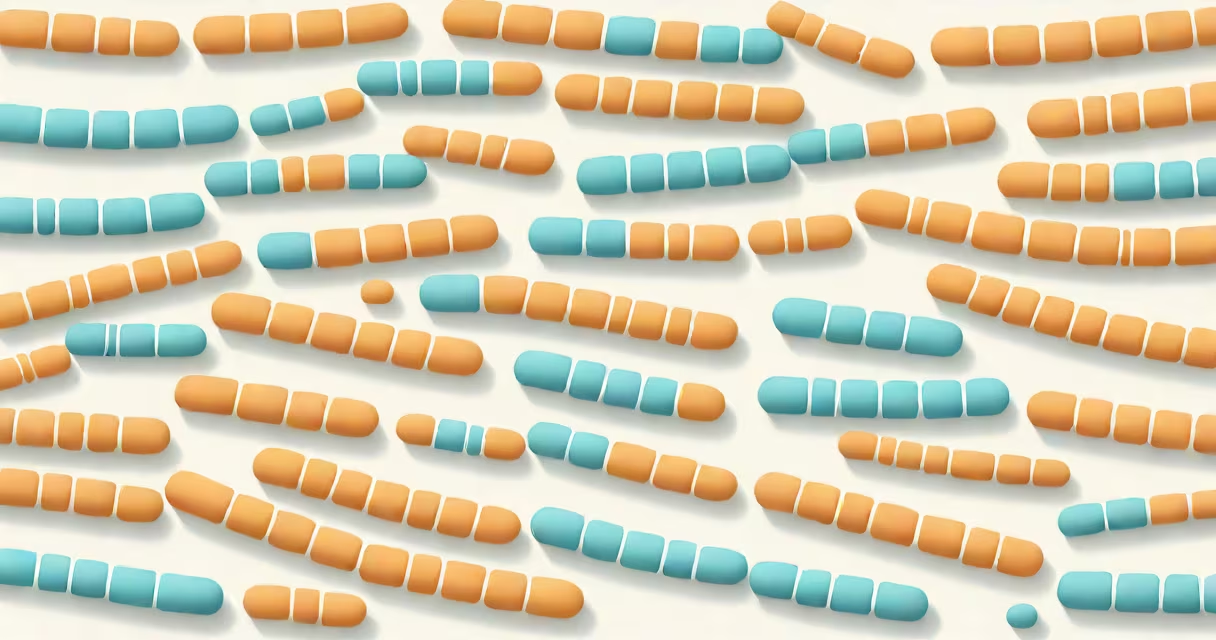
Humans have 46 chromosomes, organized into 23 pairs. This diploid number is consistent across all somatic (non-reproductive) cells and is fundamental to human genetic stability.
Chromosomes are tightly coiled structures made of DNA and proteins. They carry genetic instructions essential for development, growth, and function. In humans, 22 pairs are autosomes-chromosomes that do not determine sex-and one pair consists of the sex chromosomes (XX in females, XY in males).
Each parent contributes one chromosome to each pair during sexual reproduction. Sperm and egg cells contain 23 unpaired chromosomes, known as haploid cells. When fertilization occurs, the resulting zygote restores the diploid number of 46.
Human chromosomes are numbered from 1 to 22 based on size, with chromosome 1 being the largest and chromosome 22 the smallest. The sex chromosomes are designated X and Y. Chromosome 1 contains approximately 249 million base pairs and accounts for about 8% of the human genome.
Chromosomes are visualized using a technique called karyotyping. A sample of cells-typically from blood or amniotic fluid-is cultured, arrested in metaphase, stained with dyes like Giemsa, and photographed under a microscope. The resulting image shows distinct banding patterns that allow scientists to identify individual chromosomes and detect abnormalities.
For example, a karyotype revealing 47 chromosomes instead of 46 indicates aneuploidy-a condition linked to disorders such as Down syndrome (trisomy 21), where an extra copy of chromosome 21 is present.
While the standard number is 46, deviations occur in certain conditions. These variations fall into categories based on whether entire chromosomes are added or removed, or parts are rearranged.
| Type | Description | Example |
|---|---|---|
| Aneuploidy | Abnormal number of chromosomes due to nondisjunction during meiosis | Trisomy 21 (Down syndrome) |
| Polyploidy | Multiple complete sets of chromosomes (rare in humans) | Tetraploidy (4n = 92 chromosomes) |
| Structural abnormality | Breakage or rearrangement within a chromosome | Translocation in Philadelphia chromosome (chronic myeloid leukemia) |
These variations are detectable through karyotyping or molecular techniques like FISH (fluorescence in situ hybridization). The American College of Medical Genetics and Genomics (ACMG) reports that approximately 1 in 160 live births involves a chromosomal abnormality, though most are not clinically significant.
Many assume that the number of chromosomes correlates directly with biological complexity. However, this is incorrect. For example, the fruit fly (Drosophila melanogaster) has only 8 chromosomes, while the adder's tongue fern (Ophioglossum reticulatum) has over 1,200. Human chromosome count is not higher than many other species simply because we are more complex.
Another misconception is that all human cells have 46 chromosomes. While this is true for somatic cells, gametes (sperm and egg cells) have only 23. This reduction helps offspring inherit one set from each parent, maintaining a stable diploid number across generations.
The number of chromosomes does not equate to the number of genes. Humans have roughly 20,000-25,000 protein-coding genes distributed across the 46 chromosomes. The Human Genome Project, completed in 2003, mapped the entire sequence of human DNA, confirming that gene density varies between chromosomes.
In prenatal care, amniocentesis or chorionic villus sampling (CVS) may be performed to analyze fetal chromosomes. A karyotype from amniotic fluid revealed that a fetus had 47 chromosomes, including an extra chromosome 18. This diagnosis confirmed Edwards syndrome, a condition associated with severe developmental delays and a high mortality rate in infancy.
I once observed a clinical genetics lab where a patient with unexplained intellectual disability underwent chromosomal microarray analysis. The test detected a 1.5 Mb deletion on chromosome 16p11.2-a region linked to autism spectrum disorder and developmental delay. This finding explained the patient's symptoms and guided family counseling.
Geneticists rely on standardized reference values. The National Institutes of Health (NIH) states that the diploid number of 46 chromosomes is conserved across all human populations and is a defining feature of Homo sapiens. This consistency allows for accurate comparisons in research and diagnostics.
The number of chromosomes in humans is closely tied to the concept of ploidy-the number of complete sets of chromosomes in a cell. Humans are diploid (2n = 46), meaning they have two sets. Gametes are haploid (n = 23).
Understanding chromosome number also informs evolutionary biology. Comparative genomics shows that humans share 98.8% of their DNA sequence with chimpanzees, despite differences in chromosome number. Chimpanzees have 48 chromosomes; the fusion of two ancestral ape chromosomes created human chromosome 2.
The number of chromosomes in humans is 46. This figure is foundational to human genetics, medical diagnostics, and evolutionary understanding. It reflects both biological consistency and the potential for variation that shapes health and disease.