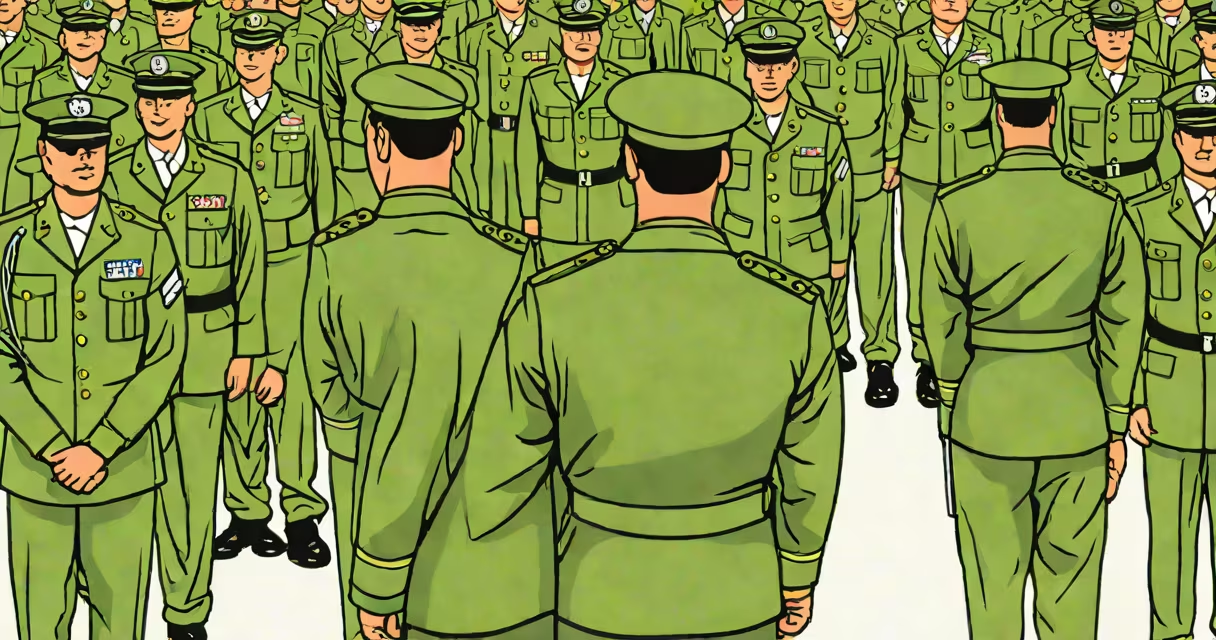
You can leave the military through formal discharge, medical separation, early release programs, or administrative separation, depending on your branch, service length, and circumstances. Each pathway requires specific eligibility and approval processes.
Leaving the military is not a simple resignation. Service members do not "quit" like civilian employees. Instead, they are released through structured procedures governed by the Uniform Code of Military Justice (UCMJ) and individual branch regulations. The most common exit routes include honorable discharge, general under honorable conditions, other than honorable, medical separation, and early release through programs like the Military Accessions Important to the National Interest (MAVNI) or the Special Separation Program (SSP).
Discharge status affects benefits such as VA healthcare, education funding under the GI Bill, and employment opportunities. A general discharge under honorable conditions may limit access to certain federal jobs. An other-than-honorable discharge can result in loss of benefits and legal consequences.
Each branch of the U.S. military-Army, Navy, Air Force, Marine Corps, Space Force-has its own chain of command and administrative system for handling separations. Requests to leave must go through a series of approvals, often requiring a commanding officer's recommendation, a review board, and documentation submitted to the Defense Manpower Data Center (DMDC).
For example, a soldier requesting early release due to family hardship must submit a hardship request form (DD Form 2807-1) along with proof of financial need, medical records, or documentation of a dependent's serious illness. The request moves up the chain of command. If approved at the unit level, it goes to the installation's personnel office, then to the regional military personnel center. Approval is not guaranteed and depends on mission readiness and available replacements.
The process takes time. A typical hardship separation request takes 60 to 90 days to process. Delays occur when supporting documents are incomplete or when the unit determines the member's continued presence is essential to mission success.
Discharge type determines post-service benefits and career access. The four primary categories are:
| Discharge Type | Eligibility Criteria | Benefits Impact |
|---|---|---|
| Honorable | Completed term, met standards, no disciplinary issues | Full VA benefits, GI Bill, federal job eligibility |
| General (Under Honorable Conditions) | Performed duties adequately but had minor misconduct | Most benefits available, but some federal jobs require honorable |
| Other Than Honorable | Major misconduct, failure to meet standards | Loss of most benefits, restricted job access |
| Bad Conduct (Court-Martial) | Convicted by special court-martial | Severe restrictions on benefits and employment |
Medical separation is another route. If a service member develops a condition that prevents them from performing duties-such as chronic back pain, PTSD, or hearing loss-they may qualify for a medical evaluation board (MEB). The MEB reviews clinical records and determines fitness for duty. If deemed unfit, the member receives a disability rating and is separated.
A non-medical example: a Marine with recurring stress fractures was evaluated by a physical evaluation board. After six months of failed rehabilitation, the board recommended separation. He received an honorable discharge and a 30% VA disability rating based on service-connected injury.
Many assume that leaving the military is easy if you simply ask. That is false. The military does not allow unilateral departure. Even if a service member expresses desire to leave, the decision rests with leadership and policy, not personal preference.
Another misconception is that being "tired" or "unhappy" qualifies for early release. Emotional burnout or dissatisfaction doesn't meet the threshold for hardship separation unless paired with documented evidence-such as a spouse's terminal illness, a child's severe medical condition, or a home foreclosure.
I once observed a Navy sailor who requested separation due to anxiety and depression. His initial request was denied because he hadn't completed a mental health evaluation or provided a letter from a licensed therapist. After two months of treatment and a formal psychological assessment, his commander approved the request. He was discharged under honorable conditions and began therapy through the VA.
Service members sign contracts committing them to a minimum term-typically four years for enlisted, four to six for officers. Breaking this contract without approval results in a court-martial or civil penalties. The Army's Article 86 of the UCMJ criminalizes desertion, which includes leaving without permission and refusing to return.
Even if you're stationed overseas, you cannot simply walk away. The Department of Defense maintains strict tracking systems. Missing a deployment or failing to report for duty triggers automatic alerts. The military uses facial recognition at airfields and biometric scanners at bases to monitor movement.
Some service members attempt to exit through civilian channels-like applying for a job abroad or enrolling in college. But the military can still enforce enlistment obligations. For example, a former Air Force technician tried to enroll in a university in Canada. The school reported him to the U.S. embassy. He was detained at the border and returned to base for processing.
There are five main ways to leave the military:
Each option requires application, documentation, and approval. There is no universal "I want out" button. The process aims to maintain operational readiness and ensure accountability.
How can I get out of the military? You can only leave through a formal, approved process. There are no shortcuts. Your exit depends on your service record, medical status, and documented circumstances. Plan carefully, gather evidence, and follow the chain of command.
Understanding the rules is the first step toward making informed decisions about your future.