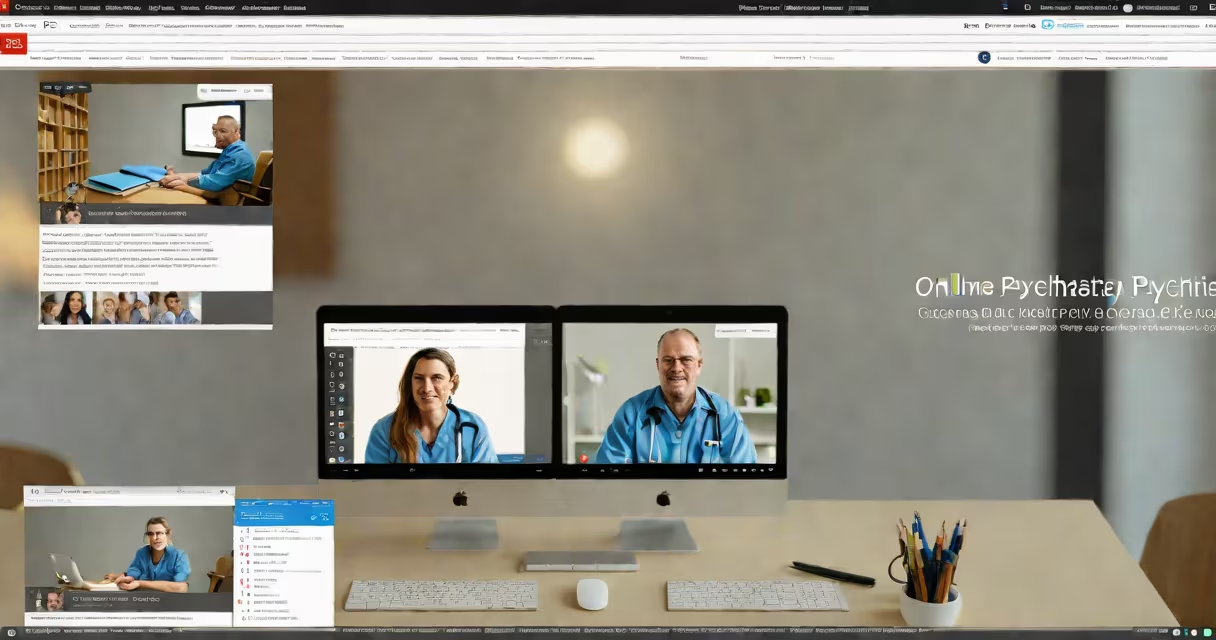
Online psychiatry courses are accredited academic or professional development programs delivered remotely that teach the medical diagnosis, treatment, and management of mental health disorders using evidence-based clinical practices. These courses cover psychiatric evaluation, pharmacotherapy, psychotherapy integration, and ethical decision-making in patient care.
Unlike general mental health or counseling courses, online psychiatry programs focus on the physician's role in mental illness-specifically diagnosing conditions through clinical interviews, interpreting lab results, prescribing psychotropic medications, and managing complex cases. They are designed for licensed physicians, nurse practitioners with psychiatric training, and advanced practice clinicians seeking board certification or continuing education credits.
These courses typically require prior medical training. A student must hold an MD, DO, NP, or equivalent credential to enroll. Most programs are offered by accredited universities, medical schools, or professional organizations such as the American Psychiatric Association (APA) or the Royal College of Psychiatrists.
Participants access course materials through learning management systems (LMS) like Canvas, Moodle, or Blackboard. Content includes recorded lectures, live webinars, interactive case studies, and virtual simulations of patient assessments. Assignments often involve written evaluations of clinical scenarios, medication regimens, or treatment plans.
Courses may last from 6 weeks to 12 months, depending on depth and credit load. Some are self-paced; others follow a fixed schedule with weekly deadlines. Exams are usually proctored via remote monitoring software like ProctorU or Examity to ensure academic integrity.
A typical week in a 10-week course might include: two 45-minute video lectures on mood disorders and substance use, a 30-minute quiz on diagnostic criteria from the DSM-5, a discussion forum analyzing a patient case study, and a 1-hour live Q&A session with a supervising psychiatrist.
Not all online psychiatry courses serve the same purpose. The following table outlines common categories based on audience and goal:
| Type | Target Audience | Duration | Credit Type | Example Provider |
|---|---|---|---|---|
| Board Preparation | Psychiatrists preparing for ABPN exam | 8-12 weeks | Continuing Medical Education (CME) | Psychiatry Online Review, University of California San Diego |
| Residency Support | Psychiatry residents in training | 1 year (curriculum-integrated) | Accredited training hours | Harvard Medical School, VA Telehealth Network |
| Specialty Certification | NPs, PAs, physicians expanding into child/adolescent or geriatric psychiatry | 6-18 months | Postgraduate certificate | University of Pennsylvania, Penn Nursing |
| Continuing Education | Practicing psychiatrists maintaining licensure | 1-4 hours per module | CME credits | American Psychiatric Association (APA) CME Portal |
One key distinction: online psychiatry courses do not replace medical school or psychiatric residency. They are supplemental or advanced training tools. A physician cannot become a psychiatrist solely through an online course-they must complete a four-year psychiatry residency after medical school.
Many assume online psychiatry courses lead to licensure as a psychiatrist. This is incorrect. Only accredited residency programs and state licensing boards grant the authority to practice psychiatry independently. Online courses cannot substitute for clinical training or supervised patient care.
Another misconception is that these courses are equivalent to psychology or counseling degrees. While both fields address mental health, psychiatry is a medical specialty focused on biological and pharmacological interventions. Psychology programs emphasize therapy, assessment, and behavioral science-not prescription rights.
A non-obvious fact: many online psychiatry courses are approved for CME credits by the Accreditation Council for Continuing Medical Education (ACCME). For example, the University of Michigan's "Psychopharmacology for Primary Care Providers" course offers 15 ACCME-approved credits. This allows physicians to meet state requirements for license renewal while staying current on medication guidelines.
In 2022, a rural family physician in Montana completed the University of Washington's online Psychiatry for Primary Care (PFP) program. The course included 12 modules covering depression, bipolar disorder, PTSD, and suicide risk assessment. After finishing, the provider began prescribing SSRIs and SNRIs under state supervision and reduced referrals to distant psychiatrists by 60%.
The program required 120 hours of coursework, including 30 hours of live case conferences. Participants submitted treatment plans for simulated patients and received feedback from board-certified psychiatrists. The physician reported that the module on managing suicidal ideation in adolescents was particularly impactful-"I'd never seen a structured structure for assessing risk in teens before."
This example shows how online psychiatry courses bridge gaps in mental healthcare access. They equip providers in underserved areas with tools to deliver safe, effective psychiatric care locally.
Look for programs hosted by institutions with medical school affiliations or accreditation from bodies like the APA or ACCME. Avoid courses that promise "certification" without specifying the issuing organization or whether it meets state licensing standards.
Reputable providers include:
Always verify that a course offers documented completion certificates recognized by your state's medical board or specialty board.
Online psychiatry courses are not a shortcut to becoming a psychiatrist. They are targeted educational resources for licensed clinicians who want to deepen their expertise in diagnosing and treating mental illness. When chosen carefully, they improve patient outcomes, especially in regions with limited access to psychiatric specialists.