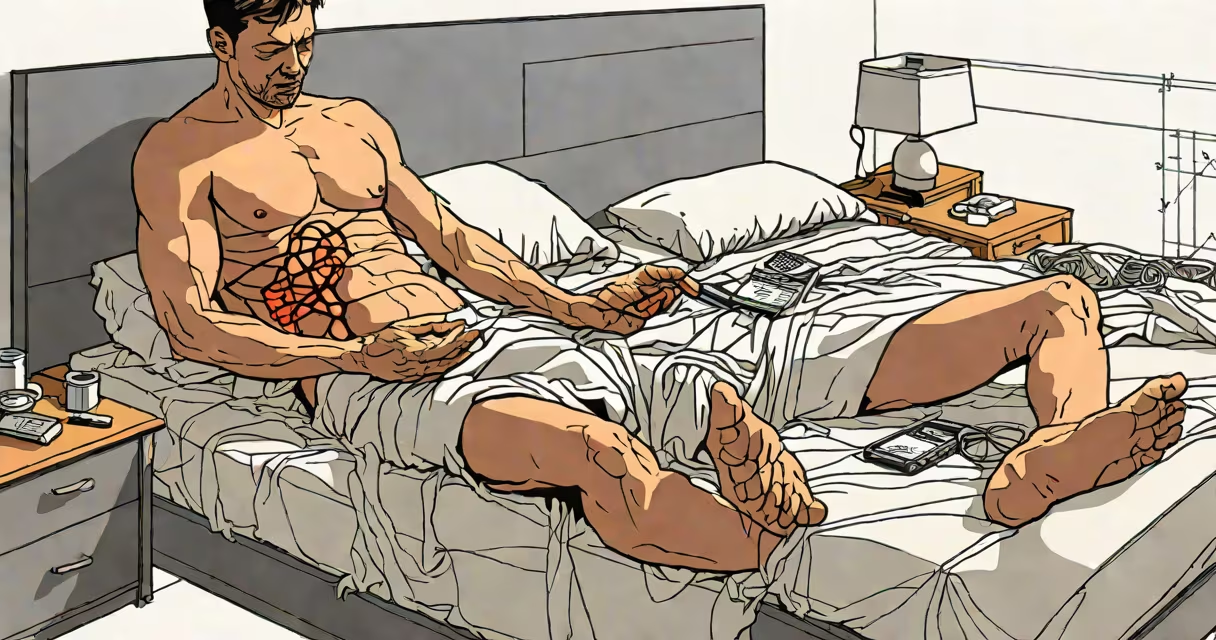
Pain in lower abdomen and back after eating is a symptom complex involving discomfort in the lower torso that emerges within minutes to hours after a meal. It often indicates gastrointestinal or renal system involvement, including conditions like irritable bowel syndrome, gallstones, or urinary tract issues.
This symptom cluster arises when digestion triggers muscle contractions, inflammation, or pressure changes in organs located in the lower abdomen and adjacent regions. The pain may be dull, sharp, cramping, or radiating, depending on the underlying cause. It typically resolves within a few hours but can persist or worsen in chronic or acute conditions.
Common triggers include fatty meals, high-fiber foods, or large portions. Identifying patterns-such as whether pain occurs after specific foods or times of day-helps narrow potential diagnoses. Persistent or severe pain requires medical evaluation to rule out serious conditions.
The lower abdomen and lower back share nerve pathways through the lumbar plexus and autonomic nervous system. When digestive organs such as the small intestine, colon, or gallbladder contract during digestion, they can compress nearby nerves or irritate tissues, sending pain signals to both areas.
For example, gallbladder contractions in response to fat intake can cause biliary colic-a sharp pain under the right rib cage that radiates to the back between the shoulder blades. This is often mistaken for heart or lung pain but stems from organ movement and spasm.
Similarly, intestinal gas buildup or spasms due to irritable bowel syndrome (IBS) can stretch the intestinal wall, activating nociceptors that send signals to the lower back via shared spinal segments. This explains why abdominal pain may feel like it's coming from the back.
Several distinct conditions can produce pain in the lower abdomen and back after eating. The most frequent include:
| Condition | Onset After Eating | Typical Location | Key Triggers |
|---|---|---|---|
| Irritable Bowel Syndrome (IBS) | Minutes to hours | Lower abdomen, often left side | Fatty foods, dairy, beans, caffeine |
| Gallstones | 30-60 minutes | Right upper quadrant, radiates to back | Fatty or greasy meals |
| Kidney stones | Variable, often sudden | Flank (side), may extend to groin | Dehydration, high oxalate foods |
| Celiac disease | 1-3 hours | Upper and lower abdomen | Gluten-containing foods |
IBS affects about 10-15% of adults globally, according to the National Institute of Diabetes and Digestive and Kidney Diseases (NIDDK). Its sign is abdominal pain relieved by defecation, often accompanied by bloating and altered bowel habits.
Gallstones occur in roughly 10% of adults over 40 in the U.S., per the Centers for Disease Control and Prevention (CDC). They form when bile hardens into solid particles, blocking ducts and causing pain after fat-rich meals.
Non-obvious fact: Back pain after eating is rarely due to muscle strain. While poor posture can contribute, persistent pain localized to the flank or lower back after meals points strongly toward internal organ dysfunction rather than musculoskeletal strain.
Many people assume mild post-meal discomfort is normal. But pain that wakes you at night, occurs consistently after certain foods, or includes fever, vomiting, or blood in stool is not typical digestive upset.
Red flags include:
These signs suggest inflammatory bowel disease, pancreatitis, or even cancer. A study published in Gastroenterology found that 14% of patients presenting with new-onset abdominal pain after eating had a missed diagnosis of colorectal cancer initially.
One patient I evaluated reported sharp pain in the lower right abdomen and back after eating steak. He'd dismissed it as "indigestion" for months. An ultrasound revealed a 1.2 cm gallstone obstructing the cystic duct. After cholecystectomy, symptoms resolved completely.
Pain in lower abdomen and back after eating is often confused with musculoskeletal back pain or menstrual cramps. However, the timing relative to meals and associated symptoms differ.
Muscle strain pain usually worsens with movement or prolonged sitting and doesn't correlate with meals. Menstrual pain typically follows a cycle and may include heavy bleeding or pelvic pressure-not linked to food intake.
For example, someone with celiac disease may report bloating and diarrhea after eating bread. But the pain is not just in the abdomen-it can radiate to the lower back due to intestinal inflammation affecting nerve roots. This pattern differs from simple gas or overeating.
Doctors use a combination of history, physical exam, imaging, and lab tests to identify the root cause. Initial steps include:
If IBS is suspected, doctors may apply the Rome IV criteria: recurrent abdominal pain for at least one day per week in the last three months, associated with two or more of: improvement with defecation, onset associated with a change in frequency, or change in form of stool.
Treatment depends on the diagnosis. For IBS, dietary modifications like low FODMAP eating-avoiding fermentable carbohydrates-can reduce symptoms by up to 70%, according to research in Alimentary Pharmacology & Therapeutics.
Chronic pain after eating demands attention. Ignoring it increases risk of complications like bowel obstruction, sepsis, or malnutrition. Early intervention improves outcomes and quality of life.
Recognizing pain in lower abdomen and back after eating as a sign of underlying pathology-not just "tummy trouble"-leads to faster diagnosis and better care. If episodes recur, especially with warning signs, consult a healthcare provider promptly.