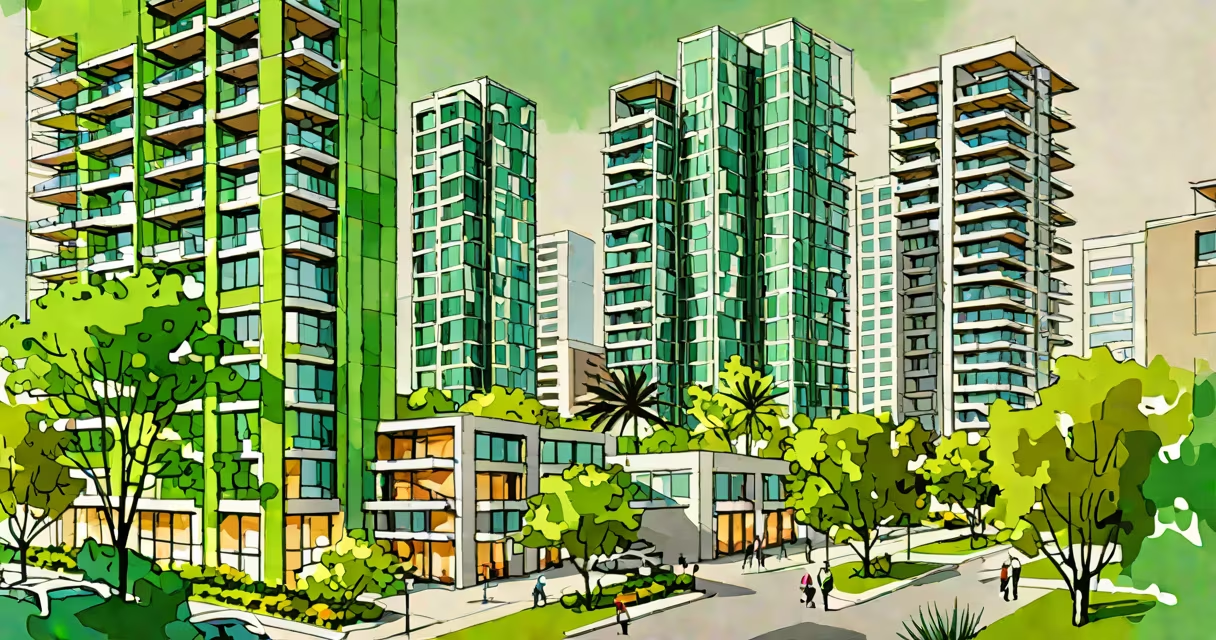
A real estate development degree online is a structured academic program that teaches the full lifecycle of property creation-from site selection and financial modeling to design coordination and construction oversight. These programs deliver core competencies in land use law, capital structuring, zoning compliance, and project management through virtual classrooms and applied case studies.
Students enrolled in a real estate development degree online complete coursework equivalent to on-campus programs, often with the same accreditation standards. The curriculum covers land acquisition strategies, feasibility analysis, entitlement processes, investor relations, and risk mitigation. Graduates emerge equipped to lead multifamily, commercial, or mixed-use projects from concept to completion.
According to the National Council of Real Estate Fiduciaries (NCREFF), 68% of licensed real estate developers hold at least a bachelor's degree in real estate, finance, or urban planning. A degree in this field provides formal grounding in legal frameworks such as the Uniform Land Sales Act and federal tax incentives like 42(a) and 1031 exchanges.
Online real estate development degrees follow a hybrid model combining asynchronous lectures, live webinars, and hands-on simulations. Students access course materials via learning management systems like Canvas or Blackboard, participate in discussion forums, and submit assignments with deadlines aligned to semester schedules.
Courses typically begin with foundational topics: market analysis, site evaluation, and capital stack structuring. As students progress, they engage in capstone projects-such as designing a 120-unit affordable housing complex in a designated Opportunity Zone-where they must present funding proposals, architectural renderings, and timeline forecasts to faculty panels.
Many programs require internships or practicum experiences. For example, the University of Southern California's online Master of Science in Real Estate Development partners with firms like Hines and CBRE to place students in development teams managing actual projects. This integration ensures graduates understand real-world constraints like permitting delays and contractor performance issues.
Real estate development education exists in three primary formats: associate, bachelor's, and master's degrees. Each level builds on the last, with increasing focus on strategy and execution.
| Program Type | Duration | Focus Areas | Typical Career Path |
|---|---|---|---|
| Associate Degree | 2 years | Land surveying, basic zoning codes, construction estimating | Site supervisor, project coordinator |
| Bachelor's Degree | 4 years | Financial modeling, feasibility studies, investor syndication | Development analyst, leasing agent |
| Master's Degree | 1.5-2 years | Entitlements, public-private partnerships, sustainability certifications | Project manager, principal developer |
Some institutions offer graduate certificates as standalone credentials. These typically take nine months to complete and cover essential modules like due diligence, environmental assessments, and lease negotiation. They're ideal for professionals already working in construction or asset management who want to pivot into development roles.
For those seeking flexibility, individual courses in real estate development are available through platforms like Coursera and edX. The University of Illinois' "Real Estate Development: From Concept to Completion" course includes video lectures, peer-reviewed assignments, and a final simulation where learners pitch a redevelopment plan for a vacant downtown retail corridor.
Real estate development degree online programs serve professionals aiming to enter or advance in urban regeneration, affordable housing, and adaptive reuse sectors. They are especially relevant in markets experiencing population growth and infrastructure investment, such as Austin, Denver, and Nashville.
Developers use this training to assess project viability under changing regulatory environments. For example, a developer in Seattle used financial modeling techniques learned in an online program to restructure a $42 million mixed-use project after the city updated its inclusionary zoning policy. The revised proposal added 15% affordable units while maintaining a 7.2% internal rate of return.
These programs also support entrepreneurs launching startups focused on sustainable development. One graduate from the University of Arizona's online program founded a firm specializing in net-zero multifamily buildings in Phoenix. Their success stemmed from applying life-cycle cost analysis and solar integration models taught in the curriculum.
Many assume that earning a real estate development degree online equates to a quick path to ownership. That's incorrect. While online programs provide accessible entry points, most developers still require significant capital, industry connections, and proven track records before securing project funding.
Another misconception is that all online real estate development programs are equivalent. Accreditation matters. The Association to Advance Collegiate Schools of Business (AACSB) accredits only 12% of business schools offering real estate programs. Programs accredited by AACSB or the Council for Higher Education Accreditation (CHEA) meet rigorous standards in faculty qualifications, curriculum design, and student outcomes.
There's also confusion between a real estate development degree and a real estate investing class. The former trains individuals to manage entire projects-from land acquisition to leasing. The latter focuses on identifying undervalued properties, calculating cash-on-cash returns, and executing short-term flips. One cannot substitute for the other.
I once observed a student in a virtual capstone presentation struggle to explain how a variance request affected a project's timeline. He had memorized zoning thresholds but hadn't practiced going through municipal hearings. The feedback highlighted a key gap: theoretical knowledge doesn't always translate to decision-making under pressure. That's why many programs now include role-playing simulations with mock city planning boards.
A real estate development degree online delivers specialized training in project lifecycle management, financial structuring, and regulatory compliance. It's not a shortcut to becoming a developer, but a validated pathway to understanding the complexities of turning raw land into functional, profitable real estate assets.
Understanding the full scope of a real estate development degree online prevents misaligned expectations. It's a disciplined, multi-phase process designed to produce leaders capable of managing risk, coordinating stakeholders, and delivering results in competitive markets.