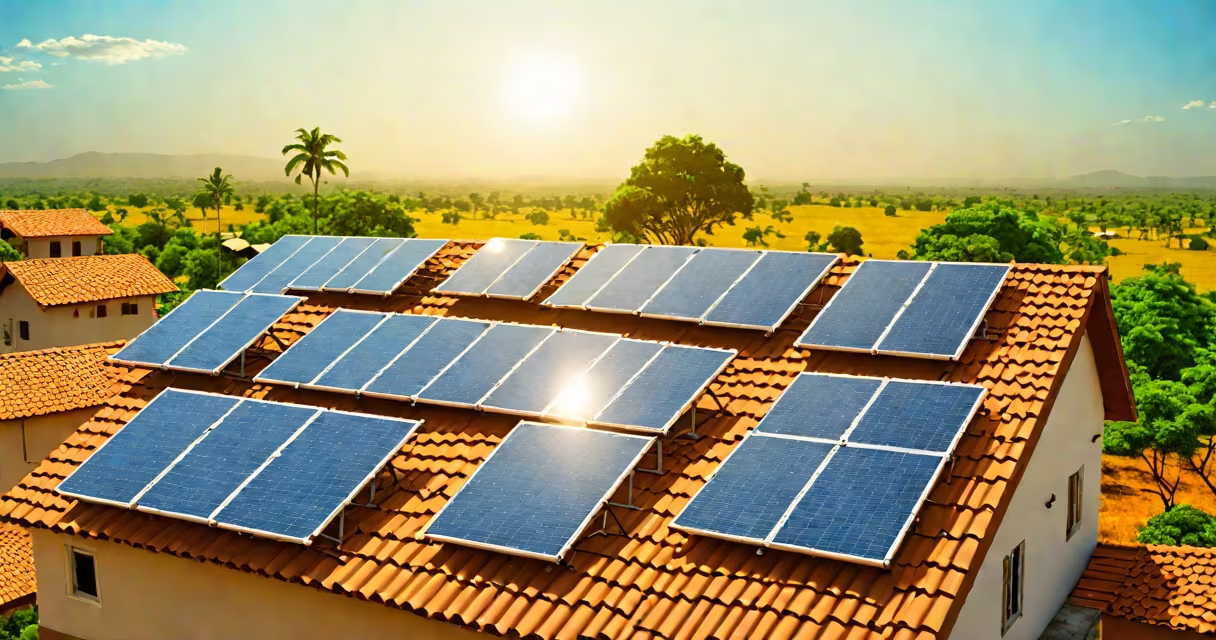
Renewable energy in the developing world refers to electricity generated from natural, replenishable sources like sunlight, wind, and flowing water in low- and middle-income countries, often deployed in remote areas where grid infrastructure is absent or unreliable.
These systems bypass traditional centralized power networks. Instead, they use localized generation-such as rooftop solar panels or small wind turbines-to supply homes, schools, clinics, and small businesses with clean, affordable power. The shift is driven by falling technology costs, mobile payment systems, and international funding aimed at energy equity.
According to the International Renewable Energy Agency (IRENA), over 700 million people globally still lack access to electricity, with 90% living in sub-Saharan Africa and South Asia. Renewable energy in the developing world directly addresses this gap. For example, in Bangladesh, over 6 million households now use solar home systems through the Infrastructure Development Company Limited (IDCOL) program, funded by the World Bank and donor nations.
Most renewable energy projects in developing regions operate off-grid or microgrid models. A typical system includes photovoltaic (PV) panels, a battery bank, a charge controller, and inverters to convert DC to AC power. These components are often packaged into turnkey kits sold or leased via pay-as-you-go (PAYG) platforms.
Users make small daily payments via mobile money apps like M-Pesa in Kenya or bKash in Bangladesh. Once paid in full, ownership transfers. This model reduces upfront cost barriers and enables adoption among low-income families who cannot afford large capital investments.
A 2022 study by the World Bank found that PAYG solar systems increased household income by 15% on average in rural Tanzania, primarily due to extended working hours after dark and reduced spending on kerosene.
The most common forms of renewable energy in the developing world are solar, small-scale wind, and mini-hydro systems. Each suits different geographic and economic conditions.
| Type | Best For | Typical Capacity | Example Application |
|---|---|---|---|
| Solar home systems | Rural households, schools | 10-100 watts | Lighting, phone charging, radio use |
| Mini-grids | Villages, small towns | 1-100 kW | Health clinics, shops, irrigation pumps |
| Small wind turbines | High-wind coastal or mountainous zones | 1-10 kW | Water pumping, community centers |
| Micro-hydro | Areas with consistent water flow | 1-50 kW | Powering multiple homes, small industries |
Hydroelectric systems require stable rivers and significant investment in civil works. However, in Nepal's Himalayan foothills, over 1,200 micro-hydro plants provide power to 300,000 people, with local cooperatives managing operations and maintenance.
Energy access is a prerequisite for education, healthcare, and economic growth. Without electricity, students study by candlelight, clinics cannot refrigerate vaccines, and entrepreneurs cannot run tools after sunset.
In Nigeria, the Rural Electrification Agency (REA) launched a solar mini-grid program in 2019. By 2023, 120 villages had operational systems serving over 40,000 people. One village in Kebbi State reported a 40% rise in small business activity after electrification, including new tailoring shops and mobile charging stations.
Renewable energy in the developing world also reduces carbon emissions. A single solar home system replaces about 150 kg of CO₂ annually compared to kerosene lamps. Scaling such systems across Sub-Saharan Africa could avoid 120 million tons of CO₂ by 2030, according to IRENA.
Many assume renewable energy requires expensive imported hardware and technical expertise. But modern systems are designed for ease of deployment and repair by local technicians. In Uganda, the NGO Practical Action trained over 300 rural youth as solar technicians, enabling rapid response times and reducing dependency on foreign contractors.
Another myth is that renewables are unreliable. Yet hybrid systems combining solar PV with battery storage and backup diesel generators have proven highly dependable. In Haiti, a solar-diesel hybrid system powers a hospital in Port-au-Prince, maintaining critical services during frequent grid outages.
Renewable energy in the developing world is not solely about replacing fossil fuels-it's about building resilient, locally managed energy systems. The focus is on energy sovereignty, not just access.
I visited a solar-powered school in northern Ghana in 2022. Before installation, students studied under dim kerosene lamps. After a 300-watt solar kit was installed, classrooms stayed lit until 9 PM. Teachers reported improved test scores and higher attendance. One student told me, "Now I can read my book at night, even when my father is working."
Renewable energy in the developing world differs from large-scale renewable projects in wealthier nations. Those often involve utility-scale wind farms or solar parks connected to national grids. In contrast, developing-world deployments prioritize decentralization, affordability, and community ownership.
Also, while global headlines focus on corporate-led green transitions, grassroots initiatives dominate in the Global South. Companies like M-KOPA (Kenya), d.light (India), and Fenix International (Central America) have reached millions through mobile-based financing and field service networks.
For context, only 14% of global renewable energy investment goes to sub-Saharan Africa despite its high potential. This imbalance underscores the need for targeted financing and policy support to scale impact.
Understanding the role of renewable energy in the developing world reveals a shift from energy as a commodity to energy as a public good. It's not just about generating electricity-it's about empowering communities.