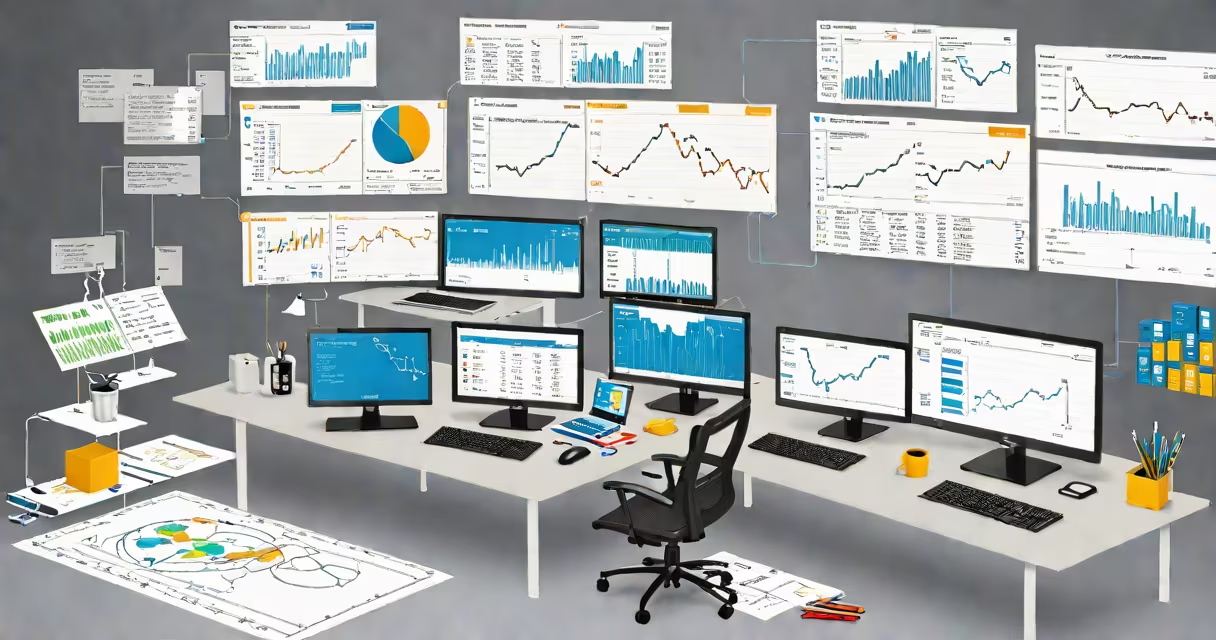
The sap erp platform is a centralized enterprise resource planning system that unifies financial management, human resources, supply chain operations, and customer relationship functions within a single database and application layer. It enables organizations to automate workflows, enforce compliance, and make data-driven decisions across departments.
SAP ERP evolved from legacy systems like SAP R/3 and now operates primarily through SAP S/4HANA, which runs on an in-memory database (SAP HANA). This architecture allows real-time processing of complex transactions and reporting, reducing latency from hours to seconds. For example, a manufacturing company using SAP ERP can update inventory levels instantly after a shipment is recorded, eliminating discrepancies between warehouse logs and accounting records.
Unlike standalone tools such as Excel or basic accounting software, SAP ERP consolidates data across departments. A retail chain with 50 stores uses SAP ERP to synchronize sales data from point-of-sale terminals, automatically adjust inventory, trigger reorders based on demand forecasts, and generate daily financial reports-all without manual intervention. The system enforces consistent business rules globally, ensuring that a transaction in Berlin follows the same logic as one in Tokyo.
SAP ERP operates on a modular architecture. Each module handles a specific business function: FI (Financial Accounting), CO (Controlling), MM (Materials Management), SD (Sales and Distribution), PP (Production Planning), and HR (Human Resources). These modules share a common data model, meaning changes in one area propagate instantly to others. When a sales order is confirmed in SD, the system updates inventory in MM, creates a receivable in FI, and schedules production in PP-all within milliseconds.
At the core is the SAP HANA database, which stores data in columnar format and processes queries directly in RAM. This eliminates the need for traditional data warehousing layers. A logistics manager running a report on delivery performance can filter results by region, carrier, and delivery window in under five seconds, even when analyzing 10 million rows of historical data.
Integration occurs via standardized interfaces. SAP ERP connects to external systems using IDocs (Intermediate Documents), RFC (Remote Function Call), and web services. A company using Salesforce for CRM can push lead data into SAP ERP's SD module via a scheduled job, triggering automatic account creation and sales rep assignment.
Modern SAP ERP platforms are built around three primary layers: the application layer (business logic), the database layer (data storage), and the presentation layer (user interface). The most widely deployed version today is SAP S/4HANA Cloud, which supports both on-premise and cloud deployment models.
| Module Type | Primary Function | Key Use Case | Example Output |
|---|---|---|---|
| FI (Financial Accounting) | General ledger, accounts payable/receivable, asset accounting | Monthly close automation | Automated journal entries for depreciation and tax accruals |
| MM (Materials Management) | Procurement, inventory, vendor management | Supplier contract renewal alerts | Purchase requisition approval workflow |
| SD (Sales and Distribution) | Sales order processing, shipping, billing | Customer credit check during order entry | Invoice generated upon goods receipt |
| PP (Production Planning) | BOM management, capacity planning, production scheduling | Real-time shop floor status tracking | Work order status updated every 15 minutes |
| HR (Human Capital Management) | Payroll, time management, talent development | Leave balance calculation across multiple countries | Automated payroll run with tax compliance checks |
Each module is configurable through transaction codes (e.g., FB03 for viewing a posted invoice) and custom fields. A pharmaceutical firm added a regulatory compliance field to its procurement process to track FDA submission dates for raw materials, ensuring audit readiness.
SAP ERP is often mistaken for a single software package. In reality, it is a structure of integrated applications. You don't "install" SAP ERP-it's deployed as a set. The term "SAP ERP" is shorthand for the entire SAP Business Set, now largely superseded by SAP S/4HANA, which includes embedded analytics, AI-driven insights, and mobile access.
A frequent error is assuming SAP ERP is only for large enterprises. While it scales well for multinational corporations, mid-sized manufacturers and distributors use it successfully. A U.S.-based distributor with $120M in annual revenue reduced month-end close time from 14 days to 48 hours after migrating to SAP S/4HANA, using standard templates and minimal customization.
Another confusion arises between SAP ERP and SAP Business One ERP. The latter is designed for small and medium businesses with fewer than 250 employees. It lacks advanced features like multi-plant production planning and global tax compliance. A company with 150 staff chose SAP Business One ERP because it offered lower licensing costs and faster implementation timelines-typically under 90 days compared to 6-12 months for full SAP ERP.
A European automotive supplier implemented SAP ERP to manage its global supply chain. The company had 12 factories across Germany, Italy, and Poland, each using different ERP systems. Integration was impossible, leading to delayed shipments and inaccurate inventory counts.
After deploying SAP ERP with S/4HANA, they connected all plants through a central master data repository. Material requirements were calculated centrally using real-time demand signals from customers. When a car manufacturer placed a rush order for 2,000 brake calipers, the system flagged a shortage of cast iron blocks at the Polish plant. It automatically created a purchase requisition, assigned a priority level, and notified the logistics team. Within 90 minutes, the material was sourced from a secondary supplier in France, and production resumed without delay.
This integration reduced stockouts by 63% and improved on-time delivery rates from 78% to 96% within six months. The CFO reported a 17% reduction in working capital tied to inventory due to better forecasting accuracy.
As noted by SAP's official documentation, "SAP S/4HANA delivers real-time insights across business processes, enabling continuous optimization." According to Gartner's 2023 Magic Quadrant for Enterprise Resource Planning, SAP leads in functional breadth and scalability among enterprise software vendors.
Understanding the sap erp platform means recognizing it as a changing, interconnected system-not a static product. Its value lies not in individual modules but in their synchronized execution across geographies, currencies, and business units. Organizations that treat it as a strategic foundation, rather than a technical tool, achieve measurable gains in agility, compliance, and profitability.