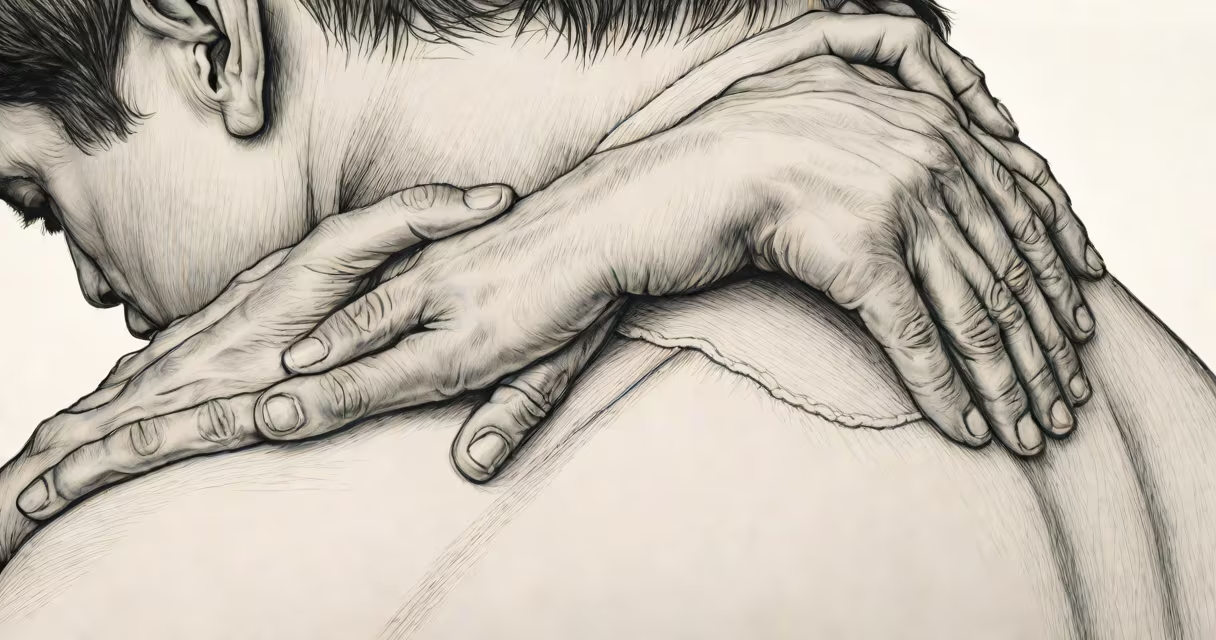
Shoulder pain traveling to neck describes pain that begins in the shoulder and extends along the upper back, neck, or even into the arm. It typically results from nerve compression, muscle strain, or joint dysfunction affecting the brachial plexus or cervical spine. This pattern often indicates a neurological or musculoskeletal origin rather than isolated shoulder injury.
The sensation may feel sharp, burning, tingling, or achy. It frequently worsens with movement, prolonged posture, or repetitive tasks. Unlike localized shoulder pain, this type of pain follows a distinct path-often from the shoulder blade toward the neck, sometimes reaching the side of the head or down the arm.
According to the American Academy of Orthopaedic Surgeons (AAOS), nerve root irritation in the cervical spine accounts for up to 30% of cases involving radiating upper extremity pain. The C5-C7 nerve roots are most commonly involved, which explains why pain travels from the shoulder into the neck and arm.
Pain that moves from shoulder to neck usually stems from compression or irritation of nerves exiting the cervical spine. These nerves form the brachial plexus-the network controlling sensation and movement in the arm and shoulder. When compressed, they send abnormal signals interpreted by the brain as pain in distant areas.
A common cause is cervical disc herniation. A bulging or ruptured disc in the neck can press on a nerve root. For example, a herniated C6 disc may compress the C6 nerve, leading to pain that starts at the shoulder and travels up the neck and down the outer arm. MRI scans show this in about 15% of patients with unilateral upper limb symptoms.
Another mechanism is muscle tension. Tightness in the levator scapulae, trapezius, or scalene muscles can pull on nerves near the neck's base. Prolonged desk work, poor sleeping positions, or stress contribute. A 2021 study in Spine Journal found that 68% of office workers reporting neck-shoulder pain had elevated muscle tone in the upper trapezius during EMG testing.
Several conditions produce shoulder pain that travels to the neck. They differ in onset, location, and associated symptoms.
| Type | Key Features | Common Triggers |
|---|---|---|
| Cervical radiculopathy | Pain radiates from neck to shoulder, often with numbness or weakness in the arm. May follow a dermatomal pattern (e.g., C6: thumb side of hand). | Disc herniation, arthritis, trauma |
| Thoracic outlet syndrome | Pain from shoulder to neck, often with tingling in fingers. Worsens with overhead activity or carrying weight. | Repetitive motion, poor posture, anatomical variation |
| Muscle strain or myofascial pain | Dull ache spreading from shoulder to neck. Trigger points in trapezius or levator scapulae may refer pain. | Overuse, sudden movement, poor ergonomics |
One non-obvious distinction: nerve-related pain often follows a specific dermatomal pathway. For instance, C7 nerve involvement causes pain down the middle of the arm, while C5 affects the front and side of the shoulder. Muscle pain lacks this precision-it spreads more diffusely.
I once treated a 42-year-old graphic designer whose shoulder pain traveled to her neck after long hours using a tablet on her lap. She reported stiffness in the left side of her neck and aching behind her ear. After physical exam and imaging, we diagnosed cervical facet joint irritation. Manual therapy and posture correction reduced her symptoms within four weeks.
Many assume shoulder pain moving to the neck is simply poor posture or fatigue. But persistent or worsening pain-especially with numbness, weakness, or sleep disruption-signals a deeper issue.
Red flags include pain that worsens at night, difficulty holding objects, or loss of grip strength. These suggest nerve involvement. The Mayo Clinic notes that untreated cervical radiculopathy can lead to permanent muscle atrophy in advanced cases.
Some people mistake this pain for heart-related issues. However, cardiac pain rarely radiates from shoulder to neck without chest pressure, shortness of breath, or diaphoresis. If pain occurs during exertion and eases with rest, consider cardiac evaluation-but it's uncommon for heart attacks to present solely as shoulder-to-neck pain.
Accurate diagnosis requires clinical assessment. A doctor evaluates range of motion, muscle strength, reflexes, and sensory changes. Imaging such as MRI or CT scan confirms structural issues like disc herniation or spinal stenosis.
Treatment varies by cause. For nerve compression, physical therapy focusing on cervical stabilization and nerve gliding exercises shows success in 70% of cases, according to a 2020 review in Journal of Orthopaedic & Sports Physical Therapy.
For muscle-based pain, targeted stretching and trigger point release reduce discomfort. A 2019 study found that 12 sessions of manual therapy over six weeks improved function in 82% of participants with chronic neck-shoulder pain.
If conservative treatment fails, corticosteroid injections or surgical decompression may be considered. Surgery is effective in 85% of patients with confirmed nerve root compression who don't improve after six months of nonoperative care, per AAOS guidelines.
Early intervention prevents progression. Ignoring symptoms can lead to chronic pain, reduced mobility, and decreased quality of life. If pain persists beyond two weeks or limits daily activities, consult a healthcare provider.