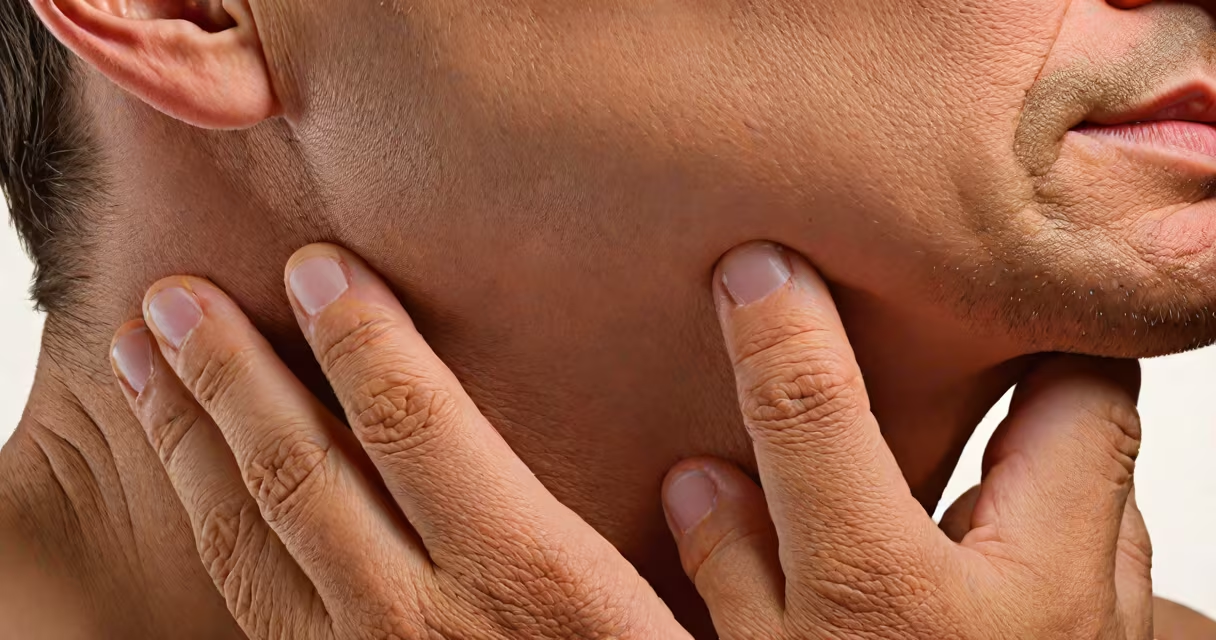
A sore throat painful to touch neck indicates localized inflammation, usually from infection, swelling of lymph nodes, or muscle strain. The pain worsens with pressure, movement, or swallowing due to irritation in the throat's connective tissues or nearby cervical lymph nodes.
This symptom most commonly results from acute upper respiratory infections. Viral pharyngitis accounts for 70-80% of sore throats, but bacterial causes like group A streptococcus (strep throat) can produce severe tenderness. Swollen lymph nodes in the neck-especially under the jaw or along the sides-are a key physical sign. When these nodes enlarge due to immune response, they become sensitive to touch.
Other contributors include postnasal drip from allergies or sinusitis, which irritates the throat lining. Less common causes include thyroid inflammation (thyroiditis), salivary gland infections (sialadenitis), or referred pain from dental issues. Rarely, persistent neck tenderness may indicate deeper pathology such as tuberculosis, lymphoma, or metastatic cancer-but these are uncommon and typically present with additional systemic symptoms.
Pain upon touching the neck near the throat arises from nociceptors-nerve endings that detect tissue damage or inflammation. When the pharynx or cervical lymph nodes swell, pressure builds on surrounding nerves. This activates pain pathways to the brain, resulting in sharp or dull discomfort during palpation.
Lymph node enlargement is a sign of immune activation. For example, in strep throat, streptococcal bacteria trigger a rapid immune response. White blood cells flood the lymph nodes in the neck, causing them to swell and become tender. Palpation reveals firm, mobile nodes that hurt when pressed-distinct from the soft, non-tender nodes seen in benign conditions.
Neck muscles can also contribute. The sternocleidomastoid muscle runs from the skull base to the collarbone and passes near the throat. Overuse from poor posture, sudden movement, or tension can cause muscle strain, leading to localized pain that worsens with neck flexion or pressure.
Conditions presenting with sore throat painful to touch neck fall into three categories: infectious, inflammatory, and structural.
| Type | Common Cause | Key Features | Diagnostic Clue |
|---|---|---|---|
| Infectious | Streptococcus pyogenes (strep) | Severe throat pain, fever >38.3°C (101°F), white patches on tonsils, tender anterior cervical lymph nodes | Positive rapid antigen test or throat culture |
| Infectious | Epstein-Barr virus (mononucleosis) | Extreme fatigue, swollen glands, enlarged spleen, atypical lymphocytes on blood smear | Heterophile antibody test positive |
| Inflammatory | Allergic rhinitis with postnasal drip | Chronic irritation, runny nose, sneezing, mucus pooling in throat | History of seasonal allergies, improvement with antihistamines |
| Structural | Thyroiditis (e.g., Hashimoto's) | Dull ache in front of neck, thyroid enlargement, fatigue, weight changes | Thyroid function tests show abnormal TSH, T4 levels |
Strep throat affects about 10-15% of adults with sore throat. According to the Centers for Disease Control and Prevention (CDC), untreated strep can lead to complications like rheumatic fever or post-streptococcal glomerulonephritis. Early diagnosis via rapid antigen detection testing improves outcomes and reduces transmission risk.
Non-obvious distinction: Not all swollen lymph nodes are infected. Nodes can enlarge due to immune responses to vaccines, autoimmune disorders, or even stress. However, nodes that are hard, fixed in place, or persist beyond two weeks warrant further evaluation.
Many assume a sore throat painful to touch neck is always viral. That's incorrect. While most cases resolve within 7-10 days, persistent or worsening symptoms suggest bacterial infection or other pathology.
Red flags include: fever above 38.3°C (101°F), difficulty swallowing or breathing, drooling (indicating inability to manage saliva), visible pus on tonsils, or neck stiffness. These signs require prompt medical assessment. A stiff neck with sore throat may signal meningitis-a rare but life-threatening condition requiring immediate hospitalization.
One common misconception is that a sore throat with neck pain always means strep. The American Academy of Otolaryngology-Head and Neck Surgery notes that only 10-15% of adult sore throats are strep-related. Overprescribing antibiotics for viral infections contributes to antimicrobial resistance.
Another error: assuming all neck tenderness stems from the throat. Pain from the temporomandibular joint (TMJ) or cervical spine issues can radiate to the throat area. A patient with TMJ dysfunction may report throat pain that worsens when opening the mouth wide-mistaken for pharyngitis.
A 28-year-old teacher presented with five days of progressive sore throat, difficulty swallowing, and bilateral neck pain. On exam, she had a temperature of 39.1°C (102.4°F), erythematous tonsils with exudate, and tender, enlarged submandibular lymph nodes. Her rapid strep test was positive.
She was prescribed penicillin V 500 mg twice daily for ten days. Within 48 hours, her pain decreased. Follow-up showed resolution of lymphadenopathy and normal throat appearance. She returned to work after seven days.
This case illustrates that timely diagnosis prevents complications. Delayed treatment increases risk of abscess formation or spread to adjacent structures.
During my time as a clinical observer in an urgent care clinic, I saw a pattern: patients with strep throat often flinch when the doctor palpates the neck. They instinctively pull away from the touch, especially around the angle of the jaw. This reaction correlates strongly with lymph node involvement. In contrast, patients with postnasal drip rarely react to palpation-pain is internal, not localized.
That physical cue helped me recognize early signs of infection. It reinforced that objective findings-like tenderness, swelling, and fever-must guide decisions, not just symptoms.
If sore throat painful to touch neck lasts longer than 10 days, worsens, or includes high fever, rash, or difficulty breathing, seek medical attention. A healthcare provider may perform a throat swab, blood tests, or imaging if needed.
For mild cases, rest, hydration, and over-the-counter analgesics like acetaminophen or ibuprofen reduce pain and inflammation. Gargling with warm salt water (1/2 tsp in 8 oz water) provides temporary relief by reducing swelling.
Do not delay care if you notice unilateral swelling, hoarseness lasting more than two weeks, or unexplained weight loss. These may signal less common but serious conditions.
Explore connections between headache, sore throat, and stiff neck.