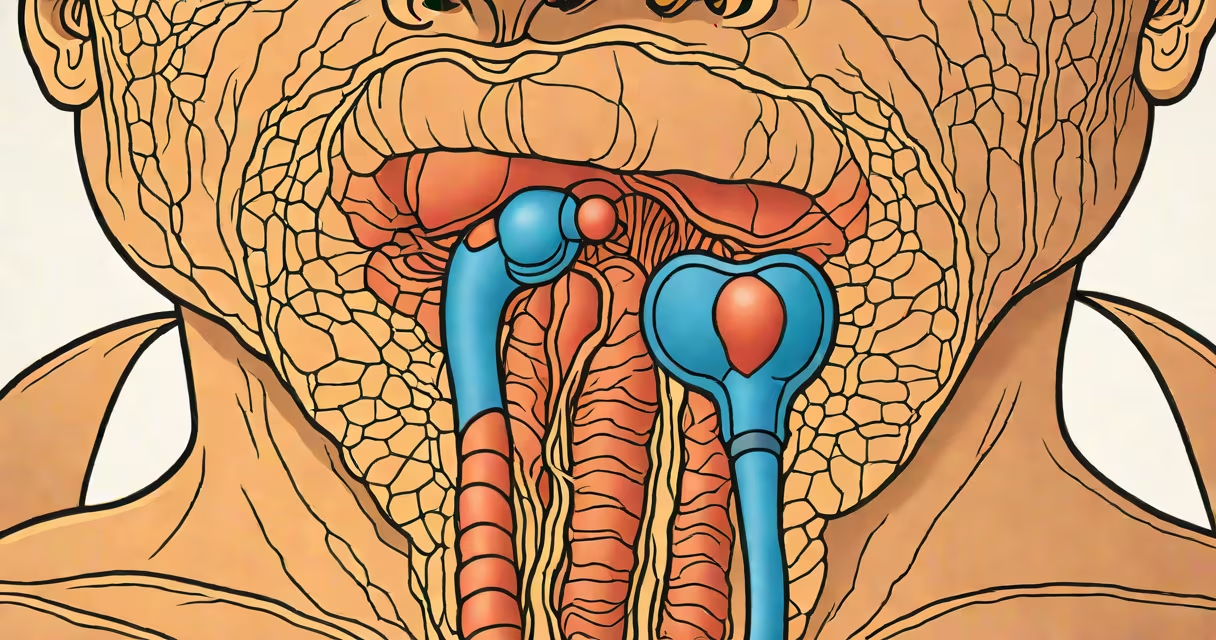
A thyroid nodule is a solid or fluid-filled lump that forms within the thyroid gland, typically detected during routine ultrasound or physical exam. Most are benign and do not cause symptoms. The term "thyroid nodule meaning" refers to understanding whether a nodule is harmless or requires further investigation for cancer.
The thyroid gland sits at the base of the neck, just below the Adam's apple. It produces hormones that regulate metabolism, heart rate, body temperature, and energy levels. When cells in this gland grow abnormally, they can form a nodule-often discovered incidentally during imaging for unrelated issues.
Approximately 6% of adults have a thyroid nodule detectable by ultrasound, and about 5% of those are malignant. The risk of cancer increases slightly with size, irregular shape, and certain ultrasound features such as microcalcifications or poor margins. A nodule larger than 1 cm is more likely to be biopsied.
Diagnosis begins with a medical history and physical exam. Doctors assess neck swelling, vocal changes, family history of thyroid disease, and radiation exposure. If a nodule is palpable or seen on imaging, the next step is an ultrasound.
Ultrasound classifies nodules using the TI-RADS system (Thyroid Imaging Reporting and Data System), developed by the American College of Radiology. This tool assigns scores based on features like echogenicity, shape, margins, and internal structure. A score of 3 or lower indicates low suspicion for cancer; 4 or higher suggests biopsy is warranted.
For nodules scoring 4 or above, fine-needle aspiration (FNA) biopsy is performed. A thin needle extracts cells from the nodule under ultrasound guidance. Pathologists examine the sample for signs of malignancy. Results are reported using the Bethesda System, which categorizes findings from benign (Category I) to suspicious or malignant (Categories VI).
Nodules vary in composition. Some are purely cystic (fluid-filled), others solid, and many mixed. Solid nodules carry higher cancer risk than purely cystic ones. Colloid nodules-common in iodine-deficient areas-are usually benign and result from overgrowth of normal thyroid tissue.
Hyperfunctioning nodules, known as hot nodules, produce excess thyroid hormone. They appear bright on radioactive iodine scans and are almost always benign. These can cause hyperthyroidism, leading to weight loss, tremors, and rapid heartbeat. Treatment may involve medication or radioiodine therapy.
| Type | Appearance on Ultrasound | Cancer Risk | Common Cause |
|---|---|---|---|
| Benign colloid nodule | Well-defined, hypoechoic, uniform | Less than 1% | Normal thyroid growth |
| Complex nodule | Mixed solid and cystic, irregular borders | 5-10% | Colloid or follicular neoplasm |
| Hot nodule | Hyperactive on scan, often cystic | Less than 1% | Autonomous hormone production |
| Papillary carcinoma nodule | Microcalcifications, irregular margins | Up to 80% in high-risk groups | Most common thyroid cancer subtype |
One non-obvious fact: nearly 90% of thyroid nodules are diagnosed in people with normal thyroid function. Even if blood tests show normal TSH, T3, and T4 levels, a nodule can still exist and require monitoring. This underscores that thyroid function tests alone cannot rule out a nodule's significance.
Most thyroid nodules are asymptomatic. But if a nodule grows large enough, it can press on nearby structures. Symptoms include hoarseness, difficulty swallowing, or a tight feeling in the throat. These signs prompt urgent evaluation.
Patients with a family history of medullary thyroid cancer or multiple endocrine neoplasia (MEN) syndromes face higher risks. In such cases, genetic testing may be recommended even for small nodules. Similarly, individuals who received head or neck radiation before age 20 have a increased lifetime risk of developing thyroid nodules and cancer.
I once evaluated a 42-year-old woman whose nodule was initially labeled benign on ultrasound. She had no symptoms and normal lab results. After a year of follow-up, the nodule grew from 1.2 cm to 1.8 cm. A repeat FNA biopsy revealed follicular neoplasm-later confirmed as papillary thyroid cancer upon surgery. Her case highlights why regular monitoring matters, even for seemingly stable nodules.
Many assume a thyroid nodule means cancer. That's incorrect. Over 95% of thyroid nodules are benign. The fear of cancer often drives unnecessary anxiety. However, ignoring a nodule with concerning features can delay treatment.
Another misconception is that all nodules need surgical removal. Only a small fraction-about 5%-require thyroidectomy. Most are monitored with periodic ultrasounds. Surgery is reserved for nodules that are cancerous, growing rapidly, or causing compressive symptoms.
Some patients believe that natural remedies or supplements can shrink nodules. There is no evidence that diet, selenium, or herbal treatments reduce nodule size. While iodine deficiency can contribute to nodule formation, correcting it doesn't reverse existing nodules. Medical management focuses on observation or targeted intervention, not unproven therapies.
If a nodule is found, the path forward depends on its characteristics. A low-risk nodule (TI-RADS 1-3) is typically monitored every 6-12 months with ultrasound. Growth beyond 2 mm per year triggers re-evaluation.
For intermediate or high-risk nodules, FNA biopsy is standard. If results are indeterminate (Bethesda III or IV), molecular testing like the Afirma Gene Expression Classifier may be used to reduce unnecessary surgeries. This test analyzes gene patterns to predict malignancy risk. A negative result lowers the chance of cancer to less than 5%, allowing safe observation.
When cancer is confirmed, treatment involves surgery, followed by radioactive iodine ablation and lifelong thyroid hormone replacement. Survival rates exceed 98% for differentiated thyroid cancers, especially when caught early.
Understanding thyroid nodule meaning is not about fear-it's about informed decision-making. Knowing the difference between a harmless lump and a potentially serious condition allows timely action without panic. For most, the outcome is excellent with proper care.