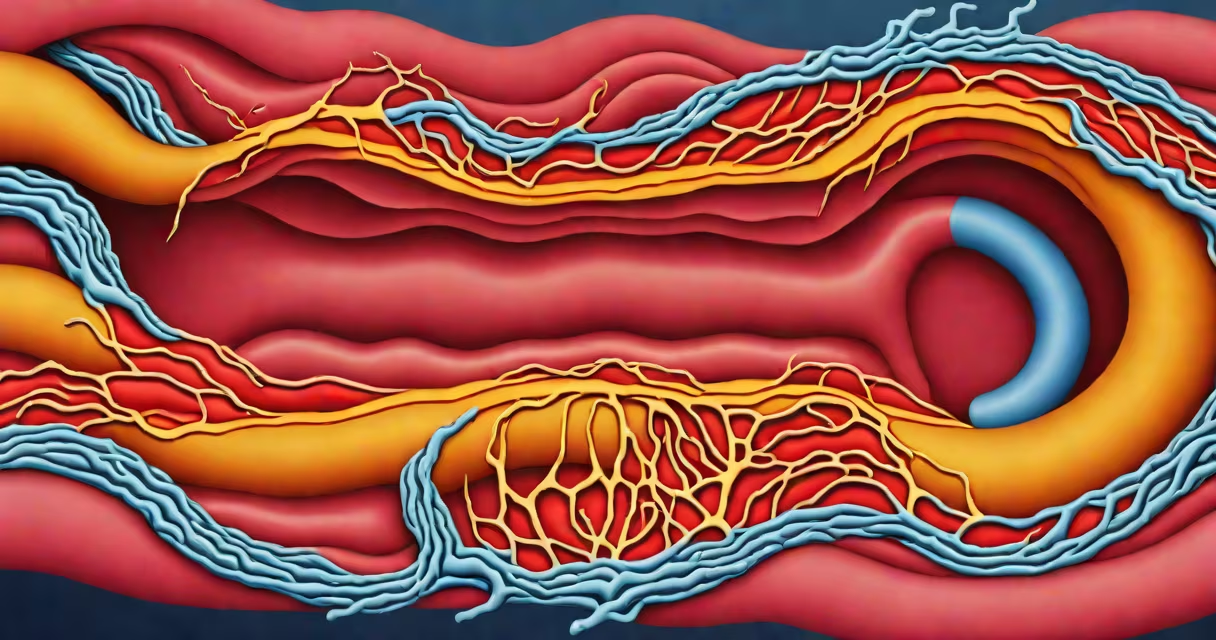
Vasoconstriction is the narrowing of blood vessels caused by contraction of smooth muscle in their walls. This reduces blood flow and increases resistance, raising blood pressure. It's a normal physiological response but can become harmful when excessive or persistent.
The process begins when signals trigger smooth muscle cells in the tunica media layer of arteries and arterioles to contract. These cells receive input from the autonomic nervous system, circulating hormones, local metabolites, or external stimuli. The result is reduced lumen diameter and restricted blood delivery to tissues.
Normal vasoconstriction maintains blood pressure during standing, supports thermoregulation in cold environments, and helps limit bleeding after injury. Abnormal or prolonged vasoconstriction contributes to conditions like hypertension, Raynaud's phenomenon, and ischemic events such as heart attacks and strokes.
Arteries and arterioles contain layers: intima, media, and adventitia. The media layer houses smooth muscle cells that regulate vessel diameter. When these cells contract, they shorten and thicken, reducing the internal space through which blood flows.
Contraction is initiated by intracellular calcium release. Calcium binds to calmodulin, activating myosin light chain kinase. This enzyme phosphorylates myosin, enabling cross-bridge formation between actin and myosin filaments-muscle contraction occurs.
After contraction, calcium is pumped out of the cytoplasm or sequestered into organelles. Relaxation follows when calcium levels drop, allowing the vessel to dilate again. This cycle enables changing control of blood flow based on metabolic demand.
Several systems regulate vasoconstriction. The sympathetic nervous system releases norepinephrine, which binds to alpha-1 adrenergic receptors on smooth muscle. Activation leads to rapid vasoconstriction, especially in skin, gut, and kidneys.
Hormones also play key roles. Epinephrine (adrenaline) activates alpha-1 receptors, causing widespread constriction. Angiotensin II, produced via the renin-angiotensin-aldosterone system (RAAS), is a potent vasoconstrictor. It forms when liver-derived angiotensinogen is cleaved by renin in the kidneys.
Local factors influence vessel tone too. Endothelin-1, released by endothelial cells, causes long-lasting constriction. Hypoxia, acidosis, and high potassium levels can trigger vasoconstriction in specific vascular beds, particularly in the lungs and brain.
| Trigger Type | Mechanism | Example Context |
|---|---|---|
| Nervous System | Neurotransmitter release (norepinephrine) | Fear response, cold exposure |
| Hormonal | Receptor binding (alpha-1, AT1) | Stress, kidney disease, dehydration |
| Local Metabolites | Endothelin-1, low oxygen | Lung vasoconstriction in pulmonary hypertension |
| Drugs/Toxins | Direct smooth muscle activation | Cocaine, amphetamines, certain migraine meds |
Vasoconstriction is often mistaken for vasodilation. While dilation widens vessels to increase blood flow, constriction restricts it. Confusing them leads to misunderstanding how blood pressure regulation works.
Another error is assuming all vasoconstriction is pathological. In reality, it's essential for homeostasis. For example, during exercise, blood flow shifts from digestive organs to muscles via vasoconstriction in splanchnic vessels.
A lesser-known fact: vasoconstriction can occur independently of neural input. Some vessels respond directly to changes in blood chemistry. For instance, cerebral arteries constrict in response to elevated carbon dioxide levels-a protective mechanism against hypercapnia.
Consider a person exposed to cold temperatures. Their body activates the sympathetic nervous system, releasing norepinephrine. This causes vasoconstriction in peripheral skin vessels, minimizing heat loss. Blood is redirected to core organs like the heart and brain. This is a healthy, adaptive response.
In contrast, chronic vasoconstriction underlies primary hypertension. A 2021 study published in Journal of the American Heart Association found that patients with uncontrolled hypertension had higher baseline vascular resistance due to sustained smooth muscle tone. The authors noted that even mild vasoconstriction in small arteries can improve systemic pressure over time.
Raynaud's phenomenon illustrates pathological vasoconstriction. Patients experience episodic finger blanching, cyanosis, and redness due to exaggerated response to cold or stress. Attacks involve intense constriction of digital arteries, sometimes lasting minutes to hours. Treatment focuses on blocking calcium channels or reducing sympathetic tone.
I once observed a patient with severe migraines who developed transient vasoconstriction in the posterior cerebral arteries during aura episodes. MRI angiography showed focal narrowing consistent with neurogenic spasm. After treatment with calcium channel blockers, symptoms resolved. This case highlights how vasoconstriction can affect brain perfusion.
Chronic vasoconstriction impairs tissue perfusion. Reduced oxygen delivery leads to ischemia. In the heart, this can cause angina. In the brain, it may trigger transient ischemic attacks. Prolonged constriction damages endothelial cells, promoting atherosclerosis.
Medications can induce unwanted vasoconstriction. Ergotamine, used for migraines, acts on serotonin receptors and can cause severe limb ischemia. Decongestants like pseudoephedrine activate alpha-adrenergic receptors and raise blood pressure-caution is needed in hypertensive individuals.
Environmental toxins also contribute. Carbon monoxide binds hemoglobin tightly, reducing oxygen availability. The body responds by increasing vasoconstriction in important organs to maintain oxygen delivery, worsening tissue hypoxia.
While vasoconstriction affects blood flow, it differs from thrombosis (clot formation) and embolism (traveling clot). Vasoconstriction narrows the vessel lumen without occlusion. Thrombosis blocks flow entirely. Distinguishing them guides treatment-vasodilators help vasoconstriction; anticoagulants treat clots.
Conditions like scleroderma involve fibrosis and vascular remodeling, leading to permanent vasoconstriction. Unlike acute responses, this is structural damage. Patients develop Raynaud's-like symptoms early, progressing to digital ulcers and gangrene.
Understanding what causes vasoconstriction helps explain both normal physiology and disease. It's not a single event but a changing interplay of nerves, hormones, and local signals. Recognizing triggers allows targeted interventions-from lifestyle changes to pharmacological agents.
When vasoconstriction becomes excessive or persistent, it disrupts organ function. Identifying the underlying cause-whether stress, medication, or chronic disease-is critical for effective management. Early recognition prevents complications like stroke, heart attack, or tissue necrosis.