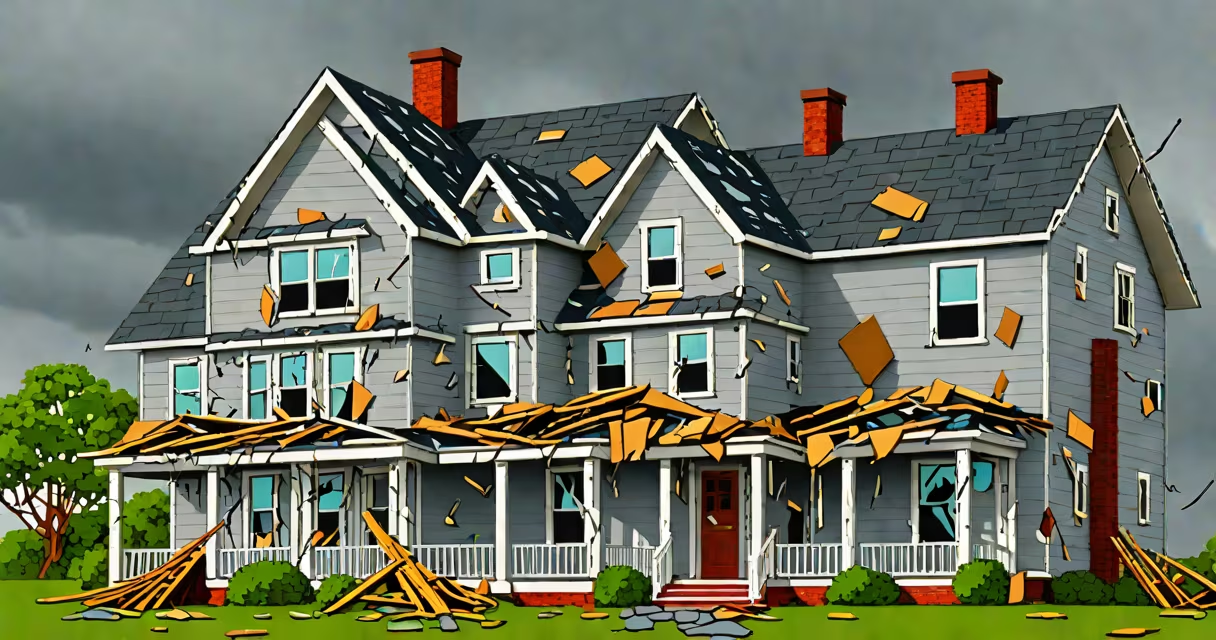
All perils means your insurance policy covers damage from nearly any sudden, accidental event-not just fire, theft, or storms-but also water leaks, falling trees, vandalism, and even accidental damage from pets or appliances. It's a broad form of coverage that applies unless a specific exclusion is listed.
Unlike named perils policies that only cover losses from a predefined list-like fire, lightning, or windstorm-all perils offers wider protection. For example, if a pipe bursts and floods your basement, causing $6,000 in damage, an all perils policy would typically pay for repairs, assuming the cause isn't excluded. This contrasts with a named perils policy, which might deny the claim unless bursting pipes were explicitly included.
The term "all perils" is often used in homeowners and commercial property insurance. It doesn't mean every possible loss-such as gradual wear or intentional acts-but rather all risks that aren't specifically excluded. The exclusions are critical: flood, earthquake, and mold damage are frequently left out, even under all perils policies. You must buy separate riders or endorsements to cover those.
When you purchase an all perils policy, the insurer agrees to pay for covered losses up to your policy limits, minus your deductible. The insurer evaluates whether the event was sudden and accidental-key qualifiers. A slow leak over months isn't covered because it wasn't sudden. Similarly, damage from poor maintenance, like a roof that deteriorated due to lack of cleaning, isn't eligible.
For example, a homeowner in Texas had a tree fall during a tornado, crushing their garage and damaging a car inside. Their all perils policy paid $18,500 toward repairs and replacement, including debris removal. The insurer confirmed the event was sudden and caused by a covered peril-windstorm-and the claim was approved without dispute.
Claims are processed based on the actual cash value (ACV) or replacement cost value (RCV), depending on your policy terms. ACV pays the current market value minus depreciation; RCV covers the full cost to replace the item with a new one. Most all perils policies offer RCV for major structures and high-value contents.
All perils coverage appears in several forms, primarily in property insurance. The most common are:
| Type | Scope | Typical Exclusions |
|---|---|---|
| Homeowners All Perils | Covers dwelling, personal property, liability, and additional living expenses | Flood, earthquake, mold, war, nuclear events |
| Commercial Property All Perils | Protects business buildings, equipment, inventory | Intentional damage, pollution, cyberattacks (unless added) |
| Renters' All Perils | Personal belongings and liability | High-value items like jewelry (unless scheduled) |
Exclusions are not always obvious. For instance, a policy may exclude damage from "acts of God," but courts have ruled that natural disasters like hurricanes qualify as such only if they meet state-specific criteria. In Louisiana, a court upheld a claim for storm surge damage under all perils, stating that "acts of God" did not automatically exclude flooding from tropical systems.
A key distinction: all perils does not cover deliberate acts. If someone intentionally sets fire to their building to collect insurance, the claim will be denied. The policy requires the event to be unforeseen and unintentional. The National Association of Insurance Commissioners (NAIC) confirms that insurers must define exclusions in policy documents to avoid disputes.
Many people assume "all perils" means complete protection. That's incorrect. The term refers to the breadth of covered causes, not the scope of financial responsibility. A policy with $250,000 in coverage won't pay for a $500,000 loss-even if the cause is covered.
Another frequent error: confusing all perils with "complete" auto insurance. While both cover unexpected damage, complete auto includes collision with animals, glass breakage, and theft. All perils in property insurance covers similar risks but applies to homes and businesses. They're different products with overlapping language.
I once reviewed a claim where a client believed their all perils policy covered a collapsed porch due to soil erosion. The insurer denied it because erosion is a gradual process, not sudden or accidental. The policy wording stated: "Losses resulting from gradual deterioration, corrosion, or settling are excluded." The client had assumed "all perils" meant everything, but the clause clarified the limitation.
Consider a small bakery in Portland that suffered a fire caused by faulty wiring. The business lost $42,000 in equipment, inventory, and building repairs. Their all perils policy covered all three categories. The insurer paid $38,000 after deducting $4,000. Without all perils, the claim might have been denied or limited to only fire-related damage.
According to the Insurance Information Institute (III), about 60% of homeowners in the U.S. carry all perils coverage for their primary residence. However, only 38% understand that exclusions exist. This gap leads to surprise denials during claims. The III advises consumers to read policy declarations and exclusions sections carefully.
Even with all perils, you must report damage promptly. Delays can result in denial. In a 2022 case in Florida, a homeowner waited 11 weeks to file a claim after a hurricane. The insurer cited "failure to mitigate" and reduced payment by 40%. The court upheld the decision, ruling that timely reporting is part of the policyholder's duty.
Understanding what all perils means prevents costly surprises. It's not a catch-all for every problem. It's a useful tool when paired with awareness of exclusions and proper documentation. Always review your policy's fine print-or consult a licensed agent.