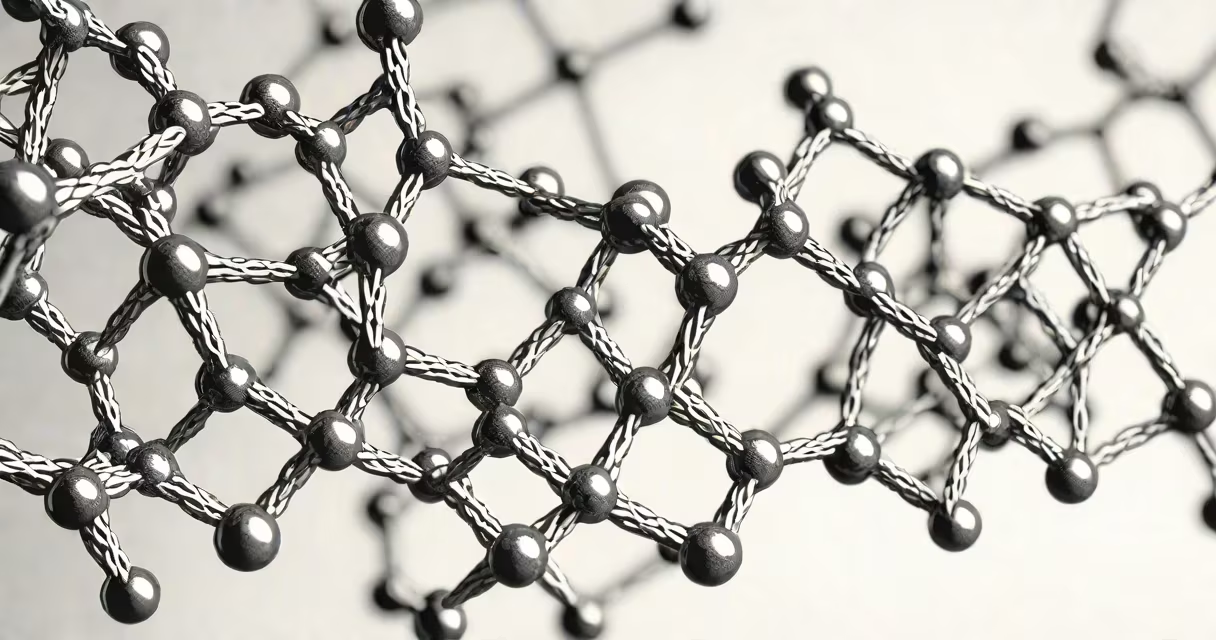
Organic chemistry is the study of carbon-containing compounds and the reactions they undergo. It focuses on molecules built around carbon skeletons, including those essential to life such as proteins, DNA, and sugars. This field underpins pharmaceuticals, plastics, fuels, and biological processes.
Carbon forms stable bonds with itself and other elements like hydrogen, oxygen, nitrogen, and sulfur. These combinations create millions of unique structures. Organic chemistry maps how these structures form, change, and interact-especially through bond breaking and forming during chemical reactions.
For example, ethanol (C₂H₅OH), the alcohol in beverages, is a product of fermentation-a series of organic reactions. Its structure includes a carbon chain with a hydroxyl group attached. Understanding how this molecule behaves in the body requires knowing its functional groups and reaction pathways, core topics in organic chemistry.
Reactions in organic chemistry follow predictable patterns based on electron movement. Molecules react when electrons shift between atoms, often initiated by acids, bases, heat, or light. These changes alter molecular structure and function.
Key concepts include reaction mechanisms-step-by-step sequences showing how bonds break and reform. For instance, in nucleophilic substitution, a negatively charged atom attacks a carbon bonded to a leaving group. The outcome depends on the molecule's geometry and stability of intermediates.
Modern tools like NMR spectroscopy and mass spectrometry allow scientists to identify unknown organic compounds by analyzing their atomic composition and bonding patterns. These methods confirm whether a synthesized drug candidate matches its intended structure.
Organic molecules are grouped by functional groups-specific arrangements of atoms that dictate reactivity. Common types include alkanes, alkenes, alkynes, alcohols, carboxylic acids, and amines.
| Type | Functional Group | Example | Common Use |
|---|---|---|---|
| Alkane | C-C single bonds | Methane (CH₄) | Natural gas fuel |
| Alcohol | -OH | Ethanol (C₂H₅OH) | Disinfectant, beverage |
| Carboxylic Acid | -COOH | Acetic acid (vinegar) | Food preservative |
| Amine | -NH₂ | Methylamine | Pharmaceutical intermediate |
Each functional group has distinct properties. Alcohols can form hydrogen bonds, making them water-soluble. Carboxylic acids donate protons, lowering pH. These behaviors determine how molecules behave in biological systems or industrial settings.
Organic chemistry powers medicine development. Over 70% of FDA-approved drugs contain carbon-based structures. Aspirin (acetylsalicylic acid), for example, reduces inflammation by inhibiting enzymes involved in pain signaling. Its effectiveness stems from precise molecular design.
Plastics rely on polymerization reactions-joining small organic units into long chains. Polyethylene, made from ethylene monomers, forms bottles and bags. The process involves free radicals initiating chain growth, a classic example of radical addition in organic synthesis.
Metabolic pathways in cells are also governed by organic chemistry. Glucose metabolism converts sugar into ATP through glycolysis, involving ten enzyme-catalyzed steps. Each step alters the molecule's structure via phosphorylation, oxidation, and rearrangement-all organic transformations.
"Organic" does not mean "natural" or "healthy." Many organic compounds are synthetic and toxic. Cyanide (CN⁻), for example, contains carbon and is highly poisonous. Conversely, some natural substances like arsenic trioxide are inorganic despite being biologically active.
Another misconception: organic chemistry is not limited to living things. The term originated historically because early chemists believed carbon compounds came only from organisms. That idea was disproven in 1828 when Friedrich Wöhler synthesized urea-an organic compound-from inorganic precursors. This experiment shattered the vitalism theory and launched modern organic chemistry.
I once synthesized benzocaine in a university lab. Starting with p-aminobenzoic acid and ethanol, I added sulfuric acid as a catalyst. After refluxing for two hours, the mixture cooled and formed a crystalline precipitate. Recrystallization purified the product, which matched the expected melting point and infrared spectrum.
This hands-on work revealed how theoretical concepts apply. Reaction yield depended on temperature control and purity of reagents. One batch failed due to trace water-water reacts with esterifying agents, reducing efficiency. That taught me that even minor impurities disrupt organic processes.
Organic chemistry is not just about memorizing reactions. It's about predicting outcomes based on structure and energy. For example, a molecule with a carbonyl group (C=O) can be attacked by nucleophiles-electrons seek positive centers. This principle applies across contexts: drug design, material science, and biochemistry.
Advanced topics include stereochemistry-the spatial arrangement of atoms. Enantiomers (mirror-image molecules) can have different effects in the body. Thalidomide, a sedative from the 1960s, caused birth defects because one enantiomer was therapeutic while the other was teratogenic. Today, chiral synthesis ensures only safe forms are produced.
Understanding what organic chemistry means opens access to fields ranging from pharmacology to nanotechnology. It explains how life functions at the molecular level and enables innovation in materials and medicine.