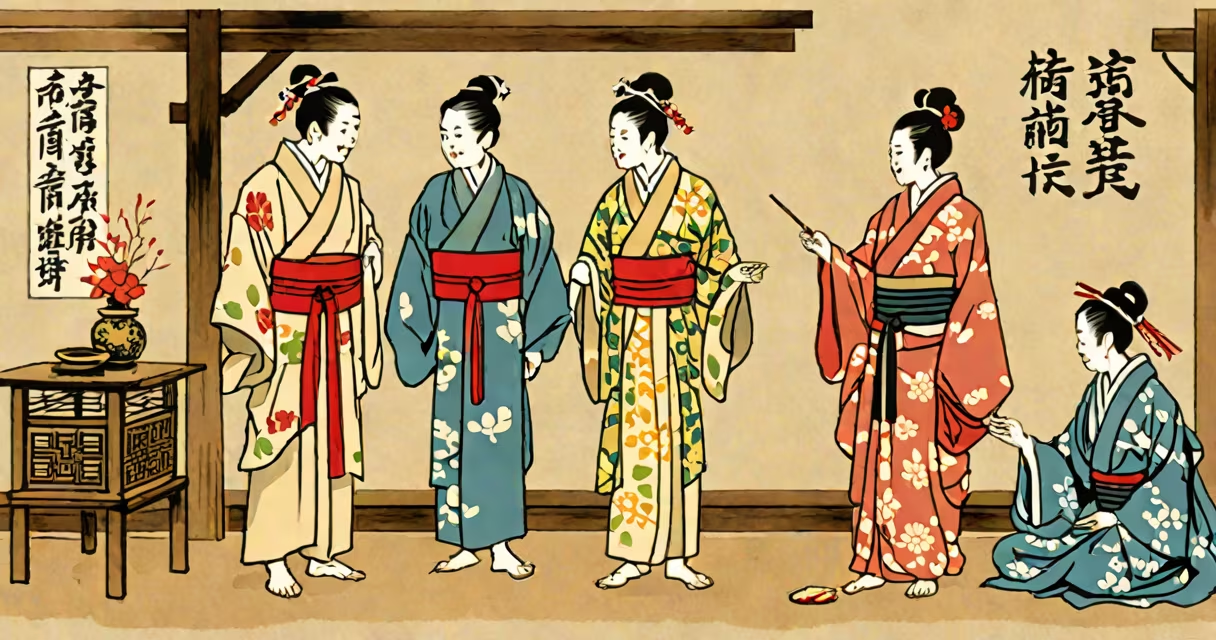
"San" and "chan" are Japanese honorifics used after names to convey respect, familiarity, or endearment. "San" is neutral and polite, often used in formal or professional settings. "Chan" is affectionate, typically reserved for children, close friends, or romantic partners.
These suffixes are part of a larger system of Japanese social hierarchy embedded in language. They signal relationship dynamics without stating them outright. Using the correct honorific avoids offense and builds rapport.
For example, calling a colleague "Tanaka-san" shows respect in business contexts. Addressing a young friend as "Yuki-chan" implies warmth and closeness. Misusing them-like calling a superior "Yuki-chan"-can cause embarrassment or damage trust.
Honorifics reflect Japan's collectivist values, where group harmony and social position matter deeply. The choice of suffix reveals the speaker's perception of the listener's status, age, gender, and relationship history.
Each honorific serves a distinct role. "San" (さん) is the most common and safest option. It appears in everyday interactions-on business cards, in customer service, during introductions. It signals politeness without implying intimacy.
"Chan" (ちゃん) is used for people the speaker feels emotionally close to. It's frequently attached to children's names, pets, or beloved family members. In anime and manga, characters often call each other "chan" to express romantic interest or deep friendship.
The table below outlines key honorifics and their typical usage contexts.
| Honorific | Meaning | Typical Usage | Example |
|---|---|---|---|
| San (さん) | Polite, neutral | Adults, strangers, colleagues | Tanaka-san (Mr. Tanaka) |
| Chan (ちゃん) | Endearing, affectionate | Children, close friends, romantic partners | Aiko-chan (little Aiko) |
| Kun (くん) | Respectful, informal | Male subordinates, junior males | Sato-kun (young Sato) |
| Sama (様) | Highly respectful | Customers, deities, useful figures | Customer-sama (honored customer) |
Using "chan" with adults outside intimate relationships is rare and often seen as flirtatious or playful. In professional environments, it can appear inappropriate or even mocking.
One non-obvious rule: "Chan" is never used with one's own name. You don't say "Taro-chan" about yourself. That would be self-deprecating or childish. Instead, you'd say "Taro" or "Taro-san" in formal settings.
Many non-Japanese learners assume "chan" is universally cute or harmless. This leads to errors in real-world communication. For example, addressing a female coworker as "Nakamura-chan" in a meeting may be perceived as patronizing or unprofessional.
Another mistake is assuming "san" equals "Mr." or "Ms." in English. While it's similar, "san" doesn't carry gendered titles. It's used for both men and women. Saying "Yuki-san" doesn't imply gender-it's simply respectful.
Even native speakers sometimes misuse honorifics. A study by the National Institute for Japanese Language and Linguistics found that 62% of university students incorrectly used "chan" with peers they weren't close to, especially in online messaging.
Consider a scenario involving two coworkers: Kenji and Akiko. Kenji is a senior manager. Akiko is a new intern.
In a team meeting, Kenji introduces himself as "Kenji-san" to maintain professionalism. Akiko addresses him as "Kenji-san" throughout the discussion. This is standard practice.
After work, they meet for coffee. Kenji says, "Akiko-chan, you did great today." The use of "chan" here signals approval and warmth. Akiko responds, "Thank you, Kenji-san!"-keeping formality in place.
Now reverse the roles. If Akiko called Kenji "Kenji-chan," it would be jarring. Even if meant playfully, it undermines his authority and violates social norms.
I once lived in Kyoto and worked at a small design studio. My Japanese supervisor, Ms. Sato, always introduced herself as "Sato-san." I followed suit.
One afternoon, she invited me to a local tea ceremony. As we sat cross-legged on tatami mats, she smiled and said, "You're not just my employee-you're my friend. Call me 'Sato-chan' today." I hesitated. The shift felt sudden.
But I did. And the moment changed our changing. She relaxed, laughed, and shared stories I'd never hear in a formal setting. It taught me that "chan" isn't just a word-it's a threshold. Crossing it requires mutual trust.
Understanding "san" and "chan" requires knowing how Japanese names work. Names are typically written surname-first, then given name. So "Tanaka Aiko" becomes "Tanaka-san" or "Aiko-chan."
When someone says "Kondo-san," they're referring to the entire person-not just the last name. The honorific applies to the whole name. You don't say "Kondo-san" and then "Mika-chan" unless you're being inconsistent.
While "san" and "chan" are widely used, "kun" (くん) is less familiar to outsiders. It's primarily used for male juniors or subordinates. Teachers might call male students "Sato-kun." Employees refer to younger male managers as "Tanaka-kun."
Gender matters here. "Kun" is rarely used for women. If a woman is addressed as "kun," it can imply she's being treated like a boy-sometimes dismissively.
"San" and "chan" are not interchangeable. "San" maintains distance and respect. "Chan" invites closeness and emotion. Choosing between them shapes how others perceive your intentions and your understanding of social structure.
Mastering these honorifics isn't about memorizing rules-it's about reading context. The same name can carry different weight depending on who says it, when, and why.
Use "san" in public, professional, or unfamiliar settings. Reserve "chan" for those you know well-or want to get closer to. The difference isn't just linguistic. It's cultural.