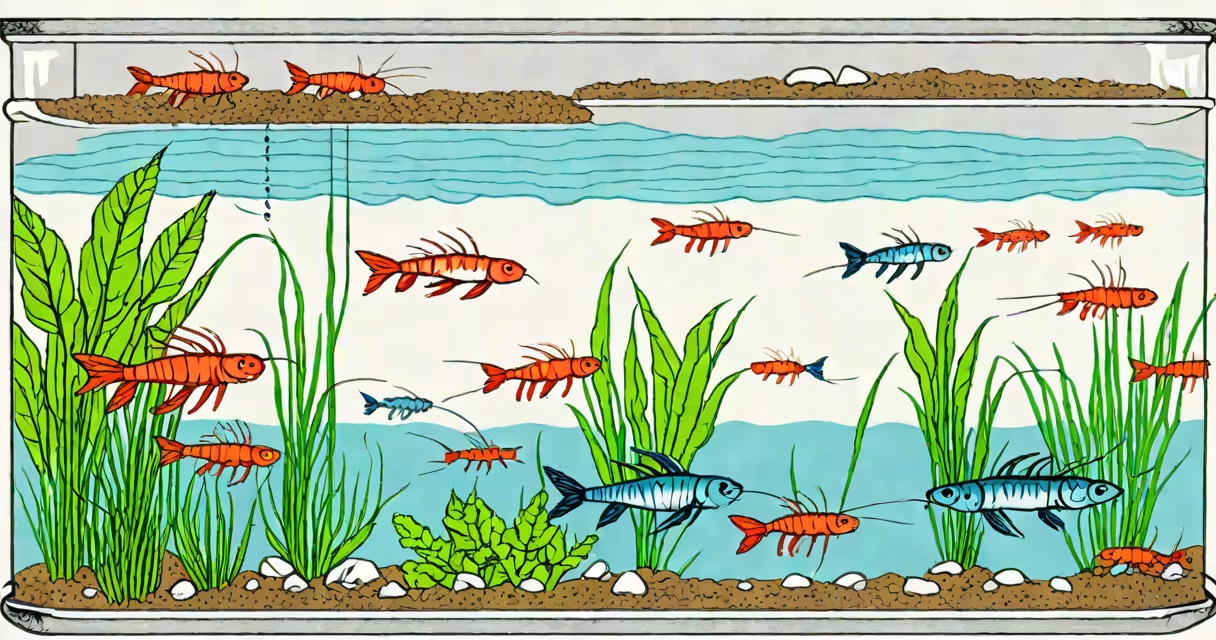
Backyard shrimp farming requires precise salinity control to support shrimp health, growth, and survival. Salinity-the concentration of dissolved salts in water-directly affects osmoregulation, immune function, and metabolic efficiency in shrimp. Without proper salinity, even small-scale operations fail.
Shrimp species differ in salinity tolerance. Freshwater species like *Macrobrachium rosenbergii* (giant river prawn) thrive in low-salinity environments (0.5-3 ppt), while brackish species such as *Litopenaeus vannamei* (whiteleg shrimp) require higher levels (10-25 ppt). Maintaining correct salinity prevents stress, reduces disease risk, and maximizes feed conversion efficiency.
Salinity is measured in parts per thousand (ppt). A standard refractometer or digital salinity meter provides accurate readings. Water temperature influences salinity values-each degree Celsius change alters density by approximately 0.1 ppt. Always calibrate instruments at the operating temperature.
Shrimp regulate internal salt concentrations through gill ion transport. When external salinity fluctuates beyond their tolerance zone, they expend energy to maintain homeostasis. This diverts resources from growth and reproduction.
For example, *L. vannamei* raised at 15 ppt show 20% faster weight gain than those at 5 ppt. Conversely, sudden drops below 8 ppt trigger molting failure and increased mortality. Chronic exposure to suboptimal salinity leads to reduced hemoglobin levels and impaired oxygen uptake.
A 2020 study by the World Aquaculture Society confirmed that shrimp reared at stable salinity (12-18 ppt) had 35% lower infection rates from *Vibrio harveyi* compared to those in fluctuating conditions. The study emphasized consistent monitoring as a key factor in disease prevention.
Backyard farms use three primary salinity management methods: natural adjustment, salt addition, and recirculating systems.
| System Type | Salinity Control Method | Best For | Monitoring Frequency |
|---|---|---|---|
| Flow-through pond | Natural inflow from well or rainwater | Freshwater species (e.g., giant river prawn) | Twice daily |
| Brackish tank with salt mix | Commercial marine salt blend added manually | Whiteleg shrimp, red swamp crayfish | Once daily |
| Recirculating aquaculture system (RAS) | Automated dosing pumps with feedback sensors | High-density stocking, year-round production | Continuous via digital sensor |
Many beginners assume adding aquarium salt (sodium chloride) is sufficient. But pure NaCl lacks essential ions like magnesium and calcium. Using a balanced marine salt mix (e.g., Instant Ocean or Red Sea Reef Salt) ensures proper mineral ratios and supports exoskeleton development.
One common mistake is treating salinity as a one-time setup task. Salinity changes with evaporation, rainfall, and biological activity. A 100-gallon tank losing 2 inches of water daily through evaporation increases salinity by 0.5 ppt per week unless replenished with fresh water.
Some believe "salinity" means "saltiness" in the culinary sense. That's incorrect. Salinity refers to total dissolved solids (TDS), including sodium, potassium, calcium, and bicarbonate ions-not just NaCl. A high TDS reading doesn't always indicate high salinity if the ions are primarily carbonates or sulfates.
Another error: assuming all shrimp tolerate the same salinity. *M. rosenbergii* survives at 0.5 ppt but dies at 10 ppt. *L. vannamei* cannot survive below 8 ppt. Mixing species in one tank causes competitive exclusion and physiological collapse.
There's also confusion about measuring salinity in ppm. Salinity is expressed in ppt (parts per thousand), not ppm (parts per million). A reading of 15,000 ppm equals 15 ppt. Confusing these units leads to under- or overdosing salt.
I ran a 200-gallon recirculating system for *L. vannamei* using a 12-ppt target. After two weeks, the salinity dropped to 9 ppt due to heavy rainfall and inadequate lid sealing. I tested the water with a handheld refractometer and found a 3 ppt drop.
To correct it, I calculated the volume of water lost: 2 inches in a 200-gallon tank equaled ~2.5 gallons. I added 2.5 gallons of dechlorinated tap water and 1.5 tablespoons of marine salt mix (20 grams per liter). After mixing, I rechecked with the refractometer-salinity stabilized at 11.8 ppt.
Over the next month, I logged daily readings. Fluctuations above ±1 ppt correlated with higher ammonia spikes and slower growth. Once I installed a weatherproof lid and automated top-off valve, salinity remained within 11-13 ppt. Shrimp grew 25% faster and showed fewer signs of stress.
Salinity isn't just a number-it's a life-support parameter. Low salinity weakens the gill barrier, allowing pathogens like *Aeromonas hydrophila* to enter. High salinity disrupts enzyme function in digestion and nitrogen processing.
The Food and Agriculture Organization (FAO) reports that 60% of small-scale shrimp failures stem from poor water quality, with salinity being the leading contributor. Their 2021 guidelines emphasize daily monitoring and gradual adjustments-never sudden shifts exceeding 2 ppt per day.
For backyard growers, investing in a digital salinity meter ($40-$80) pays off quickly. Manual testing with hydrometers is prone to error and inconsistent results. I've seen hobbyists lose entire batches due to inaccurate readings from outdated tools.
Backyard shrimp farming needs sal to succeed. Not just any salinity-but the right level, maintained consistently, with attention to species-specific requirements. Ignoring this step turns a promising project into a failed experiment.