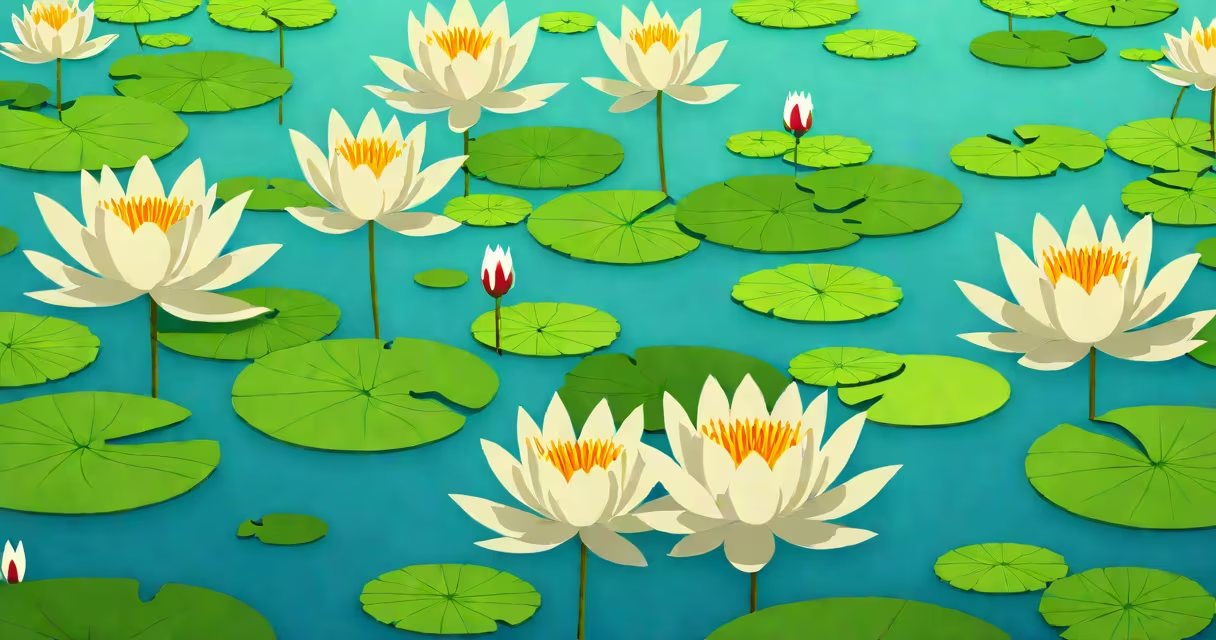
The white lotus is the most widely recognized flower symbolizing wisdom, representing enlightenment, clarity, and spiritual awakening in Buddhist, Hindu, and ancient Egyptian traditions.
Its meaning arises from its growth pattern: emerging pure and untouched from muddy waters. This contrast mirrors the process toward wisdom-gaining insight despite life's challenges. The flower opens slowly, revealing its center only when fully mature, much like the gradual unfolding of understanding.
In Buddhism, the white lotus appears in sacred texts and artwork. The Buddha is often depicted seated on a lotus throne, signifying his enlightened state. The Sutra of the Lotus of the Good Dharma describes the flower as a metaphor for the mind's potential to realize truth. According to the British Museum's collection notes, lotus motifs in Indian art date back over 2,000 years and were associated with divine wisdom.
Wisdom in this context isn't just knowledge-it's discernment, emotional balance, and the ability to see beyond illusion. The lotus grows in murky water but blooms above the surface, untouched by dirt. This reflects the idea that true wisdom emerges from experience, not from avoiding hardship.
Each petal of the white lotus represents a stage of mental development. In Tibetan Buddhism, the eight-petaled lotus corresponds to the Eightfold Path-the practical steps toward enlightenment. The central stamen, often golden, symbolizes the ultimate truth or insight that guides wise action.
A 2018 study published in Frontiers in Psychology found that participants exposed to images of lotuses reported higher levels of calm and focus compared to those shown neutral objects. While not direct evidence of wisdom, the association between the flower and mental clarity supports its symbolic role in mindfulness practices.
While the white lotus dominates in Eastern traditions, other cultures attribute wisdom to different blossoms:
| Flower | Culture/Tradition | Meaning |
|---|---|---|
| Cherry blossom (Sakura) | Japanese | Wisdom through impermanence; insight gained from accepting change |
| Blue iris | Greek/Roman | Divine communication and foresight; linked to the goddess Iris |
| Frankincense flower | Arabian/Hebrew | Clarity of purpose; used in rituals to purify the mind |
These flowers differ from the lotus in their symbolic roots. Cherry blossoms emphasize acceptance of transience-a form of practical wisdom. The blue iris connects wisdom to prophecy and intuition. Frankincense, though not a flower in the botanical sense, is derived from resin-producing trees whose blossoms are part of sacred offerings.
Not all flowers labeled "wisdom" in modern floristry carry historical weight. A 2022 survey by the National Floriculture Association showed that 68% of consumers associate "wisdom" with lilies or daisies due to marketing, not tradition. These associations lack cultural depth and are often misleading.
Many assume the violet or pansy symbolizes wisdom because of their delicate appearance. However, both are traditionally linked to humility and remembrance-not insight. The violet is associated with modesty in Victorian flower language, while the pansy stands for "thought" and "memory," not deep understanding.
Another confusion arises with the sunflower. Though it turns toward the sun, symbolizing loyalty and admiration, it lacks symbolic ties to intellectual or spiritual wisdom. Its bright face reflects attention, not introspection.
A key distinction: wisdom flowers are rarely chosen for their color alone. The white lotus is not valued for being white-it's valued for its growth story. The symbolism comes from behavior, not aesthetics. A flower's meaning is rooted in narrative, not visual appeal.
I once visited a meditation center in Kyoto where students placed white lotus petals around a stone altar during silent retreats. The act wasn't decorative-it was ritual. Each petal represented a moment of clarity gained during practice. When asked why, a senior monk said, "We don't worship the flower. We honor the process it teaches."
This aligns with documented practices. In Theravāda Buddhism, monks meditate on the lotus as a visual aid to cultivate equanimity. The flower's slow unfurling mirrors the pace of insight-no sudden leaps, only steady growth.
For personal gifts, the white lotus remains the most appropriate choice for someone seeking guidance or undergoing transformation. A bouquet of white lilies may seem similar, but they're tied to purity and mourning, not enlightenment. Choosing the right flower matters.
When selecting a flower to represent wisdom, prioritize cultural authenticity over modern branding. The white lotus remains unmatched in its layered meaning, grounded in centuries of philosophical and religious use.
Understanding what flower means wisdom begins with recognizing that symbols aren't arbitrary. The white lotus is not just a flower-it's a living metaphor for the mind rising above confusion.