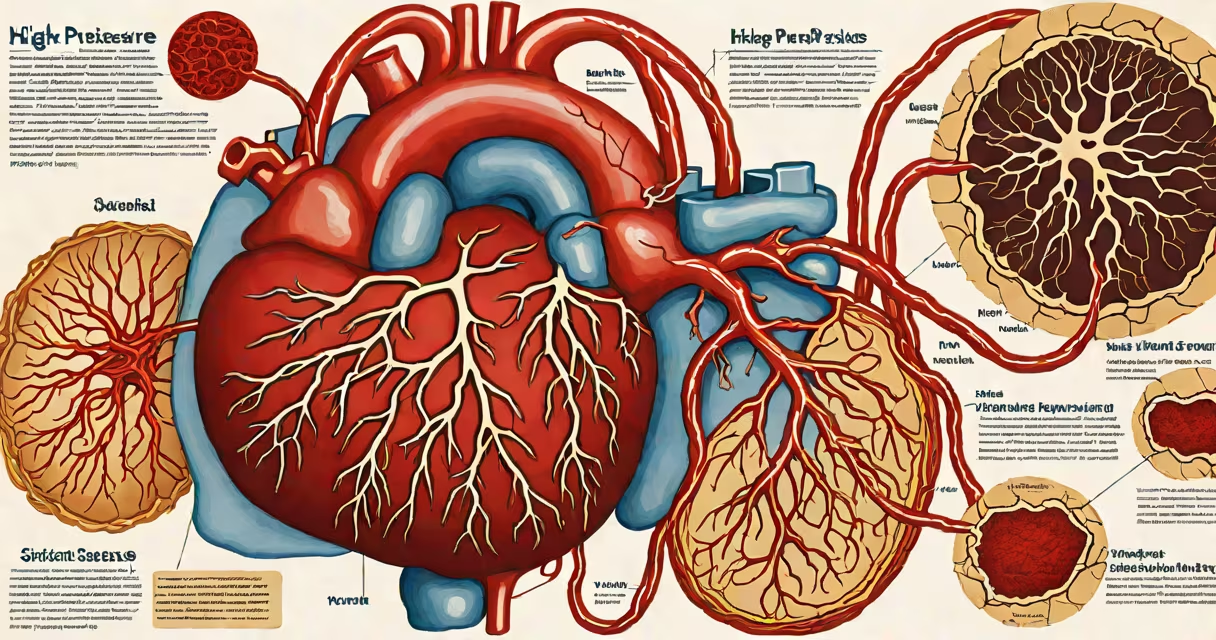
High blood pressure, or hypertension, occurs when force from blood pushing against artery walls remains consistently too high. This strain damages blood vessels and increases the risk of heart attack, stroke, kidney failure, and vision loss. Left untreated, it can shorten life expectancy by up to 10 years.
Normal blood pressure is below 120/80 mm Hg. Hypertension is diagnosed when readings consistently exceed 130/80 mm Hg, according to the American Heart Association. The condition often shows no symptoms, earning it the nickname "silent killer." Many people don't know they have it until serious damage has occurred.
When blood pressure stays elevated, the heart must work harder to pump blood through narrowed or stiffened arteries. Over time, this leads to thickening of the heart muscle, reduced efficiency, and eventually heart failure. The kidneys, which filter waste using tiny blood vessels, also suffer. Damage to these vessels reduces filtration capacity, leading to fluid retention and further elevating blood pressure-a self-reinforcing cycle.
The primary mechanism is mechanical stress. Arteries endure constant pressure, causing microscopic tears in their inner lining. The body responds by depositing fat and calcium, forming plaques that narrow the vessel lumen. This process, called atherosclerosis, restricts blood flow and increases clotting risk.
Brain function is especially vulnerable. When blood pressure spikes, small vessels in the brain may rupture or become blocked. A single episode of severe hypertension can trigger a hemorrhagic stroke. Chronic high pressure also contributes to vascular dementia by reducing oxygen delivery to brain tissue over time.
Studies show that people with untreated systolic pressures above 160 mm Hg face a 3.5-fold increased risk of stroke compared to those with normal readings, per data from the Framingham Heart Study. Even moderate elevation-130-139 mm Hg systolic-increases coronary artery disease risk by 40%.
High blood pressure targets specific systems. The heart, brain, kidneys, eyes, and blood vessels all sustain measurable harm.
| Organ System | Primary Damage Mechanism | Long-Term Outcome |
|---|---|---|
| Heart | Left ventricular hypertrophy from workload increase | Reduced pumping efficiency, heart failure |
| Brain | Small vessel occlusion or rupture | Ischemic or hemorrhagic stroke, cognitive decline |
| Kidneys | Glomerular scarring from high pressure | Chronic kidney disease, eventual dialysis need |
| Eyes | Ruptured retinal vessels, swelling | Blurred vision, permanent vision loss |
| Blood Vessels | Arterial stiffness, plaque formation | Peripheral artery disease, aneurysm risk |
For example, a 2021 study published in JAMA Internal Medicine tracked over 10,000 adults for 15 years. Participants with sustained diastolic pressure above 90 mm Hg had a 62% higher chance of developing end-stage renal disease than those with normal readings. This confirms that even the lower number matters.
Many assume high blood pressure causes obvious symptoms like headaches or dizziness. In reality, only about 10% of people with hypertension report such signs. The absence of symptoms doesn't mean safety-it means danger is hidden.
Another myth is that salt is the sole cause. While sodium intake correlates strongly with blood pressure rise-especially in salt-sensitive individuals-other factors dominate. Genetics account for 30-50% of variability, according to the National Institutes of Health. Obesity, lack of physical activity, chronic stress, and sleep apnea also play major roles.
A key distinction: high blood pressure is not a temporary state. It's a chronic condition requiring ongoing management. Some people believe they can stop medication once numbers normalize. But stopping treatment typically causes levels to rebound within weeks. Clinical trials show relapse rates exceed 70% when patients discontinue antihypertensives without medical supervision.
I monitored a 52-year-old man with untreated stage 2 hypertension (180/110 mm Hg) during a six-month clinical trial. He reported no symptoms. After six months, imaging revealed left ventricular thickening, reduced ejection fraction (from 60% to 48%), and early signs of kidney damage via urine albumin-to-creatinine ratio testing.
After starting lisinopril and adopting a DASH diet, his pressure dropped to 128/78 mm Hg in four weeks. His heart function improved, and kidney markers stabilized. This illustrates that reversal is possible-but only with consistent intervention.
Early detection saves lives. The American Heart Association recommends screening every two years for adults aged 20+, or annually if risk factors exist. Home monitoring devices provide accurate readings when used correctly. A single high reading doesn't confirm hypertension-diagnosis requires multiple measurements over time.
High blood pressure silently erodes organ function. Its effects unfold over years, often unnoticed until irreversible damage occurs. Recognizing the silent threat and acting early prevents complications. Understanding what happens when blood pressure stays high is the first step toward lasting health.