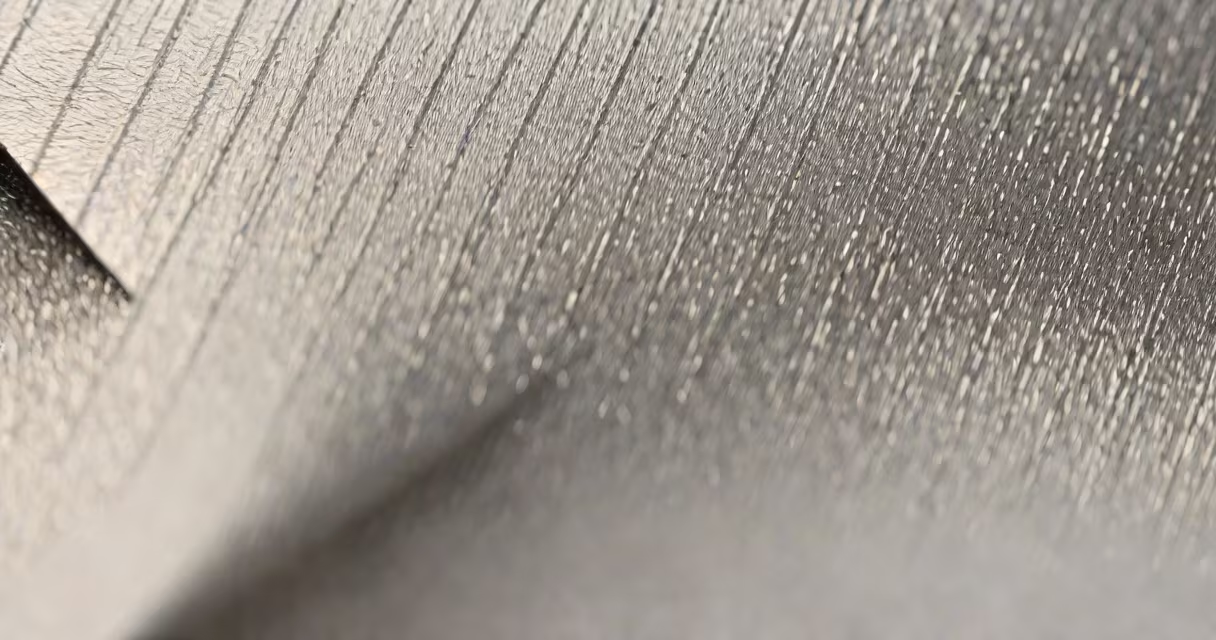
4340 steel is a medium-carbon, low-alloy steel containing chromium, nickel, and molybdenum, engineered for high strength and toughness after heat treatment. It achieves tensile strengths exceeding 1,500 MPa when properly tempered, making it ideal for critical load-bearing components.
Its composition includes approximately 0.38-0.43% carbon, 1.65-2.00% nickel, 0.40-0.60% chromium, and 0.15-0.25% molybdenum. These elements work together to improve hardenability-the ability to form martensite during quenching-allowing uniform hardness throughout thick sections. The steel is typically supplied in normalized or annealed condition and then heat-treated to achieve final mechanical properties.
Common applications include aircraft landing gear, crankshafts, gears, and high-performance engine parts. Its performance under cyclic loading and impact makes it a preferred choice in environments where failure cannot be tolerated. According to the American Society for Testing and Materials (ASTM), 4340 meets requirements for structural integrity in changing loading scenarios.
When heated to around 850°C and rapidly cooled (quenched), 4340 steel transforms from austenite into martensite-a hard, brittle microstructure. Subsequent tempering at 500-650°C reduces brittleness while maintaining high strength. This two-step process results in a balanced combination of hardness (HRC 30-50) and ductility.
The presence of chromium improves hardenability and oxidation resistance, while molybdenum enhances strength at elevated temperatures and prevents temper embrittlement. Nickel increases toughness and contributes to uniformity in mechanical response across large cross-sections. Together, these alloying elements allow 4340 to maintain performance even under thermal cycling and heavy mechanical stress.
A 25 mm diameter rod of 4340 steel, after oil quenching and tempering at 550°C, achieves a tensile strength of 1,650 MPa and elongation of 12%. This level of performance is not achievable with standard carbon steels, which would crack or deform under similar conditions.
While 4340 is standardized under ASTM A29 and SAE J403, variations exist based on processing and end-use. The most common forms are:
| Type | Typical Condition | Common Applications | Key Properties |
|---|---|---|---|
| Forged 4340 | Heat-treated (normalized + tempered) | Crankshafts, connecting rods | High fatigue life, grain refinement |
| Bar stock 4340 | As-received or machined | Gears, shafts, fasteners | Consistent hardness, good machinability |
| 4340 with improved cleanliness | Special melting processes | Aerospace components | Reduced inclusions, higher reliability |
Improved variants often undergo vacuum arc remelting (VAR) or electroslag remelting (ESR) to reduce impurities like sulfur and oxygen. These processes minimize internal defects, increasing service life in safety-critical systems. For example, NASA uses ESR-processed 4340 steel in rocket engine mounts due to its consistent fracture toughness.
4340 steel is selected when a component must endure high stress, shock loads, or prolonged fatigue. In the automotive industry, it's used in high-output engine crankshafts. A 4340 crankshaft in a 6.2L V8 engine resists torsional deformation under 12,000 RPM and maintains dimensional stability over 200,000 miles of operation.
In aerospace, 4340 is used in landing gear assemblies. A Boeing 787 landing gear strut, made from 4340 steel and heat-treated to 45 HRC, supports over 400,000 pounds of vertical load during touchdown and withstands repeated pressurization cycles without cracking.
One non-obvious fact: 4340 steel is not inherently stronger than other alloys-it becomes high-strength only after proper heat treatment. A 4340 part left untempered may shatter under impact. This contrasts with some stainless steels, which retain strength without additional processing.
4340 steel is sometimes mistaken for 4140 steel due to similar naming conventions. However, 4140 contains less nickel and lower carbon, resulting in lower ultimate strength. A 4140 bar, when similarly heat-treated, reaches ~1,400 MPa tensile strength-about 10% less than 4340.
Another misconception is that 4340 is always used in high-temperature environments. In reality, its strength degrades above 400°C. At 500°C, yield strength drops by nearly 30%. For sustained high-temp service, materials like Inconel or specialized tool steels are preferred.
I once inspected a failed 4340 crankshaft in a racing engine. The fracture originated at a fillet radius where the heat treatment was uneven. The outer layer was hardened to 50 HRC, but the core remained soft. This mismatch caused stress concentration and eventual fatigue failure. Proper heat treatment requires precise control of temperature gradients and cooling rates.
4340 steel compares favorably with other high-strength alloys in cost, availability, and machinability. Below is a comparison of key properties:
| Alloy | Tensile Strength (MPa) | Hardness Range (HRC) | Cost Factor | Best Use Case |
|---|---|---|---|---|
| 4340 steel | 1,500-1,800 | 30-50 | Medium | High-cycle fatigue, moderate temp |
| 4140 steel | 1,300-1,600 | 25-48 | Low | General engineering, lower stress |
| 42CrMo4 (European equivalent) | 1,400-1,700 | 30-48 | Medium | Automotive, industrial machinery |
| Maraging steel (18Ni-300) | 1,800-2,100 | 35-45 | High | Aerospace, precision tools |
Maraging steels offer higher strength but require expensive vacuum processing and are less forgiving in machining. 4340 remains a practical balance between performance and manufacturability.
4340 steel is not a universal solution, but for components requiring high strength, toughness, and fatigue resistance, it remains one of the most effective materials available. Its performance hinges entirely on correct processing-heat treatment is not optional, it is essential.