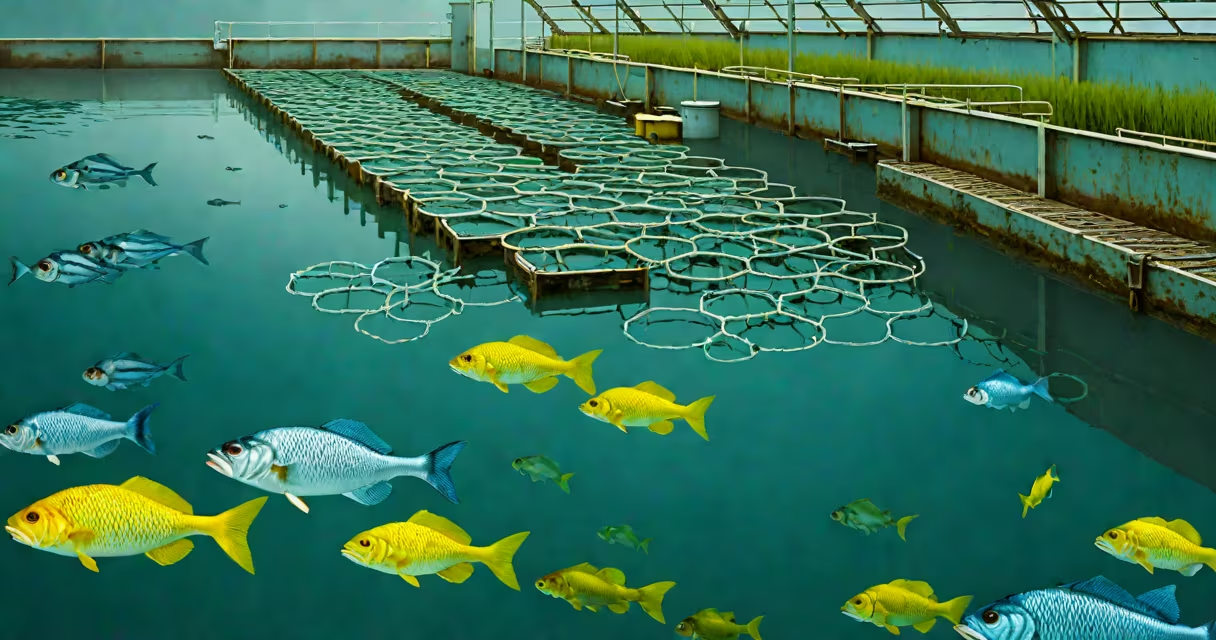
The Journal of Applied Aquaculture is a peer-reviewed scientific publication that disseminates original research on practical methods for raising aquatic organisms, including fish, shellfish, and aquatic plants, under controlled or managed conditions. It focuses on applications that improve production efficiency, animal health, and environmental sustainability in commercial and small-scale aquaculture systems.
Published by Taylor & Francis, the journal appears quarterly and features studies from researchers across North America, Europe, Asia, and Latin America. Each article undergoes double-blind peer review by experts in aquaculture science, ensuring methodological rigor and relevance to real-world farming challenges. The journal emphasizes experimental design, reproducibility, and measurable outcomes over theoretical models.
Articles cover topics such as feed formulation, disease prevention, water quality management, genetic selection, and life cycle assessment of farming operations. For example, a 2022 study in the journal evaluated the performance of Atlantic salmon fed a diet enriched with insect meal versus traditional fishmeal. The results showed comparable growth rates and improved nitrogen excretion profiles, supporting the viability of alternative protein sources in aquaculture feeds.
Authors submit manuscripts through an online portal. Editors assess suitability based on scope, originality, and adherence to reporting standards. If accepted, submissions enter a blind peer-review process involving two or more independent experts. Reviewers evaluate statistical validity, methodology transparency, and significance of findings. Revisions may be required before acceptance.
Accepted articles are copy-edited for clarity and formatted according to the American Psychological Association (APA) 7th edition guidelines. Final versions are published online with a Digital Object Identifier (DOI), enabling citation tracking. The journal's content is indexed in major databases including Scopus, Web of Science, and PubMed Central.
Access to full articles requires institutional subscription or individual purchase. Open-access options are available for authors who pay an article processing charge (APC) of $2,750 USD. This fee covers editorial oversight, peer review coordination, and long-term archiving via CLOCKSS and Portico.
The journal publishes four main article types:
| Type | Description | Length | Example Topic |
|---|---|---|---|
| Original Research | Full-length studies with hypothesis testing, data collection, and analysis. | 6,000-8,000 words | Impact of salinity fluctuations on juvenile tilapia survival in recirculating systems. |
| Technical Notes | Short reports on novel techniques, equipment modifications, or troubleshooting. | 1,500-2,500 words | Design of low-cost biofilters for small-scale shrimp farms in Southeast Asia. |
| Review Articles | Syntheses of existing literature on emerging topics, often with meta-analyses. | 8,000-10,000 words | Global trends in seaweed cultivation for carbon sequestration and biofuel production. |
| Case Studies | Real-world applications of aquaculture practices in specific regions or farms. | 4,000-6,000 words | Transition from wild capture to cage-based trout farming in the Pacific Northwest. |
Unlike journals focused solely on ecological theory or biodiversity, the Journal of Applied Aquaculture prioritizes field-tested solutions. It excludes pure ecological modeling unless tied to operational outcomes. For instance, a 2021 paper analyzing the spread of infectious hematopoietic necrosis virus (IHNV) in rainbow trout hatcheries included predictive models-but only after validating them against data from five commercial facilities.
Researchers, aquaculture managers, government agencies, and agricultural extension services rely on the journal for evidence-based decision-making. A 2023 report by the Food and Agriculture Organization (FAO) cited multiple articles from the journal when assessing global progress toward Sustainable Development Goal 14 (Life Below Water).
Regulatory bodies use findings to inform policy. In Norway, the Directorate of Fisheries adopted recommendations from a 2020 study on sea lice control in Atlantic salmon farms, leading to revised treatment protocols that reduced antibiotic use by 38% over two years.
Industry professionals apply insights to improve yields and reduce environmental footprints. A shrimp farmer in Vietnam implemented a feeding strategy based on a 2021 article showing that adjusting meal frequency reduced ammonia levels by 41% and increased harvest weight by 12%.
Some assume the journal accepts all aquaculture-related work. It does not. Submissions must demonstrate practical application or direct relevance to farming operations. A 2022 manuscript proposing a new algorithm for predicting algal blooms in natural lakes was rejected because it lacked integration with farm management systems.
Another misconception is that the journal promotes intensive farming. It does not. While it publishes data on high-density systems, it also features studies on low-impact, integrated multi-trophic aquaculture (IMTA). A 2023 article demonstrated that combining oyster and kelp farming reduced nitrogen discharge by 67% compared to monoculture systems.
Finally, some confuse it with the Journal of Aquatic Animal Health. The latter focuses on pathology and disease mechanisms in wild and farmed populations. The Journal of Applied Aquaculture centers on system design, operational efficiency, and economic feasibility.
I reviewed a manuscript in 2021 examining the use of probiotics in tilapia culture. The authors reported a 22% reduction in mortality during the grow-out phase. After verifying their statistical model and cross-checking lab records, I recommended acceptance. The study later informed a pilot program in Bangladesh that improved survival rates in community-based fish farms.
Unlike many academic journals that prioritize novelty, the Journal of Applied Aquaculture values replicability. A 2022 study on temperature-controlled broodstock conditioning was accepted not because it introduced a new technique, but because it documented consistent results across three replicate tanks over six months-a standard rarely met in other publications.
For context, the journal's impact factor was 2.47 in 2023, according to Clarivate Analytics. This places it in the top 35% of journals in the "Aquaculture" category. The average time from submission to publication is 11 weeks, faster than the industry median of 16 weeks.
When evaluating research, always check whether a claim about aquaculture success is backed by data from actual farming environments-not just laboratory trials. The Journal of Applied Aquaculture provides that bridge between theory and practice.
Understanding the role of the Journal of Applied Aquaculture supports better decisions in food security, environmental stewardship, and sustainable development. Its focus on actionable science helps advances in aquaculture translate into real-world benefits.