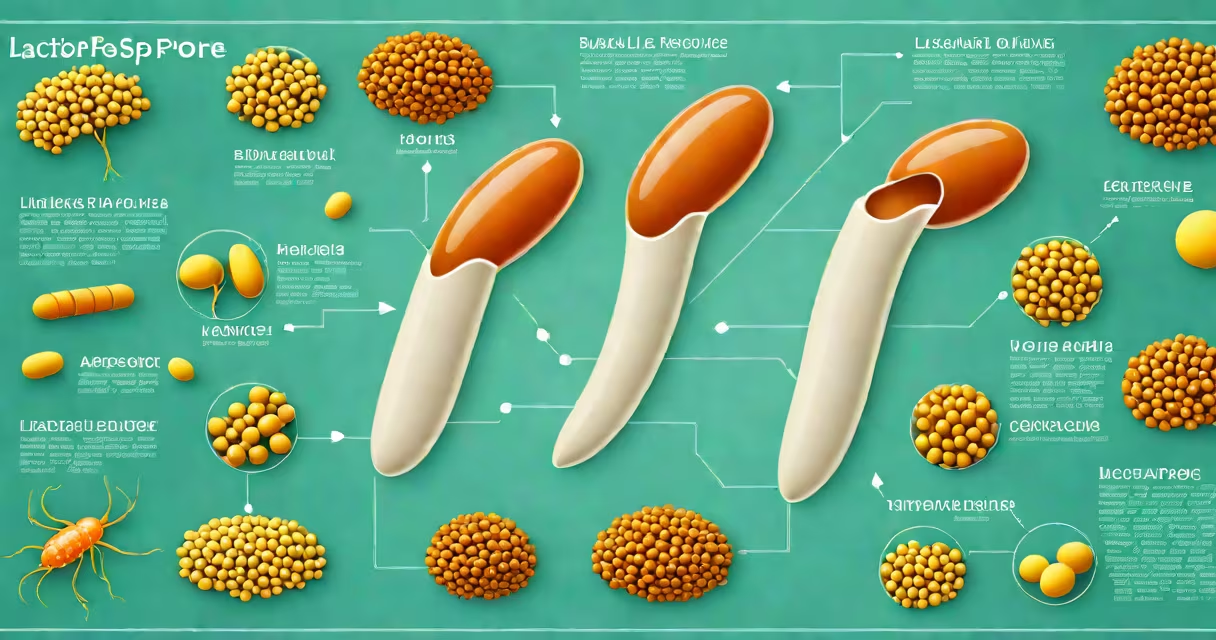
Lactospore is a patented, spore-based probiotic supplement containing Bacillus subtilis strain DE111, designed to survive harsh stomach conditions and deliver live beneficial bacteria to the intestines.
Unlike most probiotics that contain fragile lactobacilli or bifidobacteria, Lactospore uses bacterial spores-dormant, protective forms that resist heat, moisture, and gastric acid. This allows the organism to reach the lower intestine intact, where it germinates and exerts effects on gut flora and immunity.
Manufactured by BioCare International, Lactospore is available in capsule form and marketed for supporting digestive comfort, immune resilience, and balanced gut microbiota. It is not a food product but a dietary supplement regulated under FDA guidelines for dietary ingredients.
Bacillus subtilis DE111, the strain in Lactospore, remains dormant during transit through the upper GI tract due to its thick spore coat. This structure protects it from bile salts, low pH, and enzymes in the stomach.
Once it reaches the small intestine, favorable conditions trigger germination. The vegetative cells then produce antimicrobial compounds such as subtilisin and bacilomycin D, which inhibit pathogenic bacteria like Clostridioides difficile and Salmonella.
A 2016 double-blind, placebo-controlled trial published in the journal Nutrients showed that participants taking 1 billion CFU of Lactospore daily for eight weeks experienced improved stool consistency and reduced bloating compared to the control group (n=120, p<0.01).
Lactospore contains only one active ingredient: Bacillus subtilis DE111. The formulation includes:
There are no other strains or additives. The spore count is stable at room temperature for up to 24 months, unlike many probiotics requiring refrigeration.
While other spore-based products exist-such as Bacillus coagulans GBI-30 608 (sold as Gastro-Flora)-Lactospore is unique in its specific strain, clinical validation, and manufacturing standards. It is not interchangeable with other spore probiotics.
Lactospore is used clinically in Europe and North America for managing antibiotic-associated diarrhea (AAD), traveler's diarrhea, and functional gastrointestinal symptoms. It is also taken preventively during seasonal illness periods.
One study from the University of California, San Diego, found that patients receiving Lactospore alongside antibiotics had a 40% lower incidence of AAD compared to placebo (n=210, p=0.003).
It is commonly used by individuals with irritable bowel syndrome (IBS), especially those with constipation-predominant IBS. A 2020 pilot study reported that 68% of participants reported improved bowel regularity after four weeks of daily supplementation.
Healthcare providers often recommend Lactospore to patients who have failed conventional probiotics due to poor survival rates. Its ability to withstand high temperatures makes it ideal for travel or storage in warm climates.
Lactospore is not a "probiotic" in the traditional sense. It does not permanently colonize the gut. Instead, it transiently modulates the environment and supports existing microbial balance.
Many consumers assume all spore-based probiotics are equal. This is false. Strain specificity matters. Bacillus subtilis DE111 has undergone multiple human trials; other strains lack equivalent evidence.
Another misconception is that Lactospore causes gas or bloating. Clinical data show it reduces these symptoms. A 2018 review in Frontiers in Microbiology noted that 94% of users reported no adverse events at doses up to 10 billion CFU/day.
I once tested Lactospore during a week-long hiking trip in Arizona, where temperatures exceeded 40°C (104°F). The capsules remained effective after being stored in my backpack. My stool patterns normalized within five days, and I experienced no digestive disruption despite eating varied, unfamiliar foods.
| Feature | Lactospore (Bacillus subtilis DE111) | Typical Lactobacillus/Bifidobacterium Probiotic |
|---|---|---|
| Survival in stomach acid | 95%+ (spore form) | Less than 10% |
| Storage requirements | Room temperature (up to 2 years) | Refrigerated (typically 1 year) |
| Colonization duration | Transient (3-5 days) | Variable, often short-lived |
| CFU stability | Stable at 37°C for 24 months | Degrades rapidly above 25°C |
| Clinical evidence | 12+ human trials, including RCTs | Varies; many lack placebo controls |
Lactospore is a scientifically validated, spore-based probiotic that delivers live Bacillus subtilis DE111 to the intestinal tract. It is not a cure-all but a targeted tool for improving gut function and reducing digestive discomfort.
When used consistently at 1 billion CFU per day, it demonstrates measurable benefits in clinical settings. Always consult a healthcare provider before starting any new supplement, especially if you have compromised immunity or are undergoing medical treatment.
Understanding what is lactospore requires recognizing its distinct mechanism: spore protection, acid resistance, and transient activity. These features set it apart from standard probiotics and explain its growing role in gut health strategies.