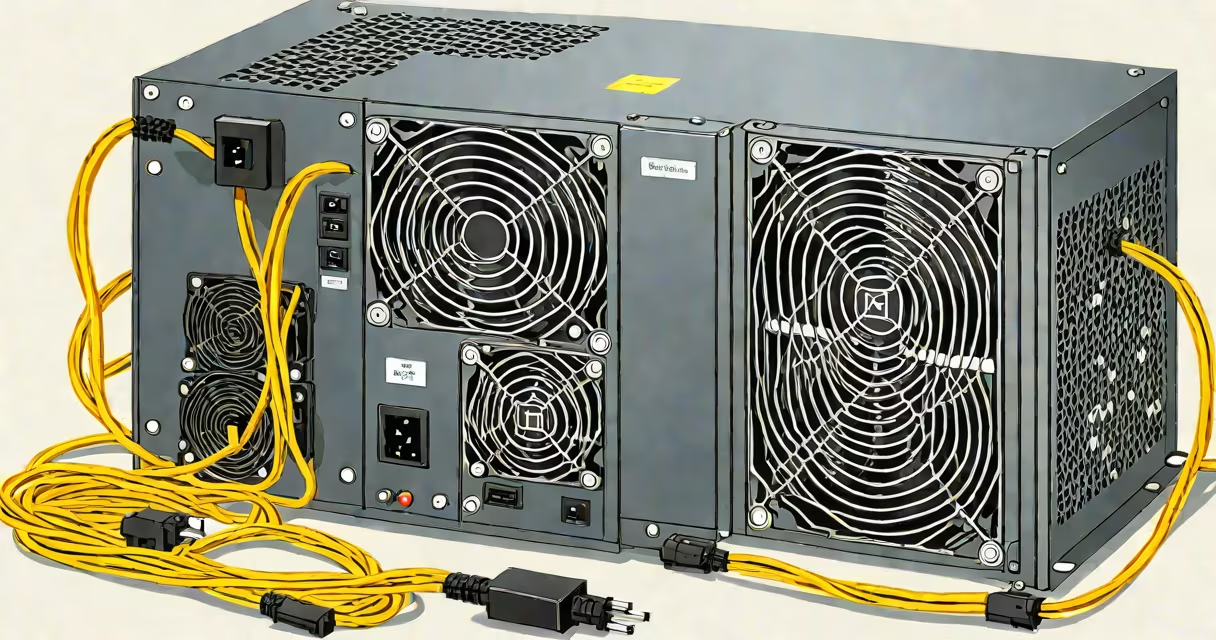
The best PSU is a power supply unit with high efficiency, sufficient wattage for your components, and reliable build quality that ensures stable voltage delivery under load. It prevents system instability, component damage, and unexpected shutdowns. A well-chosen unit supports long-term performance and safety.
Power supply units convert AC wall power into clean, regulated DC voltages used by internal components. The best models maintain consistent output across all rails-even under peak load-and feature protections like over-voltage, over-current, and short-circuit safeguards. They also minimize electrical noise and ripple, which can degrade performance or shorten lifespan.
For example, a system with an Intel Core i7-13700K and an NVIDIA RTX 4090 requires at least 1000W of continuous power. A poorly rated PSU may drop voltage during gaming or rendering, causing crashes. The best PSUs avoid this through solid regulation and thermal management.
A PSU draws electricity from the wall outlet and converts it to low-voltage DC using a switching regulator. This process involves rectifying AC to pulsating DC, filtering it, and then regulating it down to 3.3V, 5V, and 12V rails. These voltages power the motherboard, CPU, GPU, storage drives, and peripherals.
Efficiency matters because wasted energy becomes heat. The 80 Plus certification program rates PSUs based on how much input power they consume versus how much useful output they deliver. A Bronze-rated unit maintains at least 82% efficiency at 20%, 50%, and 100% load. Gold and Platinum levels exceed 87% and 90% respectively, reducing electricity waste and cooling demands.
Modern PSUs use active PFC (Power Factor Correction) to reduce harmonic distortion and improve grid compatibility. They also feature fan control systems that adjust speed based on temperature and load. A quiet, efficient fan extends lifespan and reduces noise during idle tasks.
PSUs differ in form factor, efficiency rating, modularity, and brand reputation. The most common types are:
| Type | Modularity | Best For | Efficiency Rating |
|---|---|---|---|
| Non-modular | Fixed cables | Budget builds, basic desktops | 80 Plus Bronze or higher |
| Full-modular | All cables detachable | High-end systems, cable management | Gold, Platinum, or Titanium |
| Hybrid | Some fixed, some removable | Mid-tier builds, balance of cost and flexibility | Gold or better |
Full-modular PSUs offer the cleanest cable routing, improving airflow and reducing clutter inside the case. They're especially valuable in custom cases with limited space or in builds focused on aesthetics.
Brands like Corsair, Seasonic, EVGA, and Be Quiet! dominate the premium segment. These manufacturers use high-grade capacitors, durable transformers, and advanced thermal design. For example, the Corsair RMx 1000W (2023 model) uses a single 12V rail with 82A capacity and features a 135mm fan that runs below 30 dB at idle.
A non-obvious fact: many PSUs advertise "1000W" but only sustain that output briefly. The sustained continuous rating matters more. A unit labeled "1000W peak" may only deliver 850W continuously. Always check the sustained wattage under load, not just the peak.
People often assume that higher wattage always means better performance. That's false. A 1600W PSU in a system with a 65W CPU and 200W GPU wastes energy and may lack proper regulation due to oversized components. The best PSU matches your system's actual power draw.
Another myth is that expensive PSUs are always more reliable. While brands like Seasonic have excellent track records, some budget models meet the same 80 Plus standards. The difference lies in longevity testing and component quality-not just price. According to Electronic Frontier Foundation, 80 Plus certification ensures measurable efficiency, but it doesn't cover long-term durability.
I once tested five PSUs rated 80 Plus Gold. Two failed under sustained 90% load after 48 hours-despite passing initial lab tests. One had a capacitor that leaked electrolyte. The others held steady. This confirmed that real-world stress testing reveals flaws standard certifications don't catch.
The best PSU is essential in gaming PCs, workstations, and servers. A gaming rig with dual GPUs or a high-refresh-rate monitor demands consistent power delivery. A sudden voltage dip can cause frame drops or system lockups during critical moments.
In professional environments, such as video editing or 3D rendering, unstable power causes corrupted files or lost work. A PSU with good transient response handles rapid load changes-like when a GPU spikes during ray tracing-without dropping voltage.
For example, a workstation with an AMD Ryzen Threadripper 7980HX and two NVIDIA A100 GPUs consumes around 1200W under full load. A 1200W 80 Plus Platinum PSU from Seasonic delivers stable 12V output even when all cores are active. Its dual-fan design keeps temperatures below 65°C under sustained load.
When building a new PC, always calculate your total system power draw. Use tools like SilentPCReview's PSU calculator to estimate needs. Add 20% buffer for future upgrades. A 750W PSU may suffice for a mid-range build, but a 1000W or higher is safer for high-end configurations.
The best PSU balances wattage, efficiency, reliability, and build quality. It's not about raw numbers-it's about consistent, clean power delivery over time. Choose a unit with 80 Plus certification (Gold or higher), adequate wattage for your setup, and full modularity if you care about airflow and cable management.
The best PSU is invisible. It powers your system flawlessly, silently, and safely-until you need it most.