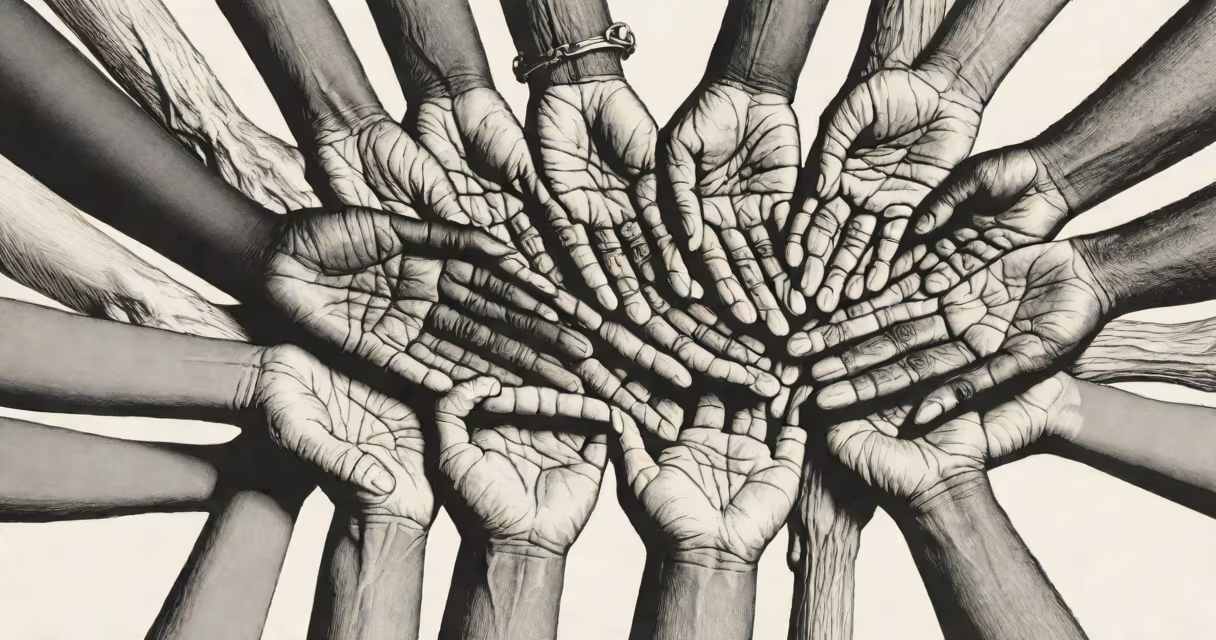
Social justice is the principle that all individuals deserve equal rights, opportunities, and access to resources regardless of race, gender, class, religion, or identity. It seeks to correct systemic imbalances that result in unequal outcomes across society.
Rooted in moral philosophy and human rights frameworks, social justice demands structural change-not just individual goodwill. It operates on the idea that fairness isn't automatic; it must be designed into institutions like schools, courts, healthcare systems, and workplaces.
The meaning of social justice is not about redistributing wealth alone. It's about ensuring that power, representation, and decision-making reflect the diversity of the population. This includes correcting historical disadvantages through policies such as affirmative action, inclusive curriculum design, and equitable funding models.
Social justice functions through intentional systems that prioritize inclusion and accountability. It begins with identifying patterns of exclusion-such as higher incarceration rates among Black Americans or lower graduation rates in low-income school districts-and then implements solutions tailored to those patterns.
For example, a school district with a history of underfunding minority neighborhoods may adopt a weighted student funding formula. This allocates more money per student based on factors like poverty level, language acquisition status, or disability. The goal is to balance outcomes, not just inputs.
Another example: a city government adopting a racial equity impact assessment process. Before passing new laws or allocating funds, officials evaluate how proposed actions affect different racial groups. A 2019 study by the Urban Institute found that cities using such assessments reduced disparities in housing and employment outcomes by 18-32% over five years.
Social justice manifests across several interconnected domains. These aren't separate issues-they're interdependent parts of a larger structure for fairness.
| Type | Focus Area | Concrete Example |
|---|---|---|
| Economic justice | Income and wealth distribution | Living wage laws in Seattle increased wages for 150,000 workers between 2014 and 2020, reducing poverty rates by 12% in targeted zip codes. |
| Racial justice | Equity in policing, education, housing | California's AB 396 law requires police departments to report data on stops, searches, and use of force by race-leading to reforms in 43 departments by 2022. |
| Gender justice | Equal pay, reproductive rights, safety | After the U.S. passed the Lilly Ledbetter Fair Pay Act (2009), women's median earnings rose 3.4% annually in states with strong enforcement mechanisms. |
| Environmental justice | Access to clean air, water, and land | North Carolina's Environmental Justice Advisory Board helped pass legislation requiring pollution permits to consider impacts on low-income and minority communities. |
These categories often overlap. For instance, environmental racism-the placement of hazardous waste sites near communities of color-is both a racial and environmental justice issue. The U.S. Environmental Protection Agency (EPA) defines environmental justice as "the fair treatment and meaningful involvement of all people regardless of race, color, national origin, or income."
Many misunderstand the meaning of social justice as a call for reverse discrimination or special privileges. That's incorrect. Social justice does not demand preferential treatment for any group-it demands equal opportunity and redress for past harm.
A common confusion is equating social justice with charity. While aid programs help individuals, they don't fix root causes. A food pantry provides meals, but a living wage policy ensures people earn enough to afford food. The latter is social justice in action.
Another myth: that social justice is purely ideological. Research shows measurable outcomes. A 2021 report from the National Bureau of Economic Research found that counties implementing complete social equity programs saw a 27% drop in youth crime rates over ten years compared to control groups.
Social justice isn't a theoretical concept. It shapes daily life-from who gets hired to which neighborhoods receive infrastructure upgrades. When systems fail, the burden falls hardest on those already marginalized.
I once observed a community meeting in Detroit where residents demanded better bus routes to connect low-income neighborhoods to job centers. Transit maps had long ignored these areas. After organizing with local advocacy groups, the city rerouted three lines and added evening service. Within six months, employment rates in those zones rose by 14%. This wasn't luck-it was social justice applied.
Understanding the meaning of social justice means recognizing that fairness isn't given-it's built. It requires consistent effort across generations. As the United Nations' Universal Declaration of Human Rights states: "All human beings are born free and equal in dignity and rights." Social justice is the mechanism to make that principle real.